Isan
region / region-isan
イサーン
Isan, northeastern Thailand. An official food-culture booklet presents bitterness as an important taste.
Photographs (captions in Japanese)
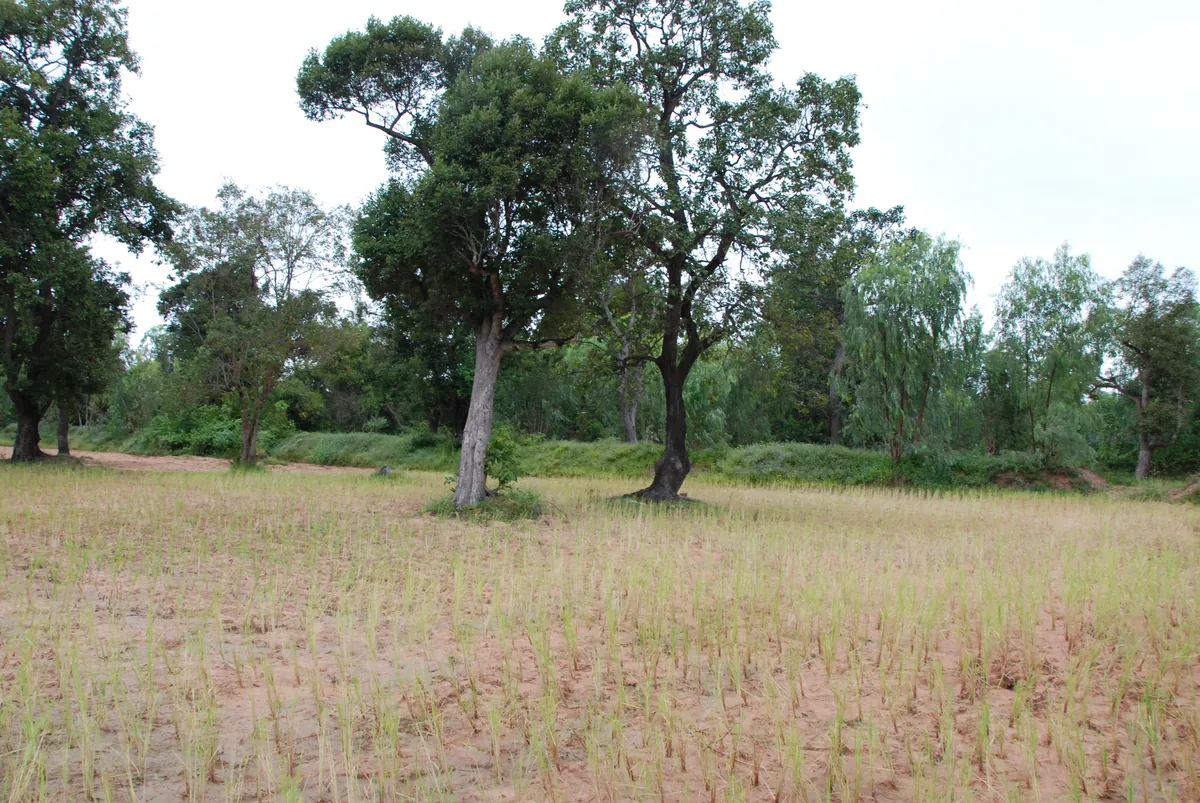
タイ東北部イサーン、カセットワイサイ郡(Kaset Wisai District, Roi Et県)の水田風景。地域を代表する農村景観の写真。
現地観測写っているもの: 該当なし(地域景観)部位・状態: 水田の景観
写真: All Fronts Quiet/ CC BY-SA 3.0/ 原画像/ 台帳の原画像
写真の範囲と来歴
被写体の確認: 原典の記載による同定。
掲載画像: リサイズ・トリミング・色調変更なし。Wikimedia Commons のオリジナル画像をそのまま使用。 表示用には幅1200px上限のWebPを配信し、台帳の原画像は上のリンクから確認できます。
On this page (7 sections)
Reading the bitterness
Isan (อีสาน) is a region of northeastern Thailand. A food-culture booklet compiled by a Thai public institution presents bitterness as an important taste in authentic Isan cooking. This is a description of regional food culture, not survey data measuring how often bitter dishes are actually prepared.
The same booklet gives examples including bitter soup, bitter chili paste, bitter dressed dishes, and soup made with bile. The passage alone does not identify each dish’s ingredients or preparation method; in particular, it provides no basis for inferring safe handling of the bile soup.
An ethnobotanical study of the Tai Yoy people of Akat Amnuai District, Sakon Nakhon Province, northeastern Thailand, records that leaves of Senna timoriensis (local name Khi Lek Pa) are boiled before being eaten as a vegetable to reduce bitterness. The same study says young shoots of Amorphophallus paeoniifolius are boiled before cooking to reduce bitterness or acridity. In its discussion, the study frames the role of sour, bitter, and aromatic plants in enhancing the flavor of traditional dishes as one example of a culinary pattern common across Southeast Asia.
Sources for this overview
Checked for this overview: Confirmed the booklet’s presentation of bitterness as an important taste. / Confirmed its examples of bitter dishes and the limits of what it describes.
Checked for this overview: A record of preliminary boiling by the Tai Yoy to reduce bitterness. / The discussion of the culinary role of sour, bitter, and aromatic plants.
Other names: อีสาน (th)
Hypotheses and recipe candidates for this entry are on the Japanese page.
Structured claims — open a section to read each claim's confidence, evidence and limits
How processing and cooking change it (1)
Scope: Layer: literature. An ethnobotanical study involving fieldwork, interviews, and market observation (conducted in 2025 and published in Biology).
Show data
region-isan —is_documented_as_having→ "An ethnobotanical study of the Tai Yoy people in Sakon Nakhon Province, northeastern Thailand, records that Senna timoriensis leaves (local name Khi Lek Pa) are boiled to reduce bitterness before being eaten as a vegetable and that young Amorphophallus paeoniifolius shoots are likewise boiled to reduce bitterness or acridity."Culture (3)
Scope: a Thai public institution's food-culture booklet
Note: Not a frequency estimate from ethnographic research, but a statement from a cultural-introduction resource.
Show data
region-isan —has_cultural_role_of→ "one of the important tastes found in authentic Isan cuisine"Scope: Isan Gastronomy p.45
Note: This claim does not recommend ingredients or safe preparation methods for individual dishes.
Show data
region-isan —is_documented_as_having→ "Examples of bitter soup, bitter chili paste, bitter dressed dishes, and soup made with bile."Scope: Layer: literature. Discussion section of an ethnobotanical study in Sakon Nakhon Province, northeastern Thailand (conducted in 2025).
Show data
region-isan —has_cultural_role_of→ "An example of a Southeast Asian culinary pattern in which sour, bitter, and aromatic plants function as important elements that enhance the flavor of traditional dishes."