Papaitan (Pinapaitan)
dish / dish-papaitan
パパイタン
Papaitan (Pinapaitan) is an Ilocos-region Filipino soup of simmered goat, cattle, or water-buffalo meat and offal, including liver, heart, kidneys, and intestines. It is distinguished by bitterness from animal bile (apdo) or digestive-tract contents (papait). Also called pinapaitan or sangkutsar, its name is described as deriving from the Ilocano paít (bitter). In encyclopedia editing, it is sometimes presented alongside bile-based dishes from other regions, such as niubie soup and larb, but no source establishing a genealogical relationship has been found.
Photographs (captions in Japanese)
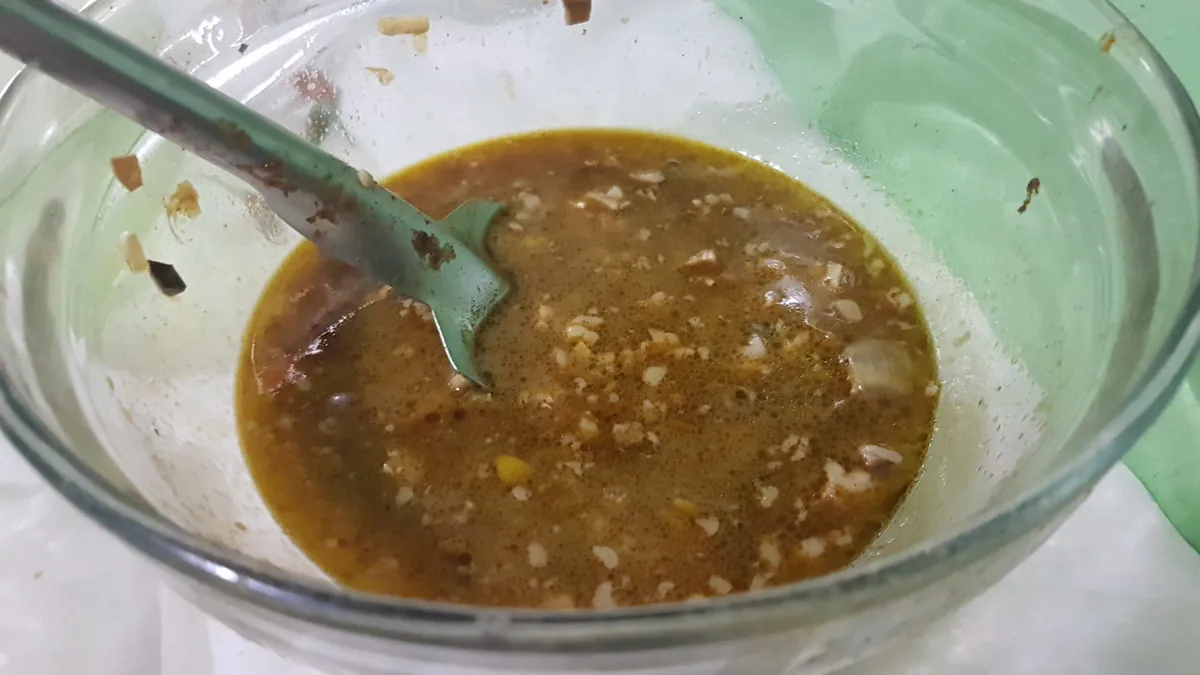
山羊・牛等の内臓と胆汁(apdo)または消化管内容物(papait)で苦味をつけた、フィリピン・イロコス地方のスープ、パパイタン(pinapaitan)を椀に盛った写真。
料理写っているもの: 該当分類群なし(パパイタン、内臓と胆汁を用いたスープ)部位・状態: 内臓・胆汁を用いて煮込んだ料理を椀に盛った状態
写真: Obsidian Soul/ CC0 1.0/ 原画像/ 台帳の原画像
写真の範囲と来歴
被写体の確認: 原典の記載による同定。原典は「an Ilocano dish using goat offal and bile」と説明。特定の店舗・地域限定の一皿として撮影されたものではない。
掲載画像: Wikimedia Commons の原寸ファイルを取得後、苦味研究所にて sips で長辺2400px程度に縮小。切り抜き・色調変更なし。 表示用には幅1200px上限のWebPを配信し、台帳の原画像は上のリンクから確認できます。
On this page (8 sections)
Reading the bitterness
Papaitan (also called pinapaitan) is a soup from the Ilocos region in northwestern Luzon, Philippines, made by simmering beef, goat, or water-buffalo meat and offal, including liver, heart, kidneys, and intestines. The official online dictionary compiled by the Komisyon sa Wikang Filipino defines it as 「牛または山羊の内臓料理で、ニンニクや生姜、apdo(胆汁)で味付けし、苦味の味を出したもの」 (in translation: "a dish of cattle or goat offal seasoned with garlic, ginger, and apdo [bile] to produce a bitter taste"). An English-language encyclopedia article and a local newspaper column also present it as an Ilocos specialty. One writer's view places it in a lineage of bitter Ilocos dishes that distinguishes the region from other parts of the Philippines.
Food and tourism media consistently say that the name derives from the Ilocano root paít (bitter). However, direct inspection of the Komisyon sa Wikang Filipino dictionary site shows that, besides a headword "pait" meaning bitterness, a separate homonymous headword meaning 「動物の腸」 (in translation: "animal intestines") also appears as a zoological term. The dictionary itself does not explain an etymological connection between these two forms of pait. This source alone cannot establish whether they share an origin or happen to have the same form.
An encyclopedia article explains the bittering material as 「これらの動物の胆嚢から採った胆汁や消化管内容物に由来し、調理によっては第四胃(牛の場合)にも胆汁の痕跡が残り、苦味に寄与することがある」 (in translation: "coming from bile taken from these animals' gallbladders or from digestive-tract contents; depending on preparation, traces of bile may also remain in the fourth stomach [in cattle] and contribute bitterness"). The Komisyon sa Wikang Filipino dictionary more simply lists apdo (bile) as the bittering ingredient; the word papait itself does not appear in its definition. The consulted sources do not establish whether papait and apdo refer to exactly the same thing or whether papait is a broader term.
A closely related dish, sinanglaw, another Ilocos offal soup, is often compared with papaitan. According to an encyclopedia article, although their ingredients and methods are similar, sinanglaw is described as differing from papaitan by lacking pait (bile or similar bittering material).
Sources for this overview
Checked for this overview: Checked the definition in the official dictionary of the language commission. / Checked the existence of two homonymous dictionary headwords. / Checked the dictionary definition naming apdo as the bittering ingredient.
Checked for this overview: Checked the encyclopedia description of an Ilocos origin. / Checked the description of bitterness derived from bile and digestive-tract contents. / Checked the stated distinction from sinanglaw.
Checked for this overview: Checked the presentation of the dish among a lineage of bitter dishes.
Other names: papaitan (fil), pinapaitan (fil), papaitan (ilo, identification medium), sangkutsar (tl, identification medium)
Follow the connections
Papaitan (Pinapaitan) →is documented in→ Ilocos Region
Papaitan (Pinapaitan) →is bittered with→ papait (papait / apdo)
Hypotheses and recipe candidates for this entry are on the Japanese page.
Structured claims — open a section to read each claim's confidence, evidence and limits
How processing and cooking change it (3)
Scope: The headword entry for "papaitan" in the KWF Diksiyonaryo ng Wikang Filipino, the official online dictionary of the Komisyon sa Wikang Filipino (Commission on the Filipino Language)
Note: A dictionary definition from a government language authority; it does not record details of origin, quantities, or cooking procedure. It specifies only the word apdo (bile) as the bittering ingredient, and the word "papait" — itself also the name of the seasoning entry — appears only as a note directly under pi•na•pa•í•tan, which the same dictionary lists as an alternate form of papaitan; this definition alone does not let us determine whether papait and apdo are the same or different.
Show data
dish-papaitan —is_defined_in_dictionary_as→ ""pa•pa•í•tan Pangngalan [alternate forms paít / pi•na•pa•í•tan] KULINARYO Lutò sa lamanloob ng báka o kambing na tinimplahan ng bawang, luya, at apdo upang lumasa ang pait." (The KWF Diksiyonaryo ng Wikang Filipino defines this as a dish made from the entrails of cattle or goats, seasoned with garlic, ginger, and apdo [bile] to bring out the taste of pait [bitterness]. The classification tag is KULINARYO = culinary/cooking.)"Scope: The KWF dictionary's papaitan entry and the body of the Wikipedia Pinapaitan article
Show data
dish-papaitan —is_bittered_with→ seasoning-papaitScope: The body of the Wikipedia Pinapaitan article (the section introducing similar dishes)
Show data
dish-papaitan —differs_from→ "The Wikipedia article body states: "The dish is often compared to sinanglao (also spelled sinanglaw), another Filipino-Ilocano innard soup, as both share similar ingredients and cooking methods; however, sinanglao does not include pait (bile)." (Sinanglaw is an Ilocano offal soup sharing similar ingredients and cooking methods, but differs from papaitan in not including pait, the bile used for bittering.)"Culture (2)
Scope: Both the "papaitan" and "pait" headword entries (2 entries) within the same dictionary site
Show data
dish-papaitan —has_name_etymology→ "In the definition of the headword "papaitan", the KWF dictionary states "...upang lumasa ang pait" (in translation: "to bring out the taste of pait") and gives "paít" and "pinapaítan" as alternate forms. The same dictionary carries two separate headword entries for "pa•ít": (1) a noun sense with "1. Lasang kasalungat ng tamis, gaya ng sa ampalaya." (in translation: "a taste opposite to sweetness, as in ampalaya [bitter gourd]") and "2. Matinding kirot ng damdámin." (in translation: "an intense pain of feeling"), accompanied by the derived words kapaitán (noun), pumaít (verb), and mapaít (adjective); and (2) a separate headword sense, "ZOOLOHIYA Bituka ng hayop." (in translation: "zoology: the intestine of an animal"). The definition of papaitan is written tied to the former sense — pait as a taste, meaning bitterness."Scope: The infobox and body text of the English-language Wikipedia article, and a 2007 Philippine Star column on Ilocano food culture
Note: Neither source is primary field research; both are culinary-media accounts — an encyclopedia and a national-newspaper column. Which of Ilocos Norte or Ilocos Sur is more central cannot be determined from these sources.
Show data
dish-papaitan —is_documented_in→ region-ilocos