Nurungji
dish / dish-nurungji
ヌルンジ
Nurungji is the scorched rice layer formed at the pot bottom when cooking rice. In Korea it is eaten as a snack and also simmered with water and drunk as sungnyung (숭늉).
Photographs (captions in Japanese)
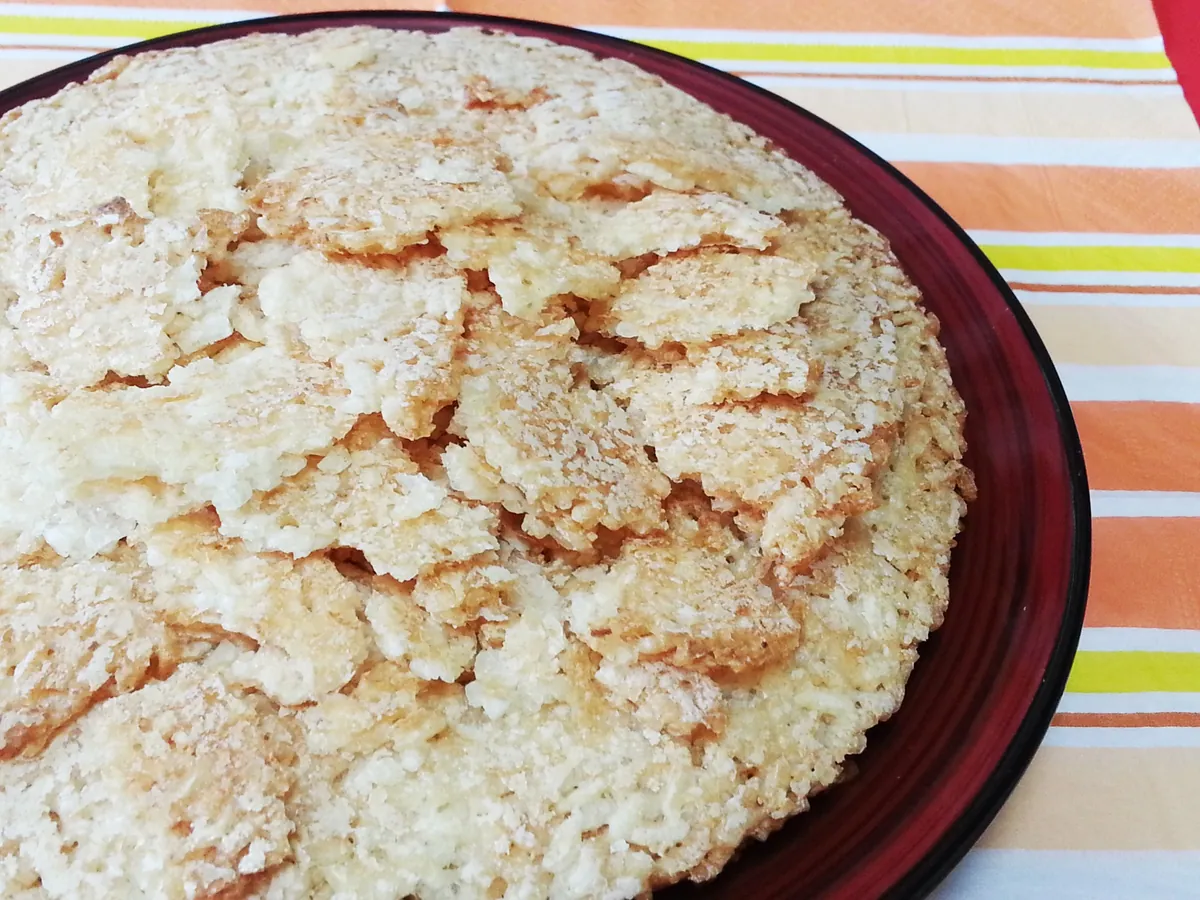
皿に載せられた、ひび割れた金色の円盤状ヌルンジ(お焦げ)。
料理写っているもの: 該当分類群なし(料理: 누룽지、鍋底の焦げ米)部位・状態: 鍋底から取り出した円盤状の焦げ米の層(丸ごと)
写真: Hyeon-Jeong Suk/ CC BY 2.0/ 原画像/ 台帳の原画像
写真の範囲と来歴
被写体の確認: 原典の記載による同定。説明文「nurungji (scorched rice)」。 画像を開き、円盤状にひび割れた黄金〜こげ茶色の米の塊が皿全体を覆っているのを確認した。
掲載画像: Wikimedia Commons の原本を長辺2400pxへ縮小。切り抜き・色調変更なし。 表示用には幅1200px上限のWebPを配信し、台帳の原画像は上のリンクから確認できます。
On this page (7 sections)
Reading the bitterness
The Encyclopedia of Korean Culture (Academy of Korean Studies) describes the taste of nurungji (the scorched rice layer that forms on the pot bottom when cooking rice) as 「고소하다(香ばしい)」 (in translation: "savory") and explains that when pot-bottom temperature exceeds 200°C, amino-carbonyl (Maillard) reaction causes browning and produces volatile carbonyl compounds, which penetrate the rice to create its characteristic savory flavor. A peer-reviewed paper likewise reports that browning forms appetizing color and savory flavor in nurungji made under heating conditions of 2–14 minutes. Neither source mentions bitterness.
A consumer-acceptance test in an international peer-reviewed journal (n=104) evaluated 5 kinds of nurungji containing 0–100% barley on 9 axes: overall acceptance, appearance, aroma, taste, sweetness intensity, texture, savory-intensity, aftertaste, and purchase intention. Bitterness was not included as an evaluation axis. This is not data positively denying bitterness, but only that it was not measured; it suggests that the research team treated savory flavor rather than bitterness as a core sensory attribute of nurungji.
Sources for this overview
Checked for this overview: Used the description explaining savory flavor through the Maillard reaction as evidence.
누룽지 가열시간에 따른 품질 특성, 아크릴아마이드 함량 및 항산화 활성
Checked for this overview: Used the report on browning and flavor by heating condition as evidence for this paragraph.
Checked for this overview: Confirmed that bitterness was excluded from the evaluation axes.
Other names: 누룽지 (ko), nurungji (ko)
Structured claims — open a section to read each claim's confidence, evidence and limits
Sensory (2)
Scope: A general description of pot-bottom temperature exceeding 200°C in pot-cooked rice, not individual measurement data.
Show data
dish-nurungji —has_sensory_attribute→ "The Encyclopedia of Korean Culture (Academy of Korean Studies) explains that the taste of 누룽지 is 「고소하다」 (in translation: "savory") and that when pot-bottom temperature exceeds 200°C, amino-carbonyl reaction produces browning and volatile carbonyl compounds that penetrate the rice and create its characteristic savory flavor."Scope: Wonkwang University (원광대학교), Korea; barley-blended 누룽지 (0/25/50/75/100%); consumer panel n=104.
Show data
dish-nurungji —has_sensory_response→ "A consumer-acceptance test in an international peer-reviewed journal (n=104) included 9 measures for 5 누룽지 samples blended with 0–100% barley: overall acceptance, appearance, aroma, taste, sweetness intensity, texture, savory intensity, aftertaste, and purchase intention, but did not set bitterness as an evaluation axis. Samples were made by preheating a nurungji maker to 205°C and heating 5 g of grain at 205°C for 3 minutes."How processing and cooking change it (1)
Scope: Laboratory-scale production and physicochemical analysis using Korean polished rice (5 heating conditions of 2–14 minutes).
Show data
dish-nurungji —is_produced_through→ "A peer-reviewed paper calls the reaction in which sugars and amino compounds react during high-temperature production of 누룽지 and turn brown the amino-carbonyl (Maillard) reaction, and states that this browning forms appetizing color and savory flavor (고소한 풍미). It reports samples heated for 2, 5, 8, 11, and 14 minutes; moisture content fell from 25.14% at 2 minutes to 0.24% as heating increased, and soluble solids were 1.40–3.00°Brix."