Stephanolepis cirrhifer
ingredient / ingredient-kawahagi-liver
肝(きも)
Stephanolepis cirrhifer is the liver of kawahagi (Stephanolepis cirrhifer). It is used for liver soy sauce served with sashimi, liver-ae and liver tataki mixed with the flesh, and other preparations. If the gallbladder ("bitter ball") is damaged during removal, bitterness is described as transferring to the liver and flesh.
Photographs (captions in Japanese)
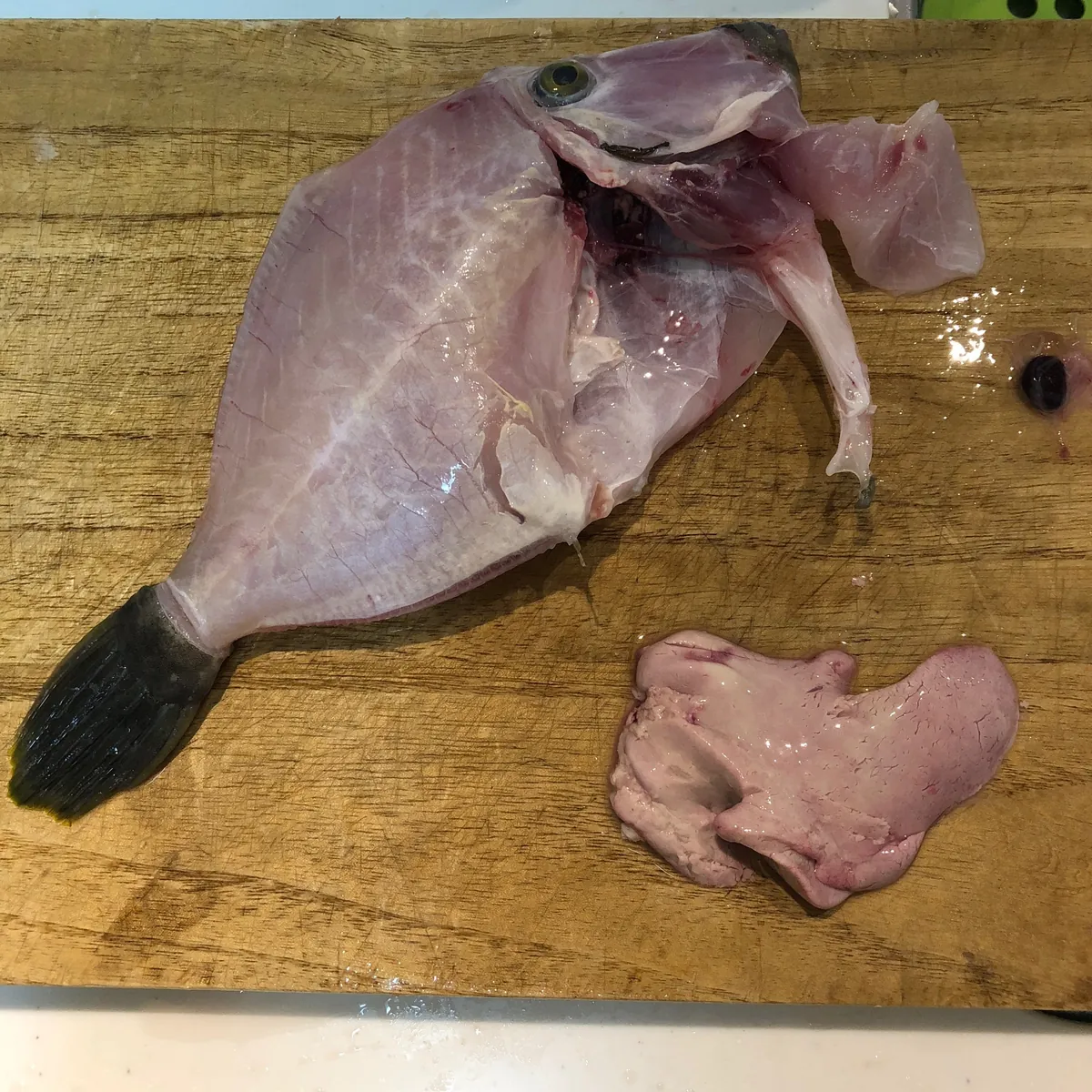
皮を剥いだカワハギの魚体と、まな板の上に取り出された肝臓
写っているもの: カワハギ(原典表記どおり。学名Stephanolepis cirrhiferはentities.csvの記載)部位・状態: 摘出された肝臓(右側の淡いピンク色の塊)と、皮を剥いた魚体本体(左側)がまな板上に並ぶ
写真: Rakurakuda/ CC BY-SA 4.0/ 原画像/ 台帳の原画像
写真の範囲と来歴
被写体の確認: 原典の記載による同定。説明文「カワハギ肝 2018.10.15 高崎漁港」と明記、own work。肝臓が魚体と分離された状態で写っており、部位の特定が明確 画像を開いて確認。まな板左に皮を剥かれた魚体(黄色い目、黒い尾ひれ付近が特徴的なカワハギ体型)、右に別に取り出された肝臓が写る
掲載画像: Wikimedia Commons の原本を長辺2400pxへ縮小。切り抜き・色調変更なし。 表示用には幅1200px上限のWebPを配信し、台帳の原画像は上のリンクから確認できます。
On this page (9 sections)
Reading the bitterness
An article by TSURINEWS, operated by a fishing guide in Kumamoto, explains that when kawahagi is filleted, there is a yellow 「苦玉」 (in translation: "bitter ball") close to the liver, corresponding to the fish gallbladder, and another reddish-brown 「苦玉」 (in translation: "bitter ball") immediately beside it. If these are ruptured, bitterness transfers to the flesh around the head and to the liver, making them unpalatable. The biological plausibility of the statement that there are two gallbladders cannot be judged from this article alone.
Meanwhile, the privately operated Market Fish and Shellfish Encyclopedia describes kawahagi as 「肝の味の良さは随一」 (in translation: "the flavor of the liver is unsurpassed") and introduces several ways to eat it, including dissolving the liver into soy sauce and eating it with sashimi, mixing vinegar miso with the liver, and mixing it with the flesh to make liver tataki; this description contains no mention of bitterness. It suggests that, if the 「苦玉」 (in translation: "bitter ball") can be carefully removed without leaving it behind, the liver is discussed as an ingredient with a rich flavor rather than bitterness.
According to an introduction by the Tokyo Metropolitan Islands Area Research and Extension Center for Agriculture, Forestry and Fisheries, the liver of kawahagi becomes especially enlarged in winter. Among the preparation methods listed is 「肝和え」 (kimo-ae), in which sashimi is dressed with the ground liver. Neither measured liver-weight values by season nor the quantities used in the dish are given.
Sources for this overview
カワハギの捌き方と肝(キモ)の摘出方法 2つある『苦玉』に要注意
Checked for this overview: Used the explanation of bitterness transfer when the bitter ball is damaged as the basis for this paragraph.
Checked for this overview: Used the encyclopedia description, which contains no mention of bitterness, as the basis for this paragraph.
Checked for this overview: Used for the introduction that the liver enlarges in winter, for kimo-ae, and for the qualification that no season-by-season measured values or quantities are given.
Other names: 苦玉 (ja, identification low)
Follow the connections
Thamnaconus modestus →differs from→ Stephanolepis cirrhifer
Structured claims — open a section to read each claim's confidence, evidence and limits
Composition and content (1)
Scope: Species classification
Note: The scientific names were confirmed in descriptions on multiple aquarium and encyclopedia websites, but primary sources of fish taxonomy, such as original description papers, were not traced.
Show data
ingredient-umazurahagi-liver —differs_from→ ingredient-kawahagi-liverSensory (2)
Scope: A TSURINEWS article (July 20, 2022, by Masaki Matsuda, a fishing guide in Kumamoto and operator of 「藤まる食堂」 [Fujimaru Shokudo])
Note: An article from a personally run fishing-information outlet, without academic verification. The description of 2 「苦玉」 existing is recorded as written in the source, but its biological validity (consistency with the fact that fish normally have 1 gallbladder) cannot be judged from this source.
Show data
ingredient-kawahagi-liver —has_perceived_bitterness_associated_with→ "A TSURINEWS article explains that when removing the entrails of kawahagi (thread-sail filefish), there is a yellow 「苦玉」 ("bitterness ball," corresponding to the fish's gallbladder and easily ruptured) close to the liver, and right beside it a reddish-brown second 「苦玉」 that the article states is equally bitter. Rupturing these, the article explains, transfers bitterness into the flesh around the head and into the liver, spoiling the flavor."Scope: The "kawahagi" entry in the Market Fish and Shellfish Encyclopedia
Note: A privately run seafood encyclopedia (operated by Bouzu Konnyaku Co., Ltd.). Properly prepared liver is described not as bitter but as rich in flavor.
Show data
ingredient-kawahagi-liver —has_sensory_attribute→ "The Market Fish and Shellfish Encyclopedia calls kawahagi's liver 「肝の味の良さは随一」 (in translation: "unrivaled in flavor") and introduces several ways of eating it — dissolving the liver into soy sauce to eat with sashimi, a blanched dish dressing the liver with vinegared miso, and minced liver mixed with the flesh. The encyclopedia's description contains no explicit mention of bitterness in the liver."How processing and cooking change it (1)
Scope: The seasonal and preparation record on the Tokyo Metropolitan kawahagi introduction page
Note: Not material that measured liver weight by season, and it gives no quantities or steps. The page's spelling of the scientific name differs from the canonical spelling.
Show data
ingredient-kawahagi-liver —is_prepared_by→ "The Tokyo Metropolitan Islands Area Research and Extension Center for Agriculture, Forestry and Fisheries states that the liver becomes especially enlarged in winter, and introduces 「肝和え」 (kimo-ae), in which sashimi is dressed with the ground liver"