bitter kola
organism / organism-garcinia-kola
ビターコーラ / Garcinia kola
Bitter kola is a tree of the St. John's wort family (Clusiaceae) found in humid forests of western and central Africa. Its seeds, called "bitter kola", are chewed as a recreational product and also substitute for kola nuts offered to guests at social ceremonies.
Photographs (captions in Japanese)
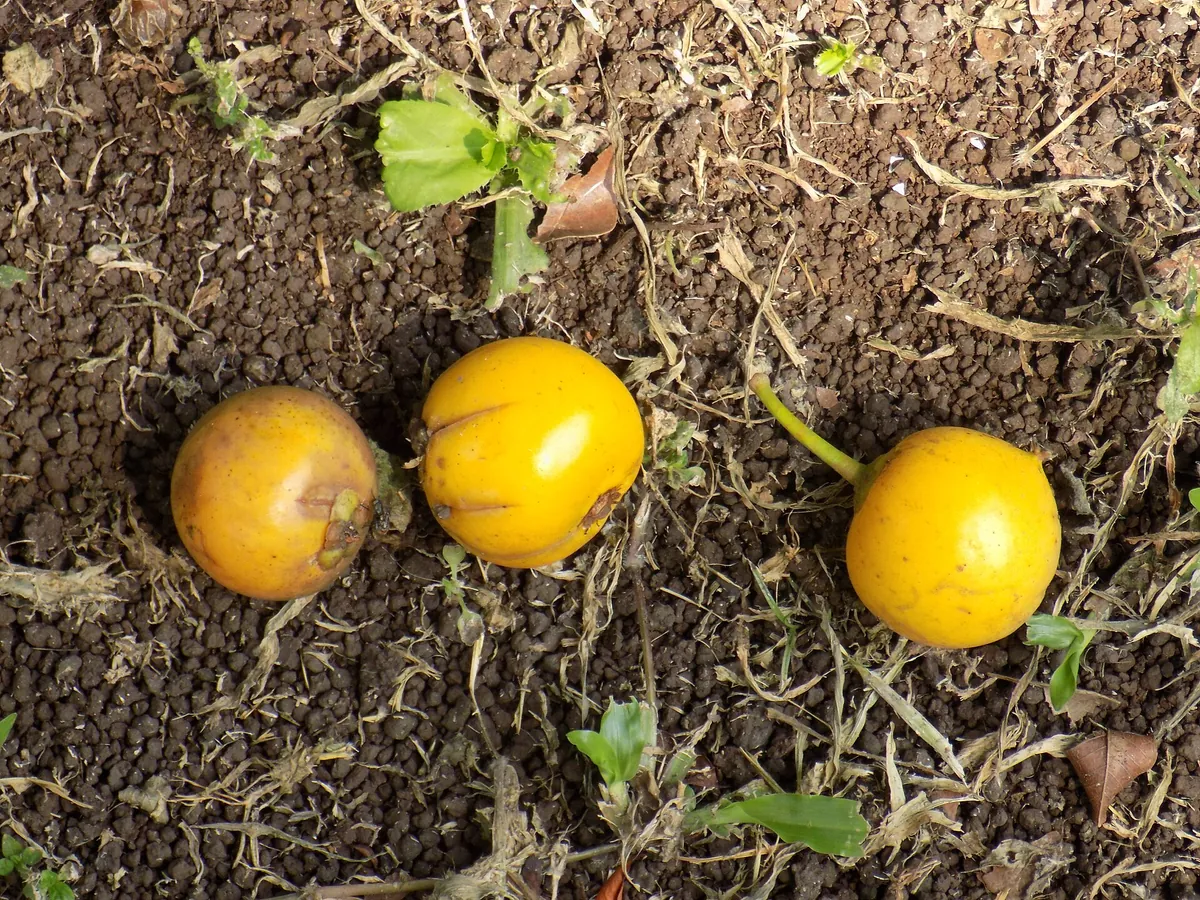
ビターコーラ(Garcinia kola)の熟した果実が3個、地面に落ちた状態で写っている。丸く光沢のある黄橙色の果皮を持つ。カメルーン・リンベ植物園で撮影されたもの。原典ページは学術種名 Garcinia kola と、カメルーンでの通称『Bitter cola』を記載している。
写っているもの: Garcinia kola部位・状態: 熟して落果した果実。丸く黄橙色の果皮を持つ果実が3個、地面の上に転がっている状態
写真: Hiobson/ CC BY-SA 4.0/ 原画像/ 台帳の原画像
写真の範囲と来歴
被写体の確認: 原典の記載による同定。原典ページは学術種名 Garcinia kola を記載し、カメルーンでの通称として『Bitter cola』を挙げている。撮影地はカメルーン・リンベ植物園。写っているのは果実であり、食用・薬用として利用される種子(ナッツ)はこの果皮の中にある。専門家による再同定は行っていない。
掲載画像: Wikimedia Commons の1920px版。苦味研究所では切り抜き・色調変更なし。 表示用には幅1200px上限のWebPを配信し、台帳の原画像は上のリンクから確認できます。
On this page (7 sections)
Reading the bitterness
Garcinia kola, a tree growing in the humid forests of western and central Africa, has seeds commonly called 「ビターコーラ」 (in translation: "bitter kola"). A review describes the seeds as something chewed for enjoyment and as a substitute for kola nuts offered to guests at social gatherings. The common-name element 『ビター』 (in translation: "bitter") itself suggests bitterness, but the source includes no sensory measurement quantifying its intensity.
A biflavonoid mixture comprising three constituents, GB1, GB2, and kolaflavanone, has been isolated from the seeds; it is called kolaviron. However, the source states no direct relationship between those constituents and bitterness, so one cannot say that kolaviron causes the bitterness. This source alone cannot connect the bitterness suggested by the name with the constituents actually isolated.
Sources for this overview
Antioxidative and Chemopreventive Properties of Vernonia amygdalina and Garcinia biflavonoid
Checked for this overview: Checked the common name 『bitter kola』 and its ceremonial use. / Checked the composition of kolaviron isolated from the seeds.
Follow the connections
kolaviron →is isolated from→ bitter kola
Structured claims — open a section to read each claim's confidence, evidence and limits
Composition and content (1)
Note: No direct correspondence with bitterness is given in the source, so none is asserted.
Show data
compound-kolaviron —is_isolated_from→ organism-garcinia-kolaCulture (1)
Scope: Western and central Africa.
Note: The common name "bitter kola" itself indicates bitterness, but sensory measurements of bitterness intensity have not been collected.
Show data
organism-garcinia-kola —is_used_as→ "The seeds (bitter kola) are chewed for enjoyment and are a major substitute for kola nuts offered to guests at social ceremonies."