Glinus oppositifolius
organism / organism-glinus-oppositifolius
パックケンコム
Glinus oppositifolius is a creeping herb in the carpetweed family. It is a wild plant used to add bitterness to dishes in northeastern Thailand and is called rau đắng đất in Vietnam.
Photographs (captions in Japanese)
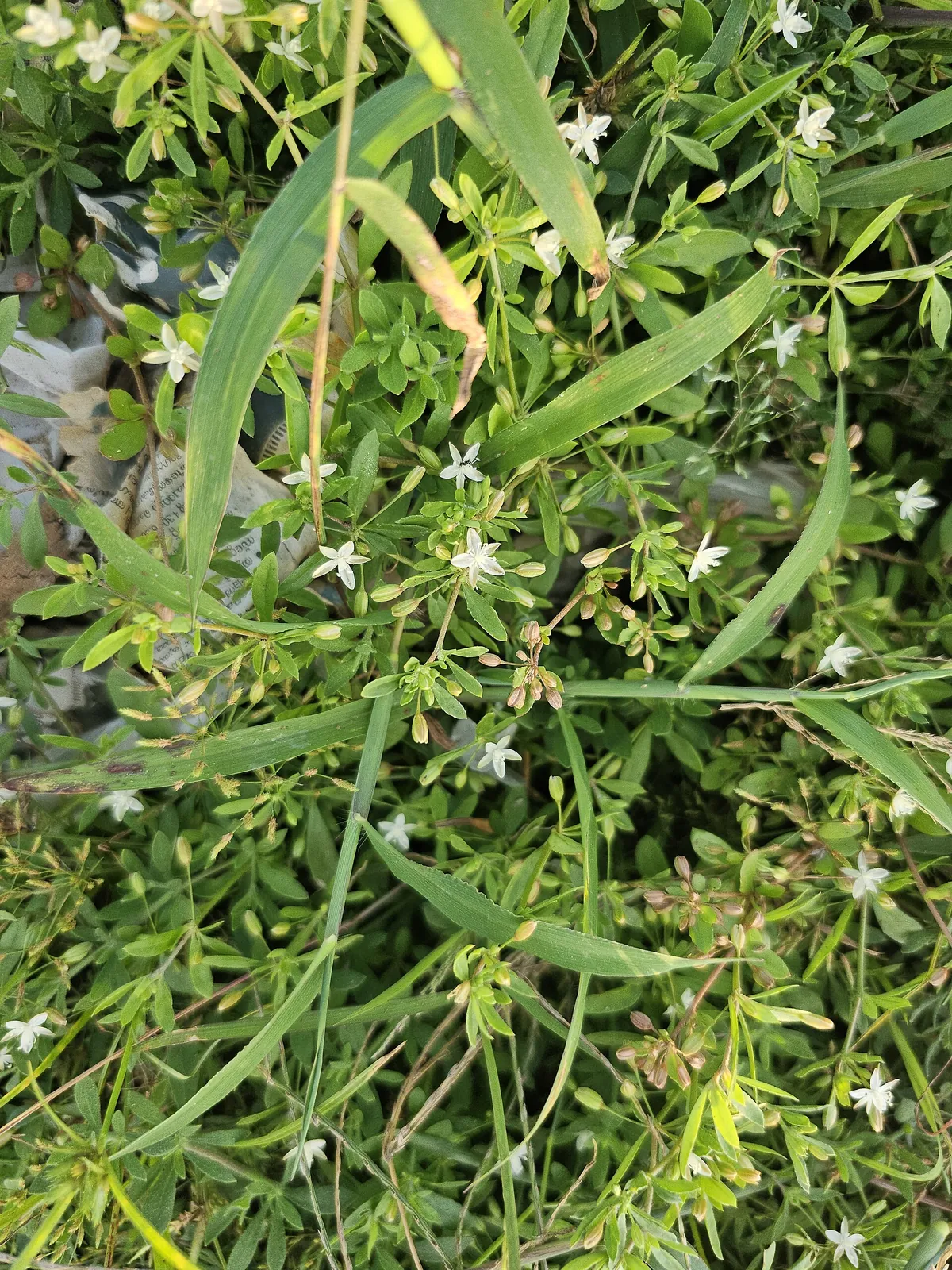
Glinus oppositifolius(rau đắng đất/ผักแก่นขม)の生育株。地面を這う対生の葉と、その間に咲く小さな白い星形の花が写っている。
写っているもの: Glinus oppositifolius部位・状態: 地面を這う対生の葉と小さな白い星形の花(開花期の全草)
写真: Gannu03/ CC BY-SA 4.0/ 原画像/ 台帳の原画像
写真の範囲と来歴
被写体の確認: 原典の記載による同定。原典ページはタイでの野外個体として写真を掲載。苦味研究所または専門家による再同定は行っていない。
掲載画像: Wikimedia Commons の1920px版。苦味研究所では切り抜き・色調変更なし。 表示用には幅1200px上限のWebPを配信し、台帳の原画像は上のリンクから確認できます。
On this page (9 sections)
Reading the bitterness
Glinus oppositifolius is a wild plant in the carpetweed family, recorded under the local name phak kaen khom (ผักแก่นขม) in an ethnobotanical survey in Pa Tio District, Yasothon Province, northeastern Thailand. The survey lists it as a wild plant used to add bitterness to dishes, but it covers 1 region and does not specify which dishes use it.
In Vietnam it is called rau đắng đất (also rau đắng lá vòng), and folk-medicinal uses for fever reduction, liver disease, and jaundice are recorded. The source lists saponins (including spergulacin, spergulacin A, glinosid, and spergulin A) and flavonoids as the main constituents of the whole plant. Its primary sources are not specified, however, so this information must be treated as preliminary. Edible use in soups or porridge in Vietnam cannot be confirmed from the materials available here.
Sources for this overview
Ethnobotanical study of wild edible plants in Pa Tio District, Yasothon Province, Thailand
Checked for this overview: Checked the description of its use as a wild plant to add bitterness in northeastern Thailand. / Checked its record as a wild plant in an ethnobotanical survey.
Rau dang dat - Glinus oppositifolius, Molluginaceae
Checked for this overview: Checked the Vietnamese names and the description of folk use for fever, liver disease, and jaundice. / Checked the description of saponins and flavonoids in the whole plant.
Other names: rau đắng đất (vi), rau đắng lá vòng (vi), ผักแก่นขม (th), Glinus oppositifolius (L.) Aug.DC. (la)
Follow the connections
rau dang greens →is prepared from→ Glinus oppositifolius
Structured claims — open a section to read each claim's confidence, evidence and limits
Composition and content (2)
Scope: Whole plant.
Note: An educational university page that does not explicitly cite primary literature.
Show data
organism-glinus-oppositifolius —contains→ "Mainly saponins (including spergulacin, spergulacin-A, glinosid, and spergulin-A) and flavonoids."Scope: A connection to a plant recorded in northeastern Thailand as a wild plant that adds bitterness
Note: Does not establish identity with the Vietnamese dish name canh rau dang.
Show data
ingredient-rau-dang —is_prepared_from→ organism-glinus-oppositifoliusHow processing and cooking change it (1)
Scope: Pa Tio District, Yasothon Province, Thailand (an ethnobotanical survey of 50 people)
Note: One of the few examples where "Used in cooking to add bitterness" is stated explicitly.
Show data
organism-glinus-oppositifolius —is_used_in→ "Use as a wild edible plant (local name ผักแก่นขม, Phak Kaen Khom) for adding bitterness to dishes"Culture (1)
Scope: Vietnam.
Note: Edible use in southern Vietnam (soups or porridge) was not included because no accessible source was secured in this round.
Show data
organism-glinus-oppositifolius —is_documented_as_having→ "The Vietnamese name rau đắng đất (also rau đắng lá vòng) and recorded folk-medicinal use for fever reduction, liver disease, and jaundice."