quinolizidine alkaloids
compound class / compound-class-quinolizidine-alkaloids
キノリジジンアルカロイド
Quinolizidine alkaloids: a group of bitter alkaloids in legume plants such as Lupinus (including lupanine, sparteine, etc.). Total QA content serves as the standard for distinguishing bitter-tasting and sweet-tasting varieties.
Photographs (captions in Japanese)
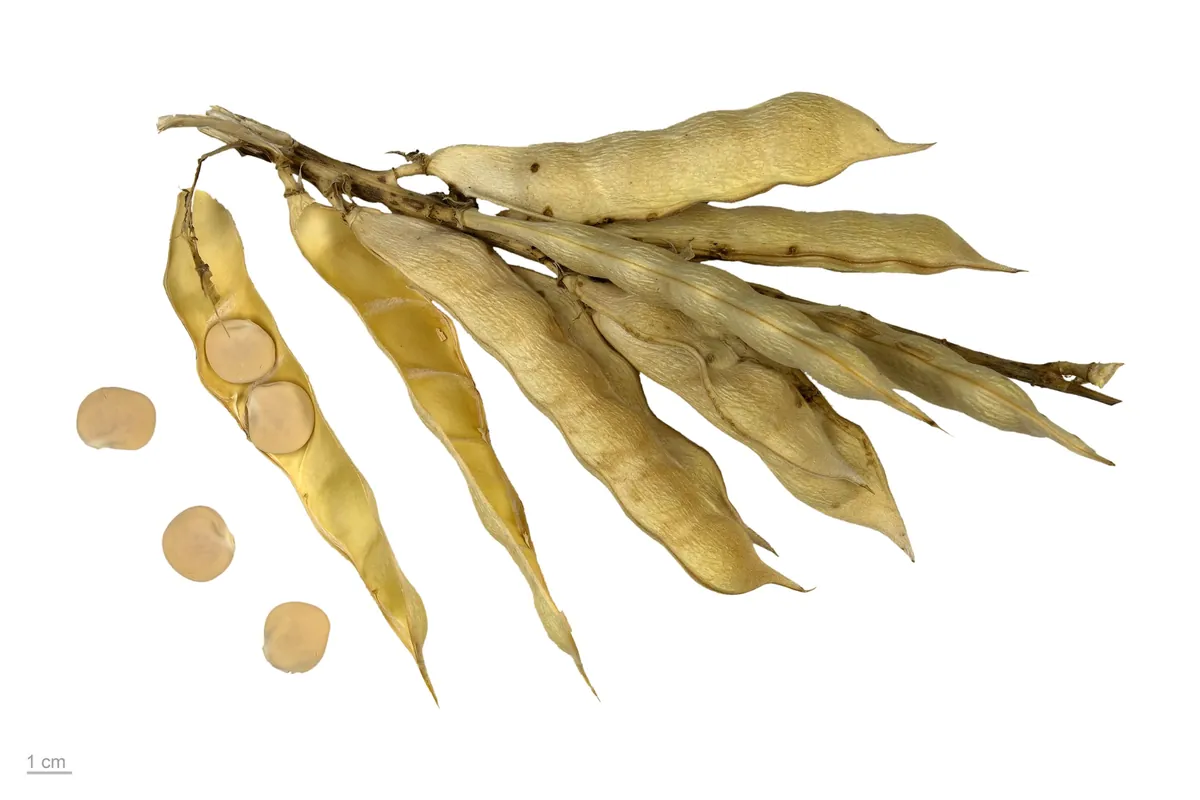
白花ルピナス(Lupinus albus)の種子標本。ルパニン・スパルテインなどのキノリジジンアルカロイド群の代表的な給源であるマメ科ルピナス属の種子の写真。
原料写っているもの: Lupinus albus(白花ルピナス)部位・状態: 種子の標本
写真: Roger Culos/ CC BY-SA 4.0/ 原画像/ 台帳の原画像
写真の範囲と来歴
被写体の確認: 原典の記載による同定。化合物そのものの写真ではなく給源植物の種子。
掲載画像: Wikimedia Commons の原寸ファイルを sips で長辺2400pxに縮小。苦味研究所では切り抜き・色調変更なし(リサイズのみ)。 表示用には幅1200px上限のWebPを配信し、台帳の原画像は上のリンクから確認できます。
On this page (10 sections)
Reading the bitterness
Quinolizidine alkaloids are a group of bitter alkaloids contained in legume plants such as Lupinus seeds. Wild Lupinus is described as containing these bitter alkaloids in high amounts, and the very standard for distinguishing cultivated 「苦味品種」(bitter-tasting varieties) and 「甘味品種」(sweet-tasting varieties) is determined by total alkaloid content in seeds. Bitter-tasting varieties exceed 10,000 mg per 1 kilogram, and sweet-tasting varieties are described as below 500 mg per 1 kilogram. For Lupinus mutabilis, a report exists of total alkaloid content of 31,000 mg per 1 kilogram; however, only 1 paper reported this value, and it cannot be said to represent the species as a whole.
From this concern regarding toxicological effects, the scientific opinion of the European Food Safety Authority (EFSA) concluded that available data were insufficient to set health-based guidance values for quinolizidine alkaloids. Accordingly, instead of presenting a fixed daily intake limit, a margin of exposure approach is used, which evaluates the safety margin between exposure and toxicological effects. This is a summary of a regulatory conclusion and is not health advice from this encyclopedia.
Sources for this overview
Checked for this overview: Bitter-tasting varieties >10,000 mg/kg and sweet-tasting varieties <500 mg/kg classification, and single report of L. mutabilis at 31,000 mg/kg. / Description that wild Lupinus contains high concentrations of bitter alkaloids. / Conclusion that data were insufficient for HBGV setting and the margin of exposure approach was adopted.
Follow the connections
Andean lupin →contains→ quinolizidine alkaloids
quinolizidine alkaloids →— sensory attribute→ bitterness →can be measured separately …→ astringency
lupin debittering →reduces→ quinolizidine alkaloids
Measured values (1)
| Kind | Compound | Target | Value | Conditions | Source |
|---|---|---|---|---|---|
| concentration | quinolizidine alkaloids | Andean lupin | 31000 mg/kg | Lupinus mutabilis seeds (variety not stated). (EFSA explicitly states that there is only one report of total QA.) | EFSA CONTAM Panel, 2019 |
Values are the reported values of each source (with units and conditions). Thresholds and EC50 depend on the panel and method; they are not single true values.
Structured claims — open a section to read each claim's confidence, evidence and limits
Composition and content (1)
Scope: Seeds
Note: The total QA figure of 31,000 mg/kg for L. mutabilis is a single report (EFSA states explicitly: "Only one paper reporting the total amount of QAs was identified").
Show data
organism-lupinus-mutabilis —contains→ compound-class-quinolizidine-alkaloidsSensory (1)
Scope: EFSA description of wild Lupinus seeds (bitter tasting QAs).
Show data
compound-class-quinolizidine-alkaloids —has_sensory_attribute→ sensation-bitterHow processing and cooking change it (1)
Scope: Layer: Food. Lupinus albus seeds, comparative treatment experiment with control (water, NaCl solution) and experimental groups (0.5%, 1% NaCl or citric acid solutions, with and without ultrasound). Taste profile measurement by electronic tongue.
Show data
process-lupin-debittering —reduces→ compound-class-quinolizidine-alkaloidsSafety and regulation (1)
Scope: Conclusion of EFSA CONTAM panel.
Show data
compound-class-quinolizidine-alkaloids —has_insufficient_evidence_for→ "Setting of health-based guidance values (HBGV). EFSA 2019 instead adopted the margin of exposure (MOE) approach."