Andean lupin
organism / organism-lupinus-mutabilis
アンデスルピナス / Lupinus mutabilis
Andean lupin is a legume crop native to the Andes. Its seeds are high in protein but contain bitter quinolizidine alkaloids; they are traditionally debittered with water before eating.
Photographs (captions in Japanese)
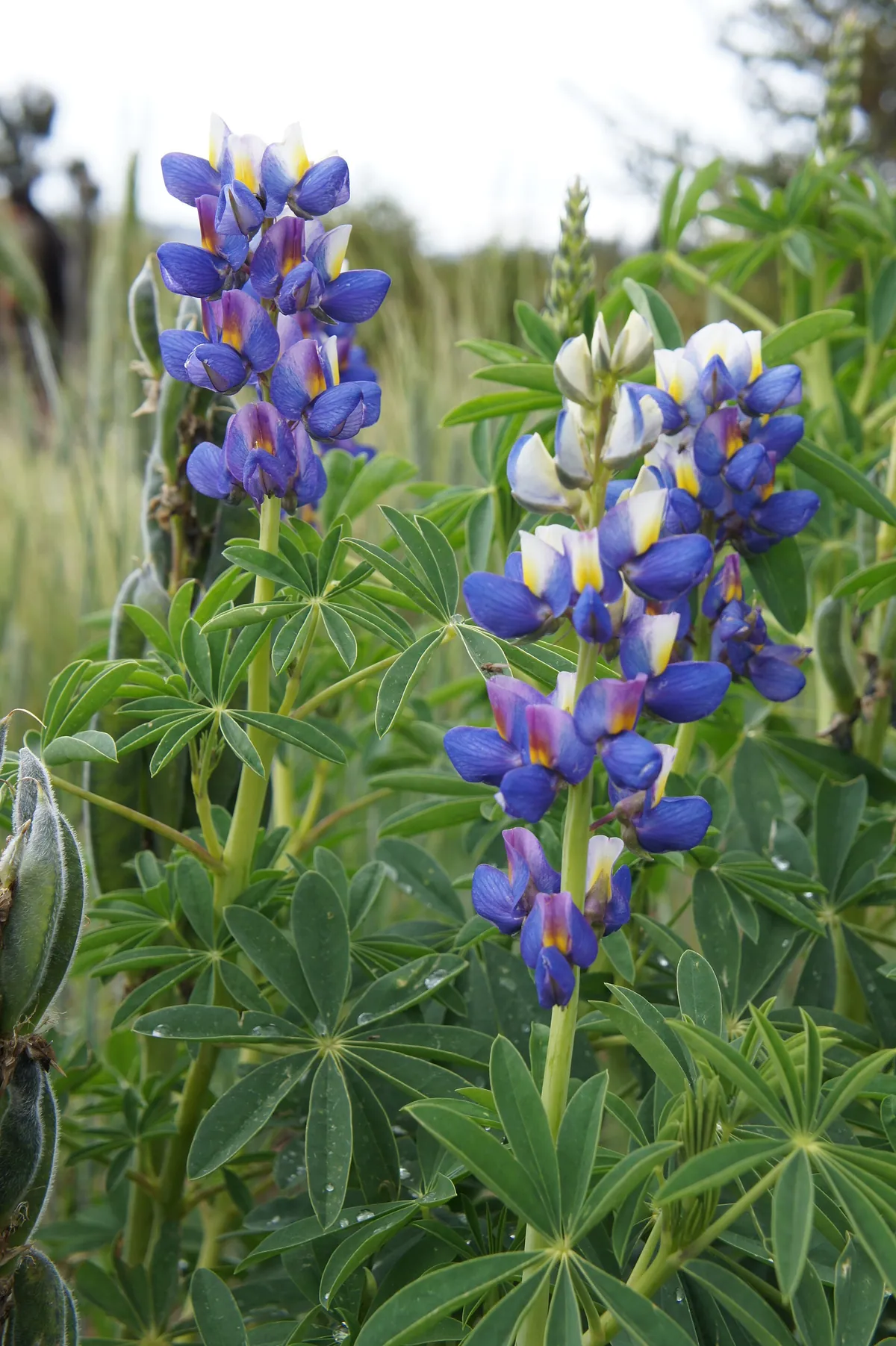
アンデスルピナス(Lupinus mutabilis, タルウィ)の栽培株。ペルー・プーノ近郊の畑で、青紫と白の花を付けた花穂と掌状複葉が写っている。
写っているもの: Lupinus mutabilis部位・状態: 栽培株の開花期の姿(青紫と白の花穂、掌状複葉)
写真: Michael Hermann/ CC BY-SA 4.0/ 原画像/ 台帳の原画像
写真の範囲と来歴
被写体の確認: 原典の記載による同定。原典はペルー・プーノ近郊、標高約3800mでの栽培個体(食用種子を目的とした栽培)として記載。専門家による再同定は行っていない。
掲載画像: Wikimedia Commons の1920px版。苦味研究所では切り抜き・色調変更なし。 表示用には幅1200px上限のWebPを配信し、台帳の原画像は上のリンクから確認できます。
On this page (7 sections)
Reading the bitterness
Andean lupin (Lupinus mutabilis) is a legume crop native to the South American Andes. Its seeds are high in protein but contain bitter quinolizidine alkaloids (QA), so they have traditionally been soaked in water to remove bitterness before eating. Total QA content is described as below 500 mg/kg in sweet varieties and above 10,000 mg/kg in bitter varieties; 1 report of 31,000 mg/kg for L. mutabilis has been identified. The assessment itself explicitly notes that this value comes from that 1 report only and is not corroborated by multiple studies.
The alkaloid composition of the seeds is not uniform either. A public assessment summarizes lupanine as accounting for 47–58% of the quinolizidine alkaloids in L. mutabilis, followed by sparteine at 7.4–16% and 13α-hydroxylupanine at 7–15%. The cultivars in the underlying data are not specified, so it is not known which cultivars this composition represents.
Sources for this overview
Checked for this overview: Checked the QA content categories for sweet and bitter varieties and the value of 31,000mg/kg. / Checked the composition figures in the main text, including 47-58% for lupanine.
Lupinus mutabilis: Composition, Uses, Toxicology, and Debittering
Checked for this overview: Checked the statement that lupins contain bitter alkaloids.
Follow the connections
Andean lupin →contains→ quinolizidine alkaloids →— sensory attribute→ bitterness
lupanine →is the major quinolizidine …→ Andean lupin
Measured values (1)
| Kind | Compound | Target | Value | Conditions | Source |
|---|---|---|---|---|---|
| concentration | quinolizidine alkaloids | Andean lupin | 31000 mg/kg | Lupinus mutabilis seeds (variety not stated). (EFSA explicitly states that there is only one report of total QA.) | EFSA CONTAM Panel, 2019 |
Values are the reported values of each source (with units and conditions). Thresholds and EC50 depend on the panel and method; they are not single true values.
Hypotheses and recipe candidates for this entry are on the Japanese page.
Structured claims — open a section to read each claim's confidence, evidence and limits
Composition and content (3)
Scope: Seeds
Note: The total QA figure of 31,000 mg/kg for L. mutabilis is a single report (EFSA states explicitly: "Only one paper reporting the total amount of QAs was identified").
Show data
organism-lupinus-mutabilis —contains→ compound-class-quinolizidine-alkaloidsScope: EFSA 2019's table of QA composition by species
Show data
compound-lupanine —is_the_major_quinolizidine_alkaloid_of→ organism-lupinus-mutabilisScope: Lupinus mutabilis
Note: An example of debittering through breeding, in contrast to the existing process-lupin-debittering (traditional debittering by water treatment). However, whether 'Inti' has become widely commercially adopted cannot be confirmed from this material.
Show data
organism-lupinus-mutabilis —has_cultivar→ "'Inti', bred through reselection of a low-alkaloid line. Alkaloid content under 0.02%. Recorded as bred through reselection in the early 1980s (Gross et al. 1988)."