Lisu
culture / culture-lisu
リス族
Lisu is an ethnolinguistic group in Southeast Asia and southwestern China.
Photographs (captions in Japanese)
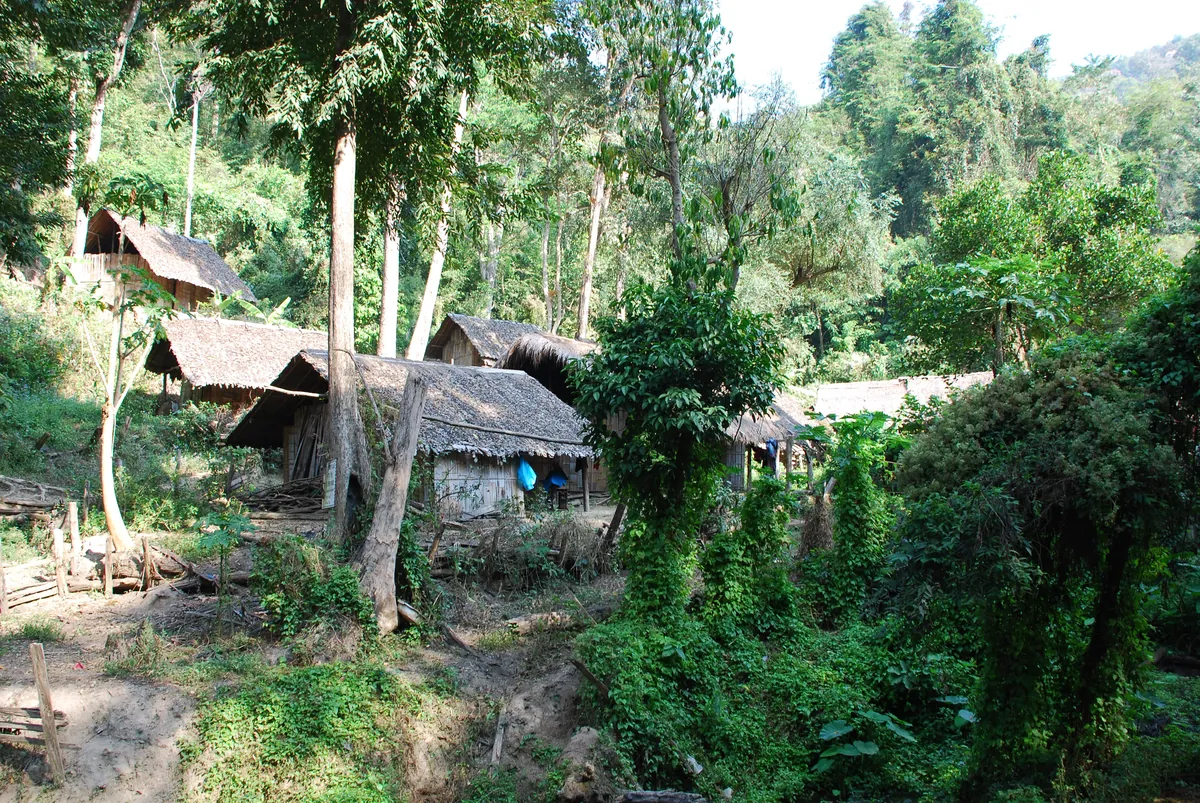
タイ・チェンダオ(Chiang Dao)近郊にあるリス族の山地集落(Lisu hill tribe village)。茅葺き屋根の家屋が森の中に点在する景観で、人物は写っていない。
現地観測写っているもの: 該当なし(民族・生活文化)部位・状態: 山地集落の景観
写真: Gunther Hagleitner/ CC BY 2.0/ 原画像/ 台帳の原画像
写真の範囲と来歴
被写体の確認: 原典の記載による同定。候補には民族衣装を着た少女2名の肖像写真もあったが、方針(人物主体不可)に基づき、人物の写らない集落景観を採用した。
掲載画像: リサイズ・トリミング・色調変更なし。Wikimedia Commons のオリジナル画像をそのまま使用。 表示用には幅1200px上限のWebPを配信し、台帳の原画像は上のリンクから確認できます。
On this page (7 sections)
Reading the bitterness
The Lisu are an ethnolinguistic group spread across Southeast Asia and southwestern China. What can be confirmed here is one Thai cultural-media article on Lisu food culture that presents 「ต้มขม」 (in translation: "tom khom, bitter soup") as a Lisu dish. This does not mean that every dish with the same name originated among the Lisu. That single article cannot stand for same-named dishes found in other regions or among other peoples.
A separate study provides more detail on Lisu use of edible plants. An ethnobotanical survey of 40 villages belonging to 7 ethnic groups in Chiang Mai, Chiang Rai, and Mae Hong Son records that Lisu villages use young shoots of Elsholtzia griffithii (local name Lum Pum) in pumpkin soup and young shoots of E. kachinensis (local name Xiao Chai) in bone soup; both are also eaten fresh as side-dish vegetables. The survey treats these herbs as aromatic vegetables and does not describe them as bitter. This is background evidence for a Lisu practice of adding herbs to soup, not evidence for the bitterness of the previously mentioned dish.
Sources for this overview
Checked for this overview: Confirmed that the dish-introduction article explicitly presents this dish as Lisu, within the article’s limited scope.
Checked for this overview: Confirmed the study’s record of fresh and soup uses for two Elsholtzia species and their aromatic quality.
Other names: ลีซู (th)
Follow the connections
Tom Khom →is documented in→ Lisu
Structured claims — open a section to read each claim's confidence, evidence and limits
Culture (3)
Scope: A recipe variant presented in one Thai cultural-media record
Note: Do not infer that every Tom Khom belongs to the Lisu.
Show data
dish-tom-khom —is_documented_in→ culture-lisuScope: Lisu villages within a survey of 40 villages and 7 ethnic groups across Chiang Mai, Chiang Rai, and Mae Hong Son.
Note: This records a Lisu practice of adding fresh aromatic herbs to soups and provides context for a Tom Khom variant using herbs. The Elsholtzia species are described in this source as aromatic; it does not record them as bitter.
Show data
culture-lisu —is_documented_using→ "Young shoots of Elsholtzia griffithii (local name Lum Pum) used in pumpkin soup, and young shoots of E. kachinensis (local name Xiao Chai) used in bone soup. Both are also eaten fresh as side-dish vegetables."Scope: Chiang Rai Province (Kok River–Mekong basin).
Note: Checked only at the abstract level (full-text PDF not obtained). The abstract does not name individual bitter plant species, so none are claimed here.
Show data
culture-lisu —is_documented_in→ "A biodiversity and food-security survey of 9 ethnic groups in the Kok River–Mekong basin of Chiang Rai Province (recording 495 edible and medicinal plant species) collected and analyzed the nutritional value of 11 Lisu recipes."