Tom Khom
dish / dish-tom-khom
トムコム
Tom Khom is a group of northern Thai and highland dishes that share a name associated with bitterness. Their ingredients and cultural contexts may differ.
Photographs (captions in Japanese)
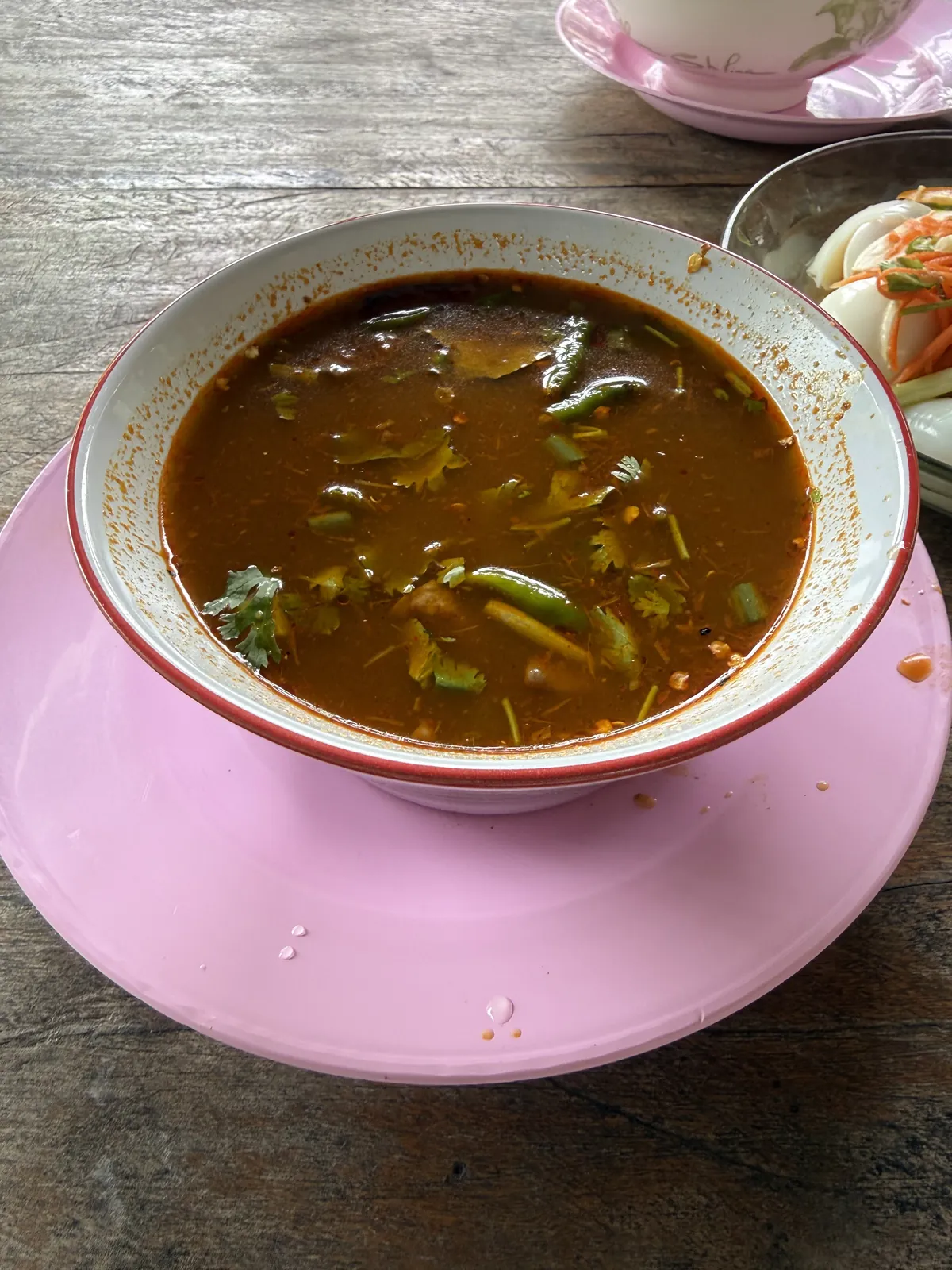
タイの、ラープを専門とする食堂で「ต้มขม(トムコム)」として提供された一杯。濃い褐色のスープに、青唐辛子、パクチー、レモングラスの繊維、肉片が浮かぶ。メニューのおすすめ欄に印字された定番料理としての一例であり、トムコム全体の標準形を示すものではない。
料理写っているもの: 該当分類群なし(提供された一杯のトムコム)部位・状態: 提供時の一杯(上面から)
写真: 苦味研究所(NIGAMI LAB)/ CC BY 4.0/ 原画像/ 台帳の原画像
写真の範囲と来歴
被写体の確認: 現地での暫定同定。運営者自身の撮影・一度の食事の記録。店のメニューには ต้มขม がラープ専門店のおすすめ欄に印字されていた。運営者の記憶では牛の胆汁を使った一杯で、チェンマイ山間部の温泉街の食堂(2026-09-16 本人確認、about 頁の記述と一致)。
掲載画像: 撮影者原本から時計回りに90度回転のみ。切り抜き・色調変更なし。撮影機材情報・位置情報はEXIFに含まれない。回転後も EXIF の向きタグ(6)が残っていたため 2026-09-04 にタグを 1 に修正(画素は無変更。表示側で二重に回転されていた)。 表示用には幅1200px上限のWebPを配信し、台帳の原画像は上のリンクから確認できます。
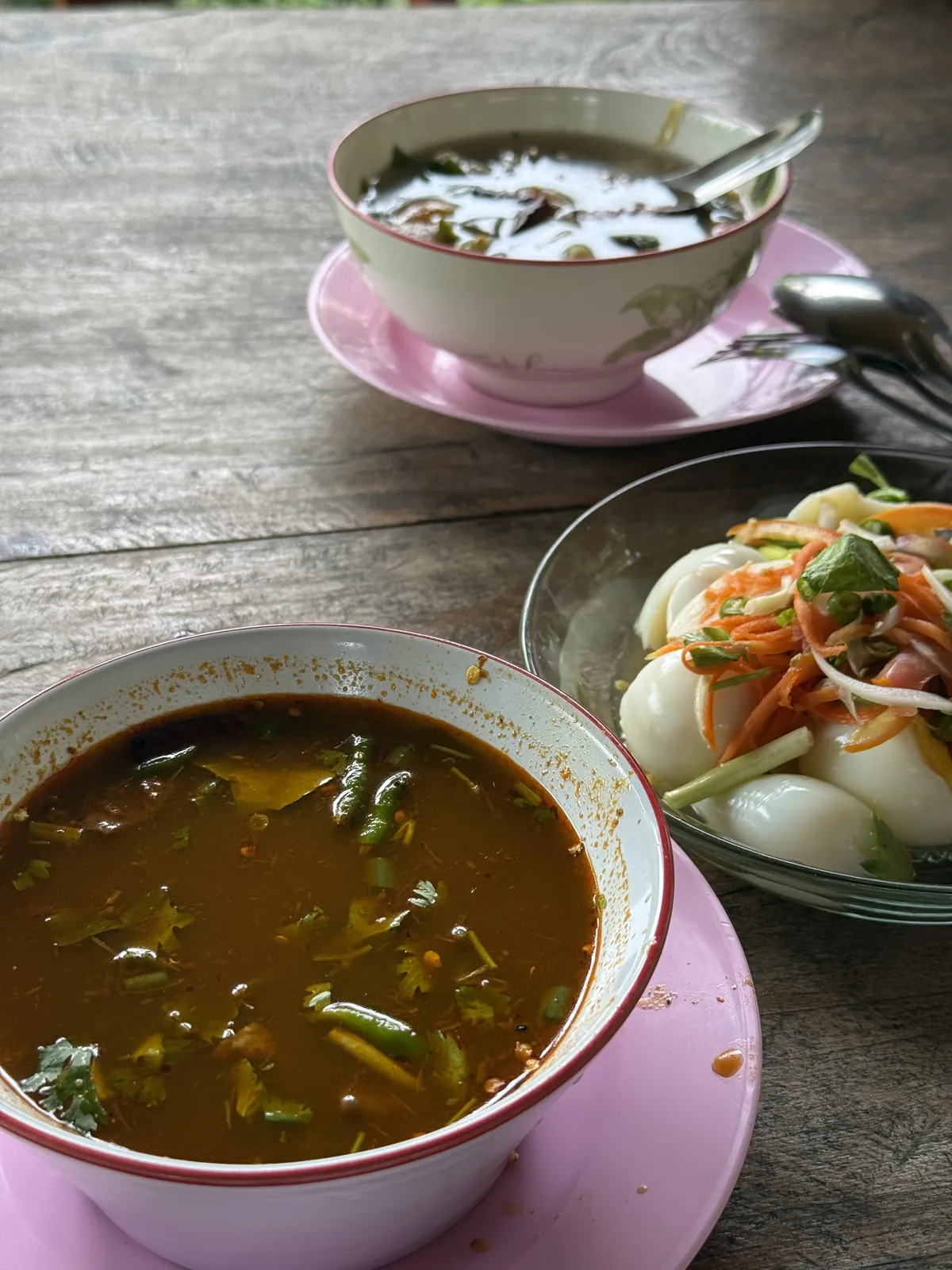
トムコムが出された食卓。手前にトムコム、奥にココナッツミルク系の白い椀、右に鉱泉水ゆで卵のヤム(メニュー表記 ยำไข่ต้มน้ำแร่)。一度の食事の並びの記録であり、決まった組み合わせを示すものではない。
現地観測写っているもの: 該当分類群なし(提供された一杯のトムコム)部位・状態: 食卓での提供文脈
写真: 苦味研究所(NIGAMI LAB)/ CC BY 4.0/ 原画像/ 台帳の原画像
写真の範囲と来歴
被写体の確認: 現地での暫定同定。運営者自身の撮影・一度の食事の記録。店のメニューには ต้มขม がラープ専門店のおすすめ欄に印字されていた。運営者の記憶では牛の胆汁を使った一杯で、チェンマイ山間部の温泉街の食堂(2026-09-16 本人確認、about 頁の記述と一致)。
掲載画像: 撮影者原本から時計回りに90度回転のみ。切り抜き・色調変更なし。撮影機材情報・位置情報はEXIFに含まれない。回転後も EXIF の向きタグ(6)が残っていたため 2026-09-04 にタグを 1 に修正(画素は無変更。表示側で二重に回転されていた)。 表示用には幅1200px上限のWebPを配信し、台帳の原画像は上のリンクから確認できます。
On this page (8 sections)
Reading the bitterness
Tom Khom (ต้มขม) is a group of dishes whose Thai name means 「苦いスープ」 (in translation: "bitter soup"). A record from a Thai cultural program released in 2017 features the Tom Khom of Lisu people living in the highlands of northern Thailand. It presents the dish as a soup centered on bitterness, with the locally gathered forest medicinal herb di-ngu-wa (ดีงูหว้า, whose scientific species identification has not been confirmed) as its main ingredient. However, this is an account from a single cultural media source. It does not locate the dish at the village or province level, nor does it establish a composition shared by every dish with the same name.
The same record places this Tom Khom in celebratory rituals, including a ceremony to call back the soul, as a symbol of health and strength. It also explicitly presents the dish as Lisu food. However, this remains an account from a single cultural media source, without independent support from an ethnographic study. This source alone cannot determine how far dishes called Tom Khom share ingredients or intensity of bitterness across regions and cooks.
Sources for this overview
Checked for this overview: Checked that the dish was introduced as a soup with bitterness as its theme. / Checked that the record concerns a highland community in northern Thailand. / Checked the description that the herb di-ngu-wa is treated as the main ingredient. / Checked the dish's place in auspicious rituals, including soul-calling. / Checked that it was presented as Lisu food.
Other names: ต้มขม (th), tom khom (th-Latn)
Follow the connections
Tom Khom →includes→ dee ngu wa
Tom Khom →is documented in→ Lisu
Tom Khom →is documented in→ Northern Thailand
Tom Khom →has a defining sensory theme→ bitterness →can be measured separately …→ astringency
Hypotheses and recipe candidates for this entry are on the Japanese page.
Structured claims — open a section to read each claim's confidence, evidence and limits
How processing and cooking change it (2)
Scope: The Isan dish 「ต้มขมไส้อ่อน」 (in translation: "bitter soup with pig small intestine"). One entry from a user-submitted recipe site (Wongnai)
Show data
dish-tom-khom —includes→ seasoning-khi-phiaScope: One individually submitted recipe on the Thai recipe-sharing site Cookpad.
Note: This recipe is another example of the Tom Khom offal-and-khi-phia type, differing in its use of beef from ต้มขมไส้อ่อน, in the existing wave24-larb-khom track, which uses pork small intestine and น้ำเพี้ย. It is only one user-submitted recipe and does not specify a region (northern Thailand or Isan). It adds one more example with a different animal species in support of the hypothesis of an 「内臓・เพี้ย型ต้มขม」 (in translation: "offal-and-phia type of Tom Khom") left open in docs/tomkhom-research-dossier.md §3.3.
Show data
dish-tom-khom —includes→ "A user-submitted recipe called 「ต้มขมเครื่องในวัว」 (in translation: "Tom Khom with beef offal") uses "เครื่องในวัว 500 กรัม" (in translation: "500 g of beef offal") as its main ingredient. The offal is simmered for 1–2 hours with water, ข่า (galangal), 5 slices, lemongrass, and kaffir lime leaves; then 「ขี้เพี้ยวัว」 (in translation: "beef khi phia") is added, 2–3 tablespoons, to give it bitterness. It is finished with chili powder, khao khua (toasted rice), scallions, and cilantro."Culture (5)
Scope: A Lisu variant of Tom Khom recorded in a Thai Health media report
Note: The herb's scientific identification remains unresolved, and this recipe should not be generalized to all Tom Khom.
Show data
dish-tom-khom —includes→ organism-dee-ngu-waScope: A single cultural media record.
Note: Independent ethnographic corroboration is needed before broad publication.
Show data
dish-tom-khom —is_consumed_in→ "Soul-calling ceremonies and other auspicious rituals in the recorded Lisu context."Scope: A recipe variant presented in one Thai cultural-media record
Note: Do not infer that every Tom Khom belongs to the Lisu.
Show data
dish-tom-khom —is_documented_in→ culture-lisuScope: A media record of a highland community in northern Thailand.
Note: This record does not establish a detailed location at the village or province level.
Show data
dish-tom-khom —is_documented_in→ region-northern-thailandScope: The recorded Lisu dish name and preparation are presented explicitly as Tom Khom, that is, a bitter soup
Note: Even recipes sharing the same name can differ in bittering ingredient and intensity.
Show data
dish-tom-khom —has_defining_sensory_theme→ sensation-bitter