turnip root
ingredient / ingredient-turnip-root
カブ / Brassica rapa subsp. rapa
Turnip root is the root of a turnip. Heating methods such as boiling, steaming, roasting, and sautéing can change not only bitterness but also the combination of sweetness, aroma, and texture.
Photographs (captions in Japanese)
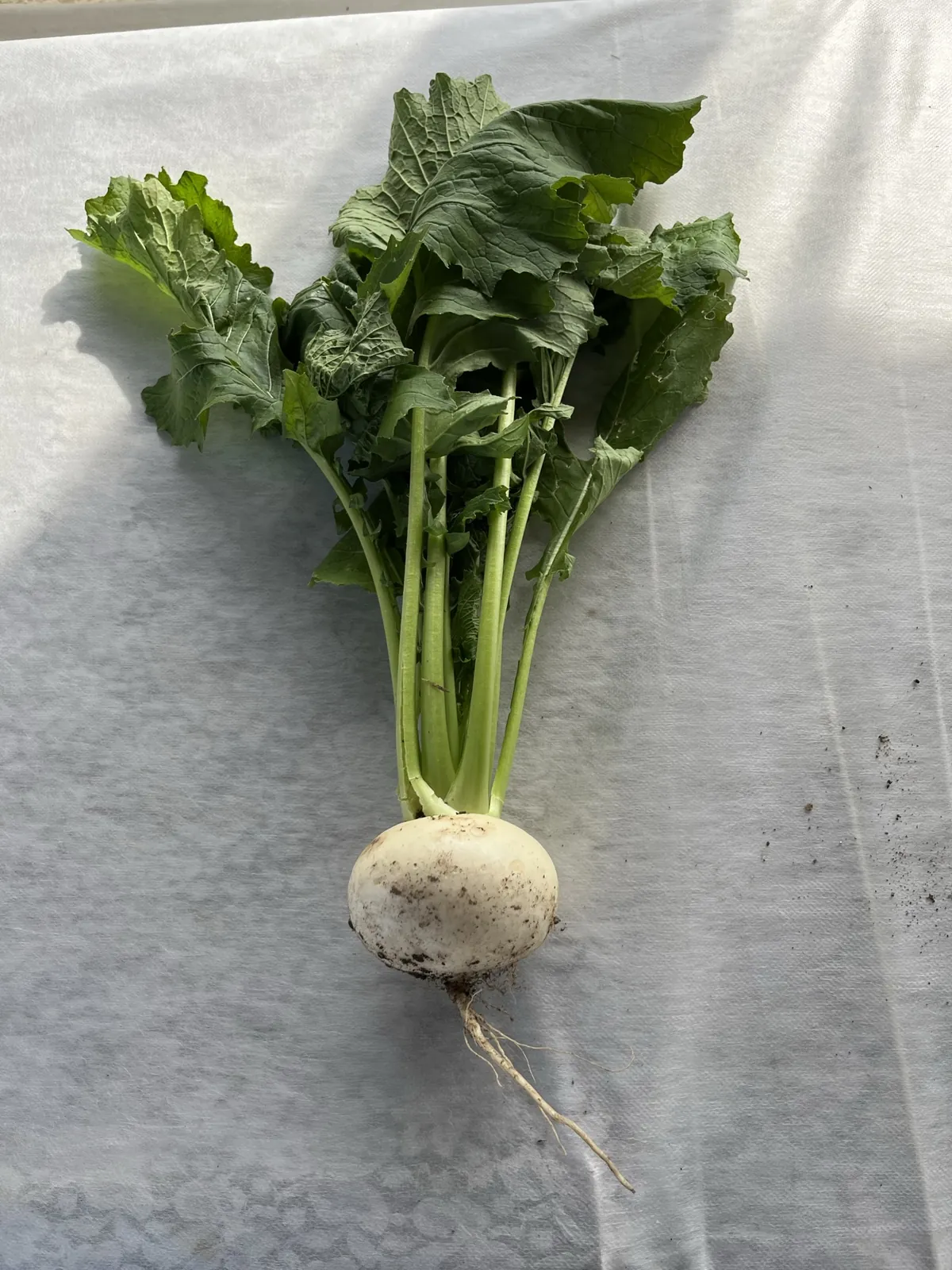
カブ(Brassica rapa subsp. rapa)の根を1株、葉つきのまま写したもの。畑から掘り上げたばかりで、白い球形の根に土が残り、下端には細いひげ根が伸びている。原典ページは『畑から掘り上げてまだ土がついたままの白カブ』と記載している。
写っているもの: Brassica rapa subsp. rapa部位・状態: 畑から掘り上げたばかりの状態。土のついた白い根球部、細いひげ根、緑の葉と葉柄が一体のまま写っている
写真: Miya/ CC BY-SA 4.0/ 原画像/ 台帳の原画像
写真の範囲と来歴
被写体の確認: 原典の記載による同定。原典ページは和名『白カブ』と記載するのみで、学術種名の明記はない。専門家による再同定は行っていない。
掲載画像: Wikimedia Commons の原寸版。苦味研究所では切り抜き・色調変更なし。 表示用には幅1200px上限のWebPを配信し、台帳の原画像は上のリンクから確認できます。
On this page (6 sections)
Reading the bitterness
Turnip (Brassica rapa subsp. rapa) is a vegetable eaten for its root, and heating methods such as boiling, steaming, roasting, and sautéing are described as affecting the combination of bitterness, sweetness, aroma, and texture. In a UK study, turnips were prepared in 4 ways—boiled and puréed, steamed and puréed, flame-roasted, and sautéed—and a trained panel of 10 described their sensory profiles. Saltiness, umami, and sweetness differed by cooking method, but bitterness did not differ significantly: all samples were perceived as bitter under every method.
Within this experiment, then, one cannot say 『茹でれば必ず苦味が減る』 (in translation: "boiling always reduces bitterness"). The main effect of cooking method on bitterness was p=0.38, not a statistically significant difference. In a separate comparison with 74 UK adults, overall liking and liking for taste differed significantly by cooking method, and methods yielding sweeter profiles were preferred. But bitterness intensity alone cannot explain this: texture, appearance, and aroma changed at the same time. Liking or disliking a bitter vegetable cannot be attributed to bitterness intensity alone.
An analysis pairing data from a sensory panel of 9 with LC-MS glucosinolate measurements in 7 independent batches of steamed turnip purée found total glucosinolate content ranging from 16.07 to 44.74 μmol/g dry weight. Most individual glucosinolates correlated positively with bitterness but not significantly; only 4-methoxyglucobrassicin showed a significant correlation (r=0.82, p=0.02). Glucobrassicin also had a correlation coefficient of 0.75 (p=0.052), but did not reach statistical significance. Bitterness and sweetness were negatively correlated as well.
Sources for this overview
Checked for this overview: Confirmed that bitterness did not differ significantly among the 4 cooking methods. / Confirmed differences in liking by cooking method and the involvement of factors besides bitterness. / The cooking-method main effect on bitterness in heated turnips was nonsignificant at p=0.38.
Checked for this overview: Only 4-methoxyglucobrassicin had a significant correlation.
Follow the connections
turnip root →— perceived bitterness is a…→ glucosinolates →are not uniformly→ bitterness
Structured claims — open a section to read each claim's confidence, evidence and limits
Sensory (3)
Scope: A trained panel of 10 compared UK turnips
Note: All samples were perceived as bitter, but the main effect of cooking method on bitterness was p=0.38. Do not generalize this to 『茹でれば必ず苦味が減る』 (in translation: "boiling always reduces bitterness").
Show data
ingredient-turnip-root —has_perceived_bitterness_unchanged_by→ "4 cooking methods: boiled purée, steamed purée, roasted, and stir-fried"Scope: A liking comparison of 4 cooking methods by 74 UK adults
Note: Overall liking and taste liking differed by cooking method, but this is not attributed to bitterness intensity alone.
Show data
ingredient-turnip-root —has_liking_associated_with→ "a sensory profile — including sweetness, umami, aroma, and texture — that varies by cooking method"Scope: Layer: Food. Analysis matching data from a single sensory panel of 9 persons with LC-MS quantification of glucosinolates. 7 independent batches of steamed-pureed turnip.
Note: The only significant correlation was 4-methoxyglucobrassicin (r=0.82, p=0.02) (the significance of the negative correlation between bitterness and sweetness has not been confirmed from the materials).
Show data
ingredient-turnip-root —has_perceived_bitterness_affected_by→ compound-glucosinolates