bitter leaf
organism / organism-vernonia-amygdalina
ビターリーフ / Vernonia amygdalina
Bitter leaf is a daisy-family shrub growing in tropical Africa. Its bitter leaves are boiled or washed by rubbing to adjust their bitterness and are used in Nigerian bitter-leaf soup and Cameroonian ndolé, among other dishes.
Photographs (captions in Japanese)
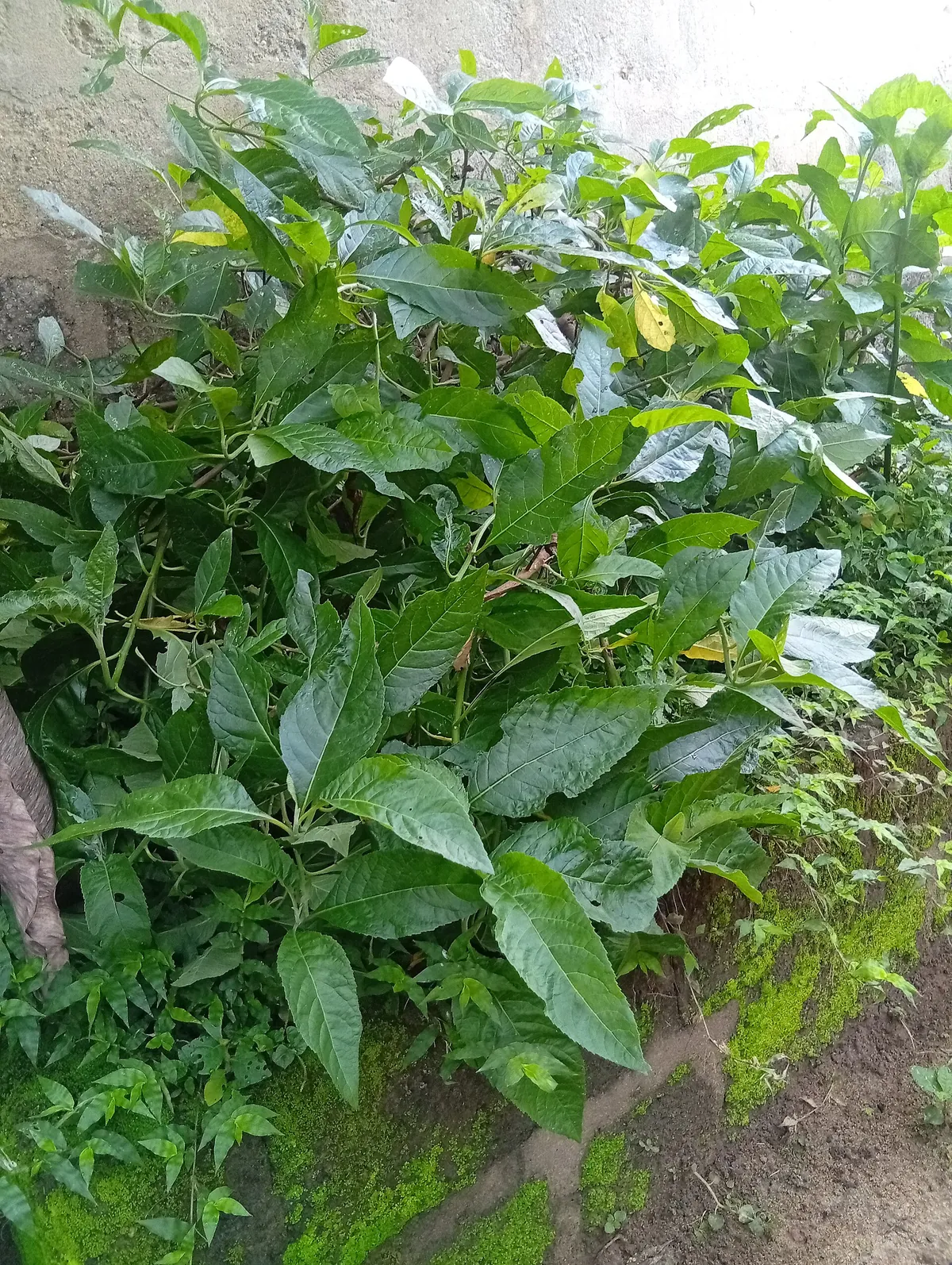
原典で Vernonia amygdalina とされるビターリーフの低木。壁際に茂る葉の形と生育時の姿を写す。
写っているもの: Vernonia amygdalina部位・状態: 生育中の低木と葉
写真: Paul The Writer/ CC0 1.0/ 原画像/ 台帳の原画像
写真の範囲と来歴
被写体の確認: 原典の記載による同定。種名は Commons の原典記載による。専門家による再同定は未実施。
掲載画像: Wikimedia Commons の1920px版。苦味研究所では切り抜き・色調変更なし。 表示用には幅1200px上限のWebPを配信し、台帳の原画像は上のリンクから確認できます。
On this page (10 sections)
Reading the bitterness
Vernonia amygdalina, called bitter leaf, is a daisy-family shrub of tropical Africa; its bitter leaves are the part that mainly reaches the table. Records describe the leaves being used in Nigeria as a green vegetable or a soup flavoring, especially as an ingredient in bitter-leaf soup. Leaves of the genus Vernonia are also used in Cameroonian ndolé, but species other than this one are named there as well.
In cooking, the choice is not simply between retaining strong bitterness and removing it altogether; it is adjusted to the desired level. Sources describe boiling the leaves, soaking them with several changes of water, and washing them by rubbing in cold or warm water. A food-systems study in southeastern Nigeria also records that they are usually washed before use. The sources do not, however, establish one uniform number of washes or level of bitterness remaining.
Bitter sesquiterpene lactones and steroid glycosides have been reported from this plant, but the set of compounds is not the same across plant parts or places of origin. An observation of wild chimpanzees in Tanzania selectively eating its pith also led to a proposed hypothesis that bitterness serves as a signal in selecting plants and plant parts. This is an intriguing hypothesis connecting behavior and constituents; it does not mean that the function has been directly demonstrated or that there is a health effect in humans.
Sources for this overview
Antioxidative and Chemopreventive Properties of Vernonia amygdalina and Garcinia biflavonoid
Checked for this overview: A review describing the bitter leaves and the origin of the common name bitter leaf. / A record of using the leaves as a vegetable and soup flavoring in Nigeria. / A review describing boiling, soaking with changes of water, and washing by rubbing.
Checked for this overview: A record of multiple Vernonia species being used in Cameroonian ndolé.
Igbo Traditional Food System: Documentation, Uses and Research Needs
Checked for this overview: A food-systems study recording that the leaves are usually washed before use in southeastern Nigeria.
Use of Vernonia amygdalina by wild chimpanzee: possible roles of its bitter and related constituents
Checked for this overview: A study that isolated constituent groups including bitter and non-bitter compounds. / A study proposing a hypothesis linking wild chimpanzee behavior and bitterness.
Bioactive sesquiterpene lactones from the leaves of Vernonia amygdalina
Checked for this overview: A study showing that different constituents were obtained from leaves from another place of origin.
Other names: Ewuro (yo), Onugbu (ig), Oriwo (bin), Ityuna (tiv), Chusar doki (ha)
Follow the connections
bitter leaf →— sensory attribute→ bitterness →can be measured separately …→ astringency
vernodalin →is a bitter principle of→ bitter leaf
bitter-leaf soup →contains→ bitter leaf
Structured claims — open a section to read each claim's confidence, evidence and limits
Composition and content (2)
Scope: Plant material from Mahale, Tanzania (including pith), and leaves from South Africa.
Note: Isolated compounds differ by plant part and place of origin (vernolide and vernodalol were reported from leaves).
Show data
organism-vernonia-amygdalina —contains→ "Bitter sesquiterpene lactones (vernodalin, vernolide, and hydroxyvernolide) and bitter steroid glycosides (vernonioside A1–A4)."Scope: Based on isolation and quantification reports.
Note: The source says "highly bitter constituents including vernodalin". No human bitterness-threshold measurement has been collected.
Show data
compound-vernodalin —is_a_bitter_principle_of→ organism-vernonia-amygdalinaSensory (1)
Scope: Fresh leaves; the origin of the common name 「ビターリーフ」 (in translation: "bitter leaf").
Show data
organism-vernonia-amygdalina —has_sensory_attribute→ sensation-bitterMechanism and receptors (1)
Scope: Observation of wild chimpanzees in Tanzania's Mahale Mountains and analysis of constituents.
Note: This is not a claim of medicinal efficacy itself but a hypothesis proposed by the source.
Show data
organism-vernonia-amygdalina —has_hypothesized_role_of_bitterness_as→ "A hypothesis that, when wild chimpanzees with parasite-related illness consume this species' pith, strongly bitter constituents (including vernodalin) serve as signals for selecting the plant and part and regulating the amount consumed."How processing and cooking change it (3)
Scope: Nigeria
Show data
dish-bitterleaf-soup —contains→ organism-vernonia-amygdalinaScope: Cameroon.
Note: The source names both V. amygdalina and V. calvoana. The object_entity refers only to the former.
Show data
dish-ndole —contains→ organism-vernonia-amygdalinaScope: A candidate structural component of a dish. Regional variation in ingredients is unconfirmed
Note: Source not connected. Does not indicate quantities or cooking conditions.
No source connected — this claim has not been verified yet. It is a general-knowledge placeholder, not a confirmed statement.
Show data
dish-ewuro-soup —includes→ organism-vernonia-amygdalina