soy isoflavone glycosides
compound class / compound-class-soy-isoflavone-glycosides
大豆イソフラボン配糖体
Soy isoflavone glycosides (daidzin, genistin, etc.) and their corresponding aglycones (daidzein, genistein, etc.) found in soy. Among soy glycoside components, they are reported as causative components of off-flavor (bitterness and astringency) alongside saponins.
Photographs (captions in Japanese)
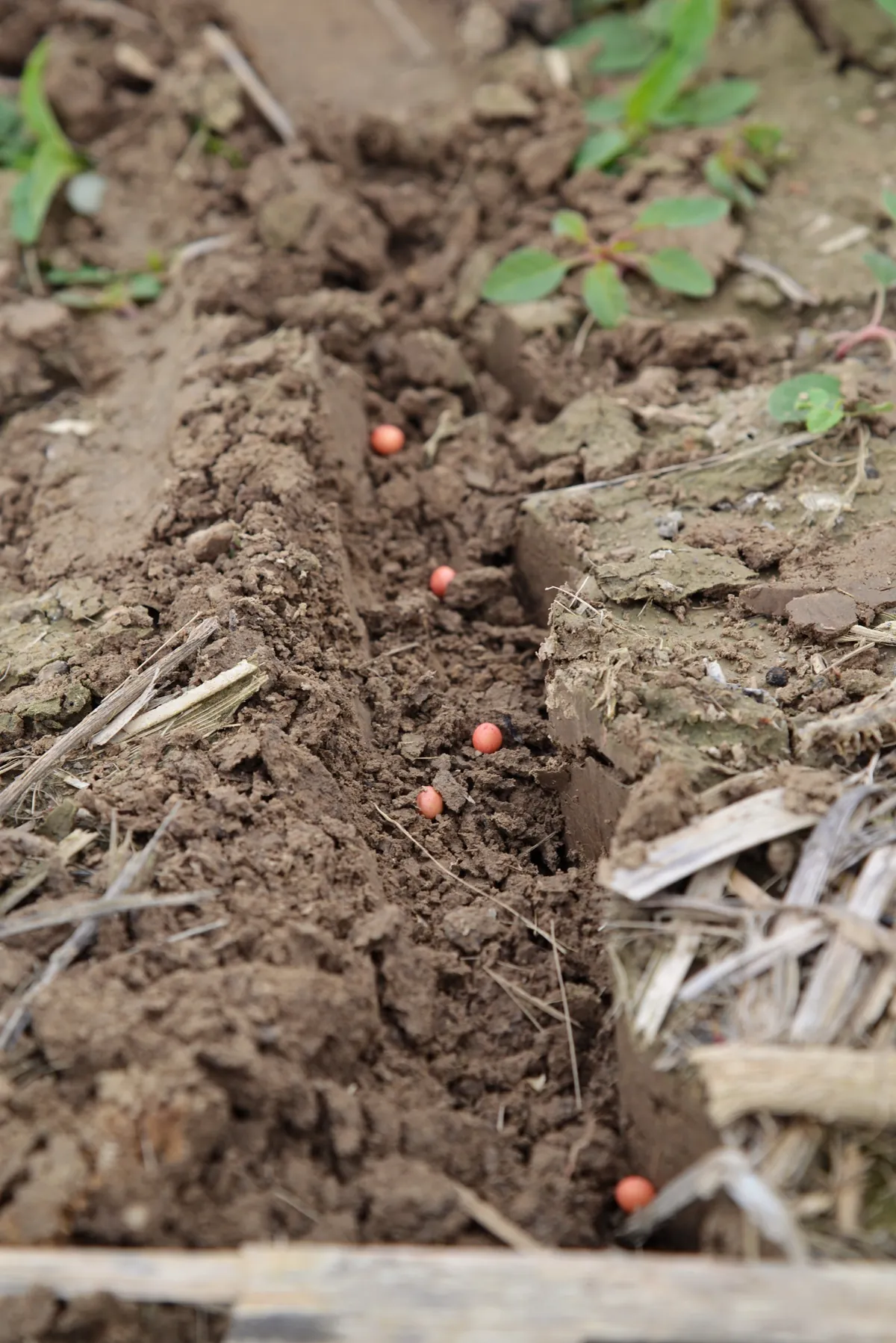
土にまかれたダイズ(Glycine max)の種子。ダイジン・ゲニスチン等のイソフラボン配糖体はこの種子に含まれるが、化合物そのものではなく給源となる種子の写真である。
原料写っているもの: Glycine max(ダイズ)部位・状態: 土中の種子
写真: United Soybean Board/ CC BY 2.0/ 原画像/ 台帳の原画像
写真の範囲と来歴
被写体の確認: 原典の記載による同定。organism-glycine-max で使用した写真とは別ファイル(重複回避)。
掲載画像: Wikimedia Commons の原寸ファイルを sips で長辺2400pxに縮小。苦味研究所では切り抜き・色調変更なし(リサイズのみ)。 表示用には幅1200px上限のWebPを配信し、台帳の原画像は上のリンクから確認できます。
On this page (7 sections)
Reading the bitterness
Soy isoflavone glycosides are a collective term for glycosides such as daidzin and genistin and their corresponding aglycones (such as daidzein and genistein), and are listed as causative components of off-flavor (bitterness and astringency) alongside soy saponins. Okubo (1988) conducted a sensory evaluation of genistin and daidzin isolated from soy and their aglycones, demonstrating that the taste detection threshold of these isoflavonoid components falls in the range of 10⁻²–10⁻³ mM. Both the glycosides and their corresponding aglycones were included in the same evaluation.
In the legend of Figure 1 in the sensory evaluation, the astringency produced by this class of compounds is classified as 『弱い収斂味』 (in translation: "weak astringency"), and while positioned as an off-flavor component alongside bitterness, the strength of the astringency itself was assessed as weak. Okubo (1988) also noted that there was significant individual variation in taste descriptions in sensory evaluations, and it is necessary to take into account that the threshold evaluation of isolated components involves variation in individual panelists' sensitivity.
A review summarizes primary research showing that genistein, a major soy isoflavone, activates both TAS2R39 and TAS2R14. From experiments on related isoflavone compounds in the same study, 15 new TAS2R39 agonists were identified, including four—acetyl-genistin, genistin, glycitin, and malonyl-genistin—which are components of soy isoflavone glycosides and were identified as TAS2R39-specific agonists. EC50 and other activation concentrations are not reported in the review.
Sources for this overview
大豆のDMF(Dry Mouth Feel,あく,不快味)成分と豆腐等の食品加工におけるその挙動
Checked for this overview: Sensory evaluation of isolated genistin and daidzin with their aglycones; taste detection threshold 10⁻²–10⁻³ mM confirmed. / Confirmed the 『弱い収斂味』 (in translation: "weak astringency") classification in the Figure 1 legend and the authors' remark on individual variation in the sensory evaluation.
The Hidden One: What We Know About Bitter Taste Receptor 39
Checked for this overview: Genistein activation of TAS2R39/TAS2R14 and identification of 4 specific agonists.
Follow the connections
soy isoflavone glycosides →contributes to→ bitterness →can be measured separately …→ astringency
soy isoflavone glycosides →contributes to→ astringency →is not synonymous with→ bitterness
soy isoflavone glycosides →activates→ TAS2R39
Structured claims — open a section to read each claim's confidence, evidence and limits
Sensory (2)
Scope: Isoflavone glycosides (daidzin, genistin, etc.) isolated from raw, unprocessed soybean (sensory test)
Note: Okubo (1988) conducted a sensory test on genistin and daidzin, the main isoflavonoids of soybean, and their aglycones (genistein and daidzein), and showed that the isoflavonoid components exhibit a strong astringent taste and bitterness at a taste threshold of 10⁻²–10⁻³ mM.
Show data
compound-class-soy-isoflavone-glycosides —contributes_to→ sensation-bitterScope: Isoflavone glycosides isolated from raw, unprocessed soybean (sensory test)
Show data
compound-class-soy-isoflavone-glycosides —contributes_to→ sensation-astringentMechanism and receptors (1)
Scope: Layer: cell (description in primary research summarized by the review).
Note: A review (Jalševac et al. 2022) summarizes primary research on soy isoflavones (reference 25); this is a second-hand citation. Primary source has not been read.
Show data
compound-class-soy-isoflavone-glycosides —activates→ receptor-tas2r39