niga-uruka (bitter uruka, ayu entrails)
dish / dish-niga-uruka
にがうるか
Niga-uruka (bitter uruka, ayu entrails) is a type of ayu uruka made only from ayu viscera. In places including Minamiamabe District, Oita, it is called (niga-uruka) and is described as having the bitterness and astringency characteristic of viscera. Related names, such as (shibu-uruka) and (doro-uruka), reflect differences in how the viscera are prepared and when they are collected.
Photographs (captions in Japanese)
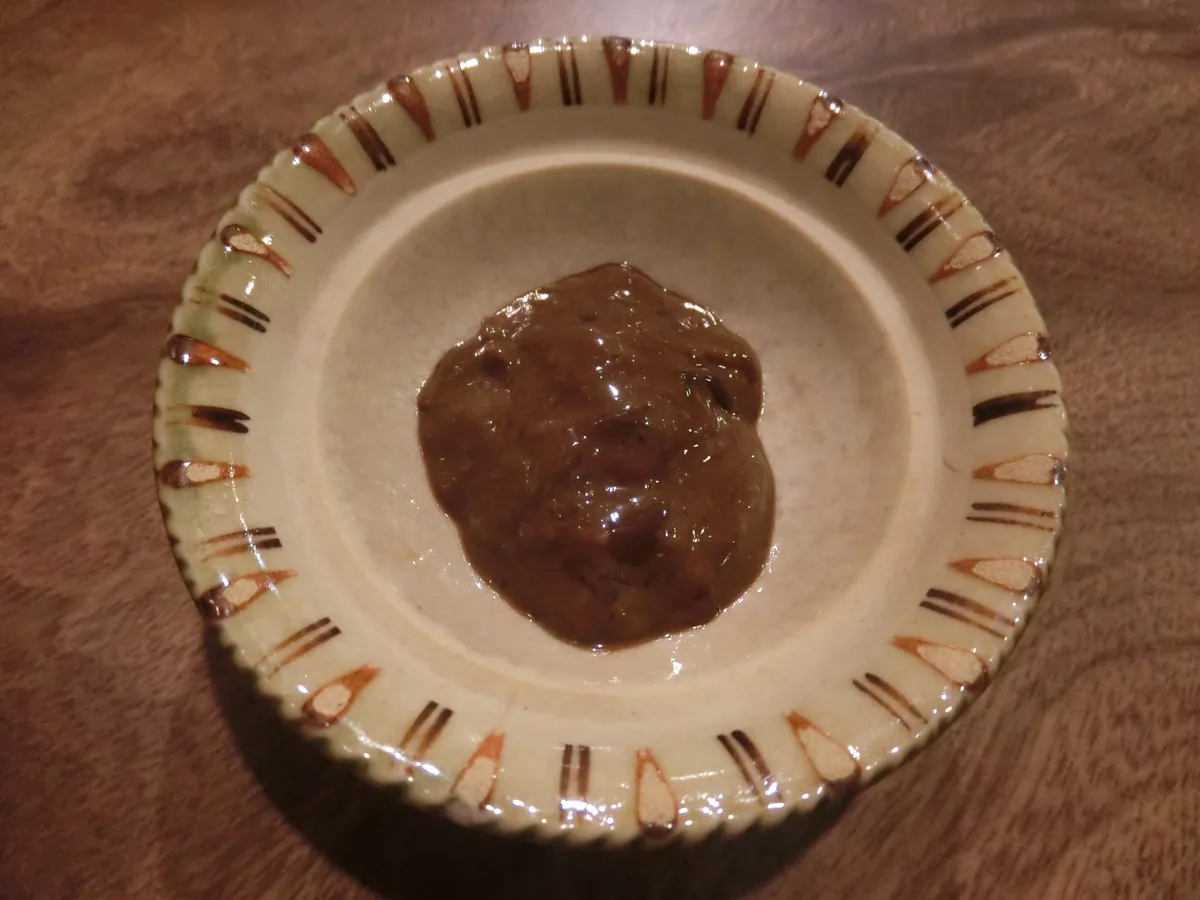
岐阜県郡上市で製造された「渋うるか」(鮎の内臓のみを原料とする系統)。ファイル説明文の表記「渋うるか」のとおりに記録する。
料理写っているもの: 該当なし(料理)部位・状態: 盛り付け(小皿)
写真: 大野一将/ CC BY-SA 4.0/ 原画像/ 台帳の原画像
写真の範囲と来歴
被写体の確認: 原典の記載による同定。
掲載画像: 苦味研究所側で sips により長辺2400pxにリサイズ(オリジナルは4608x3456px)。トリミング・色調変更なし。 表示用には幅1200px上限のWebPを配信し、台帳の原画像は上のリンクから確認できます。
On this page (9 sections)
Reading the bitterness
Niga-uruka names a type of ayu uruka made solely from ayu viscera. A product description from Minamiamabe District, Oita, defines it as 『にがうるか…鮎の内臓のみをうるかにしたもの』 (in translation: "niga-uruka... uruka made only from ayu viscera"). It is distinguished by the part used from other types of uruka that also include flesh, eggs, or milt.
Official material on Oita regional cuisine says that in Oita, 「うるか」 (uruka) often refers to 「にがうるか」 (niga-uruka), and explicitly states that only ayu viscera are used. However, this account comes from one prefectural-level source and does not cover details of similarly named niga-uruka varieties in other regions.
The dish is described as having a distinctive bitterness and astringency arising from its use of viscera. Oita regional-cuisine material says 『内臓を使っていることもあり、「にがうるか」の独特な苦味、渋味を好む人も多い』 (in translation: "Because it uses viscera, many people also enjoy the distinctive bitterness and astringency of niga-uruka"). This is a statement of preference in an introductory text, not an assessment of intensity by sensory testing.
Another study homogenized the viscera taken from 20 frozen ayu and divided the material into 1 storage control group at −80 °C and 4 groups held at 30 °C for 7 days. The 4 groups included a condition combining 12% salt with 100 MPa pressurization, among others. From changes in microbial counts and composition, the authors interpreted the fermentation of the laboratory uruka as due to endogenous enzymes rather than microorganisms. This was not an experiment that measured the bitterness of commercial niga-uruka.
Sources for this overview
Checked for this overview: Checked the viscera-only definition in the Minamiamabe District product description.
Checked for this overview: Checked the naming practice for niga-uruka in Oita regional-cuisine material. / Checked the statement that many people like its bitterness and astringency.
Enzymatic fermentation of Uruka under hydrostatic pressure conditions
Checked for this overview: Viscera from 20 fish, 1 storage control group at −80 °C, the 4 groups held at 30 °C for 7 days, the 12% salt and 100 MPa combination, and the authors' mechanistic interpretation and the limitation of unmeasured bitterness
Other names: 渋うるか (ja, identification medium), しぶうるか (ja, identification medium), どろうるか (ja, identification medium)
Follow the connections
niga-uruka (bitter uruka, ayu entrails) →is a form of→ uruka (salted, fermented ayu entrails)
Structured claims — open a section to read each claim's confidence, evidence and limits
Composition and content (1)
Scope: Uruka of Oita Prefecture (a local-dish source from Oita) and a nationwide product survey (a 1996 paper)
Show data
dish-niga-uruka —is_a_form_of→ dish-urukaSensory (1)
Scope: Oita Prefecture's ayu uruka ("Uchi no Kyodo Ryori," Ministry of Agriculture, Forestry and Fisheries)
Note: Not an intensity rating from a sensory test, but a statement of preference within an introductory text.
Show data
dish-niga-uruka —has_perceived_bitterness_associated_with→ "A distinctive bitterness and astringency arising from the use of entrails, which many people are recorded as enjoying, according to an Oita Prefecture local-dish introduction resource."How processing and cooking change it (1)
Scope: Laboratory viscera uruka from Jang and Iwahashi 2024. 1 storage control group at −80 °C and 4 groups held at 30 °C for 7 days.
Note: This is the authors' conclusion under their experimental conditions. The samples were not made as commercial 「にがうるか」 (niga-uruka), and this is not generalized to all traditional production methods. Bitterness was not measured.
Show data
dish-niga-uruka —was_observed_with→ "A 2024 study homogenized the viscera of 20 frozen ayu, divided the material into 1 storage control group at −80 °C and 4 groups held at 30 °C for 7 days, and from the results of combining 100 MPa pressurization and 12% salt, interpreted the fermentation of the laboratory uruka as due to endogenous enzymes rather than microorganisms."