liverwurst
ingredient / ingredient-liverwurst
レバーソーセージ / Leberwurst (liverwurst / liver sausage)
Liverwurst is a standard German-speaking-region cooked paste-like sausage made with a stated proportion of pork, beef, chicken, or other liver (approximately 10–40% depending on the source). Canned and jarred preserved products (Halbkonserve/Vollkonserve) are also widely distributed.
Photographs (captions in Japanese)
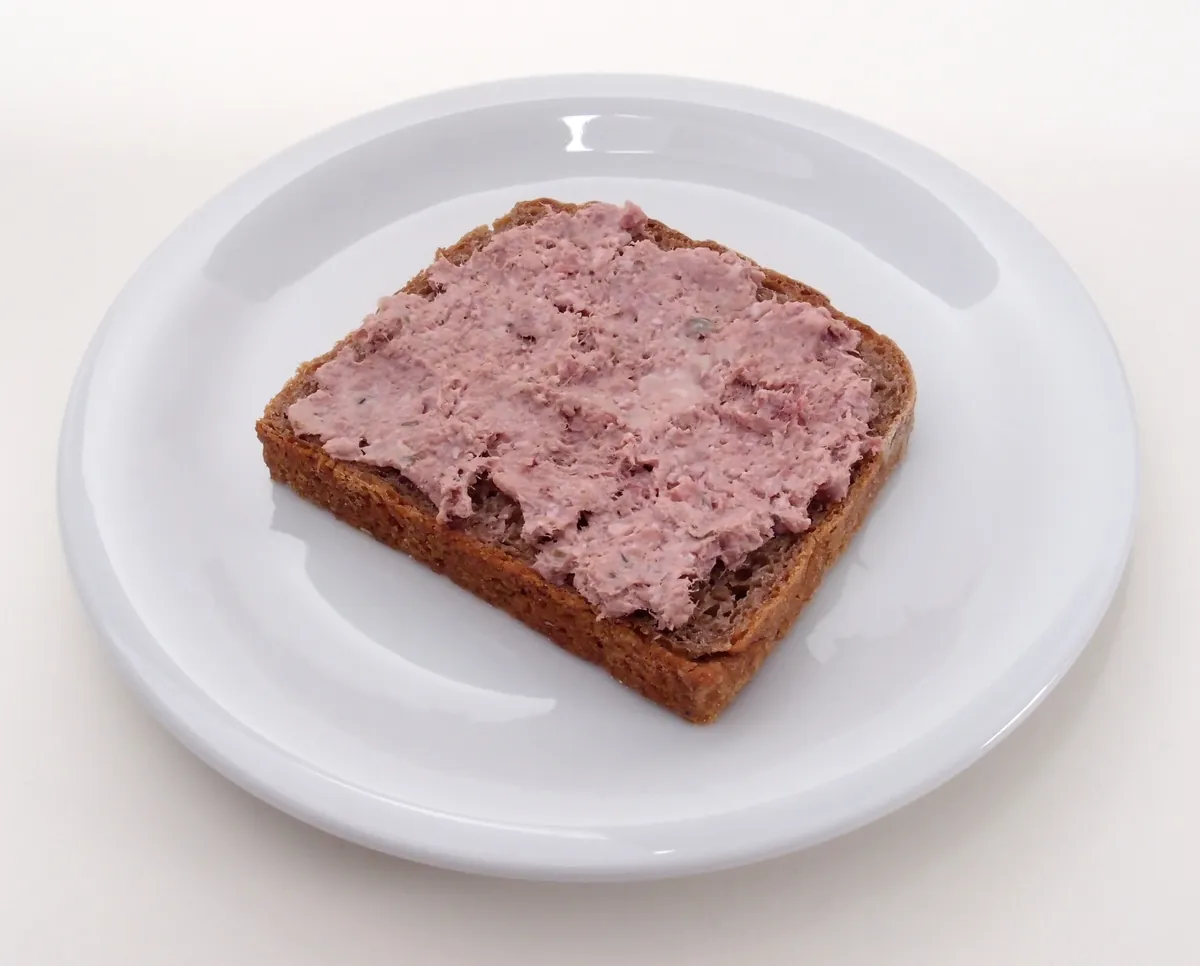
ライ麦パンに塗られた粗挽きレバーヴルスト
加工後写っているもの: N/A(豚等の肝臓を配合した加工品、原典表記どおり coarse liverwurst)部位・状態: 粗挽きタイプのレバーヴルストをパンに塗った状態
写真: SKopp/ CC BY-SA 4.0/ 原画像/ 台帳の原画像
写真の範囲と来歴
被写体の確認: 原典の記載による同定。説明文「A slice of rye bread spread with coarse liverwurst」と明記。own work 画像を開いて確認。茶色いパンの上にピンクがかった粗い質感のペーストが塗られている
掲載画像: Wikimedia Commons の原本を長辺2400pxへ縮小。切り抜き・色調変更なし。 表示用には幅1200px上限のWebPを配信し、台帳の原画像は上のリンクから確認できます。
On this page (7 sections)
Reading the bitterness
The German Wikipedia article states that beef liver (Rindsleber), although chemically similar to the comparison liver, produces a bitter taste and dark color. It should be kept in mind that this statement has no footnote and presents general cooking knowledge without a cited source. The production section also describes roughly removing bile, bile ducts (Galle, Gallengänge), and attached visceral fat from the source liver.
Canned and jarred liverwurst (Halbkonserve/Vollkonserve) is known to have bitterness arising through a route separate from bile. A research project at the University of Hohenheim’s Food Materials Science unit (1990–1997) addresses the quality defect called 「苦く焦げたような加熱風味(Hocherhitzungsgeschmack)」 (in translation: "bitter, burnt-like heating flavor") in canned liverwurst and explains that Maillard reactions between free amino acids or ε-amino groups of protein-bound lysine and carbohydrates such as glucose produce the causative substances during high-temperature sterilization.
Sources for this overview
Checked for this overview: Used the description of bitterness when beef liver is used. / Used the description of preparation removing bile and bile ducts.
Hocherhitzungsgeschmack bei Leberwurst(研究プロジェクト概要)
Checked for this overview: Explained the cause of bitterness from high-temperature sterilization.
Other names: Leberwurst (de), liver sausage (en)
Structured claims — open a section to read each claim's confidence, evidence and limits
Sensory (1)
Scope: The ingredients section of the German-language Wikipedia article "Leberwurst"
Note: Note that this passage in the article carries no footnote and is presented as general culinary/food knowledge.
Show data
ingredient-liverwurst —has_perceived_bitterness_associated_with→ "Using beef liver (Rindsleber) as a raw material."How processing and cooking change it (2)
Scope: The production section of the German Wikipedia article "Leberwurst".
Note: There is no footnote.
Show data
ingredient-liverwurst —is_prepared_by→ "A preliminary preparation that roughly removes bile, bile ducts (Galle, Gallengänge), and attached visceral fat from the source liver."Scope: University of Hohenheim Food Materials Science project "Hocherhitzungsgeschmack bei Leberwurst" (period 1990-1997).
Show data
ingredient-liverwurst —has_bitterness_generated_by→ "A Maillard reaction between free amino acids and the ε-amino groups of protein-bound lysine and carbohydrates such as glucose during canning or jarring (high-temperature sterilization)."