sake
ingredient / ingredient-sake
清酒
Sake is a Japanese brewed alcoholic beverage made from rice, rice koji, and water through parallel multiple fermentation: koji mold (Aspergillus oryzae) saccharifies rice starch while sake yeast (Saccharomyces cerevisiae) ferments alcohol at the same time. Its taste constituents include sugars, organic acids, amino acids, peptides, and minerals.
Photographs (captions in Japanese)
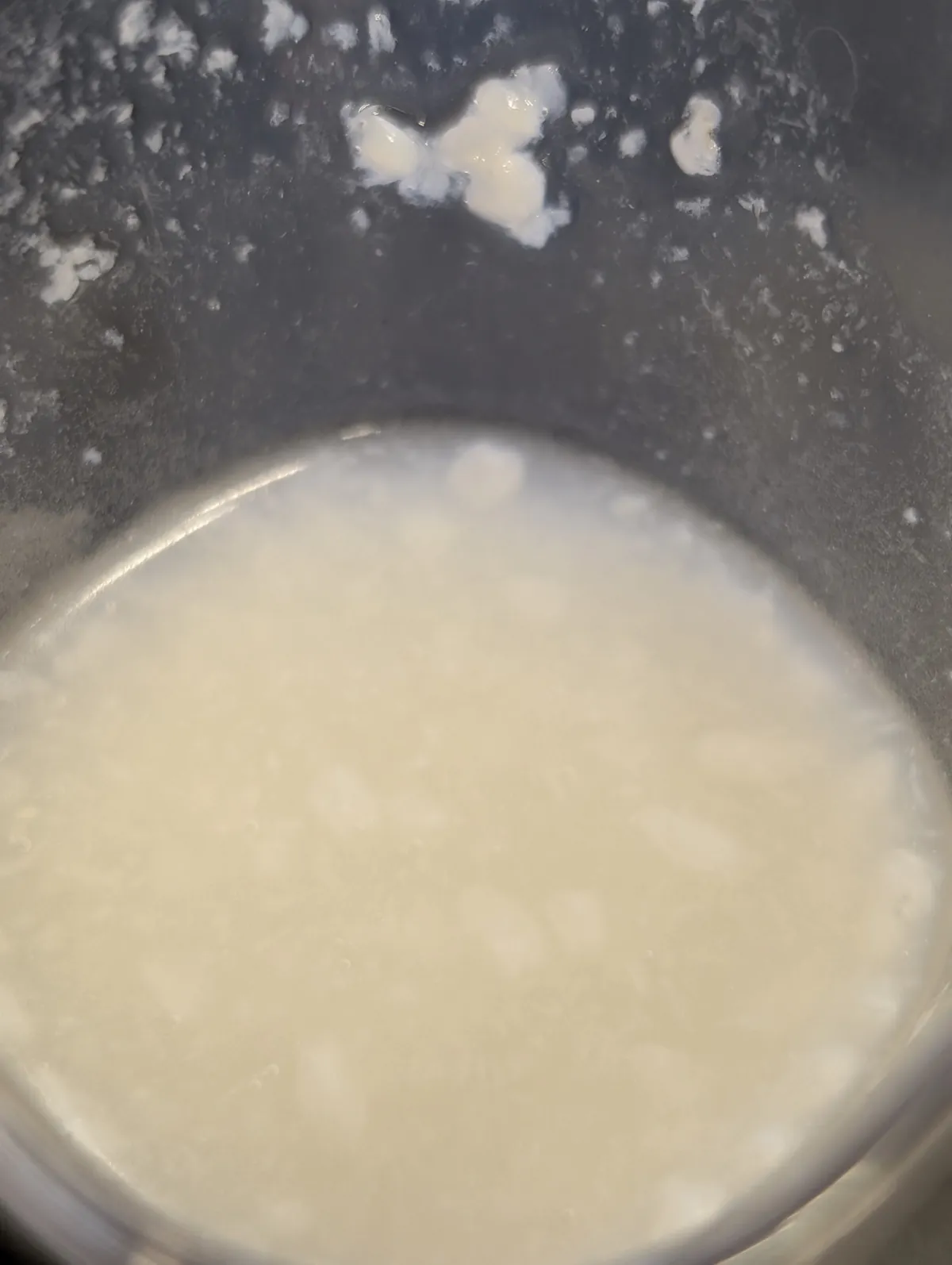
長野県産の生酒(無濾過・非加熱処理の日本酒)をカップに注いだ写真。液体そのものが被写体で、酒器や醸造設備そのものを主題とする写真ではない。
写っているもの: 該当分類群なし(生酒、カップに注いだ状態)部位・状態: 生酒(無濾過・非加熱処理の日本酒)をカップに注いだ液体そのもの
写真: Syced/ CC0 1.0/ 原画像/ 台帳の原画像
写真の範囲と来歴
被写体の確認: 原典の記載による同定。原典は長野県産の生酒と記載。具体的な酒蔵・銘柄名の記載はない。
掲載画像: Wikimedia Commons の原寸ファイルを取得後、苦味研究所にて sips で長辺2400px程度に縮小。切り抜き・色調変更なし。 表示用には幅1200px上限のWebPを配信し、台帳の原画像は上のリンクから確認できます。
On this page (10 sections)
Reading the bitterness
Sake is brewed from rice, rice koji, and water through parallel multiple fermentation, in which koji mold (Aspergillus oryzae) saccharifies rice starch while sake yeast carries out alcoholic fermentation. Koji-derived enzymes digest the acidic subunit of glutelin, a storage protein in steamed rice, yielding distinctive short peptides (fragments of several linked amino acids) with an N-terminal pyroglutamyl group (a structure formed by cyclization of a glutamine side chain). A 2008 account examined peptides of this kind isolated from commercial junmai sake and suggested they might contribute to sake taste.
Sake bitterness is described as arising from free amino acids as well as peptides. In a discrimination test, arginine was added to a fully synthetic sake (a model made by combining ethanol, sugars, organic acids, and other constituents) at 1500 ppm, 10 times the concentration in commercial sake. The added sample was correctly identified in 23 of 25 judgments (significance level 0.1%), and a preference test often noted 「苦味,甘味」 (in translation: "bitterness and sweetness") and judged it an undesirable amino acid. A 2015 review likewise attributes bitterness characteristic of sake to valine, isoleucine, leucine, proline, and arginine. The arginine test used a concentration 10 times natural levels, however, so it does not show the extent of contribution at ordinary concentrations.
A sake sensory vocabulary compiled by the National Research Institute of Brewing with industry-group cooperation uses tyrosol (a phenolic compound) as the standard reference for 「苦味」 (in translation: "bitterness"). It gives a discrimination or detection threshold of 1.4 g/l, a standard spiking concentration of 4.9 g/l, and an actual sake content of 70–90 mg/l. The bitter peptides isolated in the 2008 account were described as having 「大変強い苦味」 (in translation: "very strong bitterness") with 「不快感が後に長く残る」 (in translation: "an unpleasant sensation lingering for a long time"). Thus strong peptide-derived bitterness is recorded separately from a single-compound standard such as tyrosol.
For stored sake that has undergone hiire (heat pasteurization), a table in the vocabulary system reports increases in 「苦味」 (in translation: "bitterness") and 「刺激味(なめらか)」 (in translation: "stimulatory taste (smooth)"), and decreases in 「渋味」 (in translation: "astringency") and 「刺激味(あらい)」 (in translation: "stimulatory taste (rough)"). The entry for unpasteurized sake does not specify a change in bitterness, so the account distinguishes the behavior during storage by whether hiire was used. Against this background, the 2008 account describes an industry trend toward lighter ginjo-type sake and demand for lower-protein rice.
Sources for this overview
原料米タンパク質に由来する清酒の苦味ペプチド (Bitter-Tasting Sake Peptides Derived from the Rice Protein)
Checked for this overview: Checked the generation of bitter peptides by digestion of glutelin's acidic subunit. / Checked the strong bitterness and unpleasant aftertaste described for isolated peptides. / Checked the explanation of demand for lower-protein rice amid the shift toward lighter styles and more ginjo sake.
清酒の呈味性に影響を及ぼすアミノ酸の探索 (Search for amino acids affecting the taste of Japanese sake)
Checked for this overview: Checked correct identification of the 1500 ppm arginine sample in 23/25 judgments and comments on bitterness.
日本酒の成分と香味 (Components and flavor of Japanese sake)
Checked for this overview: Checked the review's attribution to 5 amino acids.
Checked for this overview: Checked tyrosol as the bitterness reference and its threshold values. / Checked the table's statement that bitterness increases during storage of heat-pasteurized sake.
Other names: 日本酒 (ja)
Follow the connections
sake →— bitterness is generated by→ sake bitter peptides from rice glutelin
sake →— positive sensory attribut…→ bitter peptides
sake →— perceived bitterness is a…→ L-arginine
Structured claims — open a section to read each claim's confidence, evidence and limits
Composition and content (1)
Scope: The acidic subunit of glutelin, a protein in steamed rice, is digested in sake mash by koji-mold-derived enzymes, generating a characteristic oligopeptide (a bitter peptide) bearing a pyroglutamyl group at its N-terminus; this has been shown to possibly be involved in sake's taste.
Note: An account by Hashizume Katsumi (2008). Based on a digestion test of steamed rice using 4 rice-protein mutant lines (esp1-4) and their parent strains (Nipponbare and Yamada Nishiki), and on molecular structural analysis and sensory evaluation of a bitter-peptide preparation isolated from commercial junmai sake.
Show data
ingredient-sake —has_bitterness_generated_by→ compound-class-sake-glutelin-peptidesSensory (4)
Scope: Sake's peptides are reported to make a favorable sensory contribution to flavor (introducing a citation to an earlier study).
Show data
ingredient-sake —has_positive_sensory_attributes→ compound-class-bitter-peptidesScope: In a 3-point (triangle) discrimination test on pure synthetic sake (formulated with 20% ethanol, glucose, succinic acid, lactic acid, NaCl, KH2PO4, isoamyl alcohol, isoamyl acetate, and ethyl caproate) to which arginine was added at 1500 ppm, 10 times the amino-acid concentration in commercial sake, 23 of 25 answers were correct (significant at the 0.1% level). In a 3-point preference test, the arginine-added sample drew frequent comments of "bitterness, sweetness" and was judged, at the 0.1% significance level, to be a sensorially undesirable amino acid.
Note: Iwano et al. (2004). The panel was small and untrained: 3 faculty members and 2 undergraduate thesis students, 5 people x 5 repetitions = 25 judgments. This is an examination under a high-concentration condition, 10 times the concentration in natural sake, and does not show the size of the contribution at ordinary concentrations. The English abstract states explicitly, "Arginine was judged as the amino acid causing bitterness."
Show data
ingredient-sake —has_perceived_bitterness_associated_with→ compound-arginineScope: A review statement that "sake's distinctive bitterness is attributed to valine, isoleucine, leucine, proline, and arginine."
Note: A statement on p.336 of the Ogawa (2015) review. It is presented as a general summary without an explicit citation number, and this source contains no individual quantitative or sensory data.
Show data
ingredient-sake —has_bitterness_attributed_to→ "Valine, isoleucine, leucine, proline, arginine."Scope: In the vocabulary's class "13. Bitterness" / the term "bitterness," defined as "bitter," the standard reference sample is set as tyrosol (2-(4-Hydroxyphenyl)ethyl alcohol, TCI 98%+). Detection threshold 1.4 g/L, standard addition level 4.9 g/L, content in sake 70-90 mg/L.
Show data
ingredient-sake —has_standardized_vocabulary_entry_in→ "The sake flavour-quality assessment vocabulary of Utsunomiya et al. (2006) (compiled by the National Research Institute of Brewing with the cooperation of the Japan Sake and Shochu Makers Association, the Nada Sake Research Association, and the Fushimi Brewers' Friendship Society)"How processing and cooking change it (1)
Scope: According to Table 4 of Utsunomiya et al. (2006) (evaluation terms describing flavor changes accompanying sake storage), for pasteurized sake, the tastes "bitterness, stimulant taste (smooth)" increase with storage while "astringency, stimulant taste (rough)" decrease. The same table's entry for unpasteurized sake (before pasteurization) does not record any increase or decrease in bitterness.
Note: Based on the storage flavor-change table (Table 4), excluding hineka and namahineka (stale off-flavors). Note that the behavior of bitterness during storage is written up differently for unpasteurized sake and pasteurized sake.
Show data
ingredient-sake —has_perceived_bitterness_affected_by→ "Increase: storage of pasteurized (heat-sterilized) sake."Culture (2)
Scope: An explanation of the research motivation, stating 『低タンパク質質の原料米が求められる背景には,酒質の淡麗化や吟醸タイプ清酒の増加があると考えられる』 (in translation: "the reason low-protein raw rice is called for is thought to be the trend toward lighter, more delicate sake quality and the increase in ginjo-type sake").
Note: A statement from the introduction (p.574) of Hashizume (2008). This is the author's background explanation of an industry trend, and is treated as discursive framing (there is no numerical verification in the body text).
Show data
ingredient-sake —is_associated_with→ "Industry trend toward demanding low-protein raw rice (sake quality becoming lighter and more delicate, and an increase in ginjo-type sake)"Scope: 『近年の香り高く味が淡い嗜好,いわゆる淡麗辛口嗜好からの吟醸酒の注目度が増している。まさに“米白ければ酒にくせなし”である。』 (in translation: "In recent years, attention to ginjo sake has been increasing, driven by the preference for a highly aromatic, light taste — the so-called tanrei-karakuchi preference. It is precisely 'if the rice is white, the sake has no kuse.'")
Note: Discursive framing from Ogawa (2015), review, p.331. Note that 『くせ』 (in translation: kuse) here is not naming bitterness or zatsumi directly; it is cited as an idiomatic phrase linking the rice polishing ratio to lightness of taste in general. Because this is not discourse that speaks of bitterness directly, it is kept as a weak, contextual connection.
Show data
ingredient-sake —is_associated_with→ "Preference for the tanrei-karakuchi (light and dry) style — a recent preference for sake that is highly aromatic and light in taste"