Acmella paniculata
organism / organism-acmella-paniculata
アクメラ・パニクラタ(在来センニチモドキ類)
Acmella paniculata is an Acmella species native to Thailand and the most widely distributed there. It is eaten as a wild leafy vegetable in northern Thailand and is likely the species actually meant by many Thai use records registered under the name A. oleracea.
Photographs (captions in Japanese)
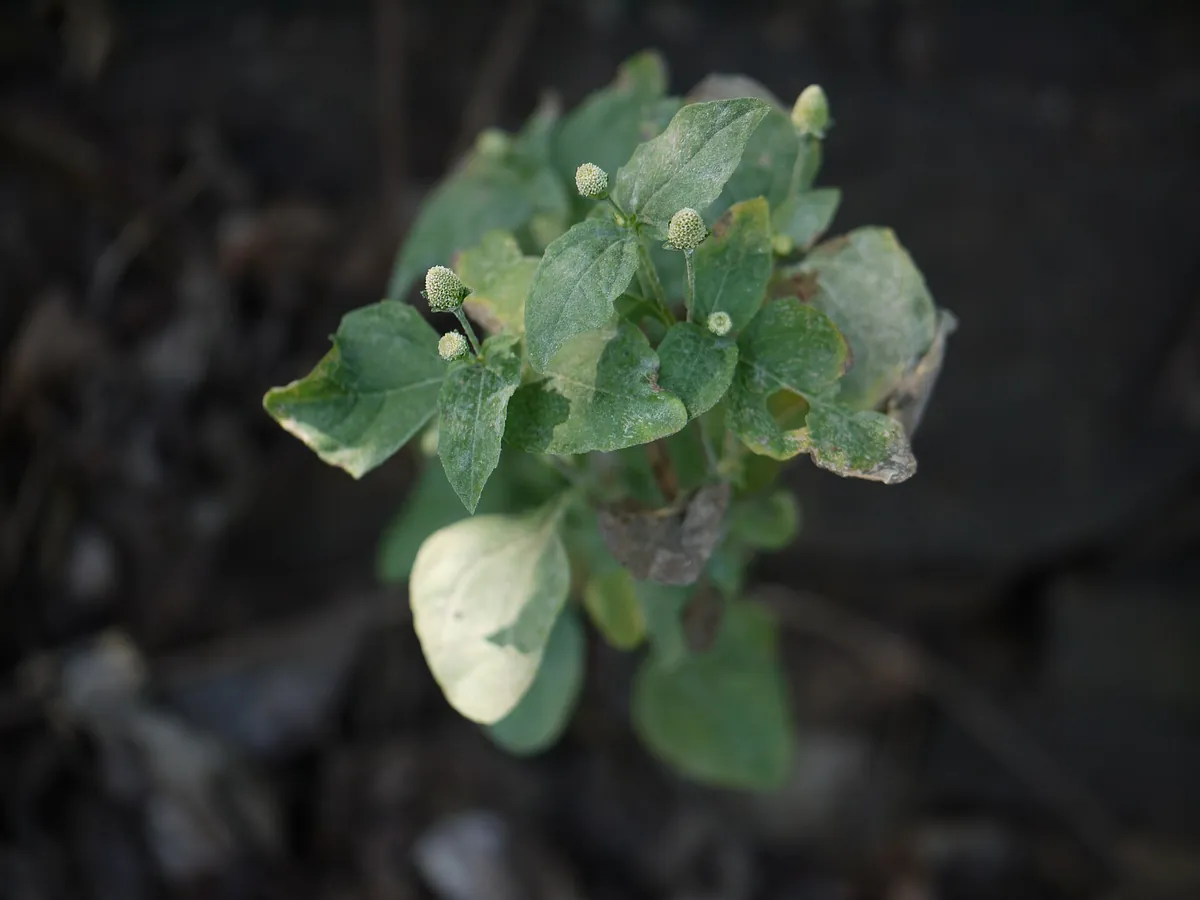
アクメラ・パニクラタ(Acmella paniculata)の枝先。卵形の対生葉の間から、小さな円錐形の淡黄緑色の頭花が複数、蕾を含めて伸びている。原典ページは学術種名を命名者表記付きで記載している。
写っているもの: Acmella paniculata (Wall. ex DC) R. K. Jensen部位・状態: 地上部の枝先。卵形の葉と、複数の小さな淡黄緑色の円錐形頭花(一部はまだ蕾)が付いた状態
写真: Dinesh Valke (Thane, India)/ CC BY-SA 2.0/ 原画像/ 台帳の原画像
写真の範囲と来歴
被写体の確認: 原典の記載による同定。原典ページは学術種名 Acmella paniculata (Wall. ex DC) R. K. Jensen を命名者表記付きで記載している。専門家による再同定は行っていない。
掲載画像: Wikimedia Commons の1920px版。苦味研究所では切り抜き・色調変更なし。 表示用には幅1200px上限のWebPを配信し、台帳の原画像は上のリンクから確認できます。
On this page (7 sections)
Reading the bitterness
Acmella paniculata is a member of the Asteraceae family and the most widely distributed of the 2 Acmella species native to Thailand. The taste recorded in Thai accounts of this species is not bitterness but a pungent sensation. Much Thai phytochemical and ethnobotanical literature recorded uses of this group under the names Acmella oleracea or Spilanthes acmella; according to a taxonomic reassessment, nearly 80% of those records may have referred to the native A. paniculata.
In Karen and Lawa villages in Mae Chaem District, Chiang Mai Province, northern Thailand, this plant is eaten as a wild leafy vegetable. Its aerial parts are eaten raw with chili paste or cooked, and Karen people chew the roots to treat toothache. The local names were recorded as Hor te mi in Karen and Tu plei in Lawa. This survey covered Karen and Lawa villages in Mae Chaem District, Chiang Mai Province, and did not confirm use by other ethnic groups or in other provinces.
An ethnobotanical review summarizes its use in Lawa and Thai Yuan communities as a flavoring added to spicy vegetable soup, contributing a pungent flavor and citrus, spicy, and earthy aromas. Here, too, the taste descriptor is pungency rather than bitterness. The underlying primary record is not identified in the review, and taxonomic uncertainty about the species identification itself also remains relevant.
Sources for this overview
Taxonomy and ethnobotany of Acmella (Asteraceae) in Thailand
Checked for this overview: Checked in the main text the possibility that nearly 80% of use records referred to A. paniculata.
Checked for this overview: Checked in the main text that the taste is described as pungency, not bitterness. / Checked in the main text its use in spicy soup among Lawa and Thai Yuan communities.
Checked for this overview: Checked in the main text the food and medicinal-use records from 2 Karen and 2 Lawa villages.
Follow the connections
toothache plant →Records of are often confl…→ Acmella paniculata
Structured claims — open a section to read each claim's confidence, evidence and limits
Composition and content (1)
Scope: Thai ethnobotanical and phytochemical literature; a taxonomic reassessment of Acmella in Thailand (6 species: 2 native and 4 introduced).
Show data
organism-acmella —is_often_conflated_in_records_with→ organism-acmella-paniculataHow processing and cooking change it (2)
Scope: Karen and Lawa villages in Mae Chaem District, Chiang Mai Province, northern Thailand.
Note: Recorded ethnic names: Hor te mi (Karen) and Tu plei (Lawa). This provides a basis for comparing an unidentified Chiang Mai leafy green with a native Acmella that is actually eaten in the region.
Show data
organism-acmella-paniculata —is_eaten_as→ "Wild leafy vegetable: aerial parts eaten raw with chili paste or cooked. Karen people chew the roots to treat toothache."Scope: Lawa and Thai Yuan communities in northern Thailand.
Note: The first peer-reviewed record found of Acmella use in a soup context in northern Thailand. The review's sensory descriptor is pungency (pungent), not bitterness.
Show data
organism-acmella-paniculata —is_used_in→ "Spicy vegetable soup; leaves are added to enhance the dish with a pungent flavor."