cyclodextrins
compound class / compound-class-cyclodextrins
シクロデキストリン類
Cyclic oligosaccharides that form host-guest inclusion complexes (typically α-, β-, and γ-cyclodextrins composed of 6, 7, or 8 glucose units, as well as substituted derivatives such as hydroxypropyl-β-cyclodextrin). In pharmaceuticals, they are used as solubilizers, stabilizers, and taste-masking excipients.
Photographs (captions in Japanese)
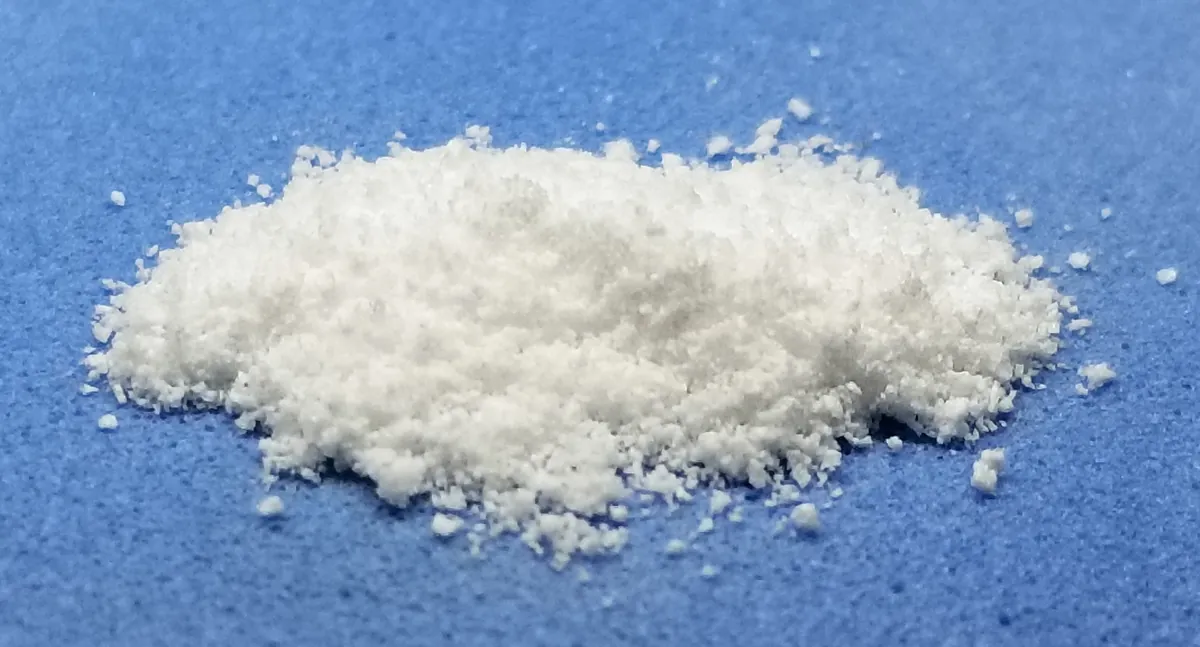
β-シクロデキストリンの実物サンプル。構造図ではなく、化合物のサンプルを撮影した実写真。
写っているもの: 該当なし(生物ではなく化合物のサンプル)部位・状態: 粉末サンプル(実物)
写真: Materialscientist/ CC BY-SA 4.0/ 原画像/ 台帳の原画像
写真の範囲と来歴
被写体の確認: 原典の記載による同定。
掲載画像: Wikimedia Commons の原寸ファイル。苦味研究所では切り抜き・色調変更なし。 表示用には幅1200px上限のWebPを配信し、台帳の原画像は上のリンクから確認できます。
On this page (7 sections)
Reading the bitterness
Cyclodextrins are oligosaccharides with glucose units arranged in a ring; they have the property of forming a 「ホスト-ゲスト複合体」 (in translation: "host-guest complex") by taking up other molecules in the cavity formed inside. Typically, there are α-, β-, and γ-cyclodextrins composed of 6, 7, or 8 glucose units, as well as substituted derivatives such as hydroxypropyl-β-cyclodextrin. In pharmaceuticals, they are used as solubilizers, stabilizers, and also as additives (excipients) to mitigate bitterness. The mechanism is that by taking up bitter molecules into this cavity and encapsulating them, the concentration of free drug or active components reaching the taste buds is lowered, weakening the perceived bitterness.
In a study adding β-cyclodextrin at 0.25-2% to bitter melon (goya) juice, the 1.5%-supplemented juice showed the highest sensory acceptability score (7.7 +/- 0.3) compared to the control (3.8 +/- 0.7); analysis by NMR and FTIR showed that β-cyclodextrin takes up momordicosides, a bitter component, as an inclusion complex. Another research group had a trained panel rate the bitterness intensity itself of bitter melon extract and reports that adding only 0.25% β-cyclodextrin reduced bitterness by approximately 33%, and adding 0.75% or 1% reduced it by over 90%. This was a larger effect than the 19% reduction with 0.6% carboxymethylcellulose, which was used as a comparison.
In pharmaceutical bitterness masking, it has been reported that the type of cyclodextrin and the molar ratio produce large differences in effect. When fluoxetine was complexed with β-cyclodextrin, volunteers rated non-complexed fluoxetine as bitter or very bitter, whereas the complexed drug was described as tasteless; captopril was complexed with β-cyclodextrin at a 1:2 molar ratio in an orally disintegrating tablet and was rated more favorably than the non-complexed tablet, which had a metallic, burning flavor. Conversely, it has been reported that even when spironolactone was complexed with hydroxypropyl-β-cyclodextrin, taste was not improved. With cetirizine, a 1:5 solution with β-cyclodextrin led most raters to answer no bitterness or mild bitterness, whereas a solution at the same ratio of γ-cyclodextrin was rated as extremely bitter by most, demonstrating that which cyclodextrin is selected affects the outcome, even for the same drug.
In a study using propranolol, on a taste sensor (electronic tongue) scale where hydroxypropyl-β-cyclodextrin alone was 0 and propranolol alone was 10, the bitterness score of a formulation complexed at a 1:1 molar ratio was reported as 8.5 (15% reduction), and at 1:2 as 7.3 (approximately 30% reduction). However, this measurement was instrumental only, without a human sensory panel; in a report cited by another review from a regulatory authority, electronic tongue measurement of the same propranolol in a marketed pediatric formulation (prepared by a method different from cyclodextrin) showed approximately 80% masking effect, and simple numerical comparison is not possible. Bitterness masking by cyclodextrin requires individual verification for each compound and for each type of cyclodextrin.
Sources for this overview
Review of Applications of Cyclodextrins as Taste-Masking Excipients for Pharmaceutical Purposes
Checked for this overview: Verification of the description of the general mechanism of reduction in free drug concentration through inclusion complex formation / Verification of success examples with fluoxetine and captopril / Verification of the example where taste was not improved with spironolactone / Verification of the description where results with β-CD and γ-CD diverged with cetirizine
Checked for this overview: Verification of acceptability score at 1.5% supplementation and analysis of inclusion complex formation
Checked for this overview: Verification of reduction rate in bitterness intensity itself and comparison with CMC
Checked for this overview: Verification of bitterness scores by molar ratio and reduction rates by electronic tongue
Checked for this overview: Verification of context information of approximately 80% masking with a marketed formulation
Follow the connections
bitter melon →— sensory acceptability was…→ cyclodextrins
propranolol →— electronic-tongue bittern…→ cyclodextrins
marrubiin →can be debittered by→ cyclodextrins
Structured claims — open a section to read each claim's confidence, evidence and limits
Sensory (2)
Scope: 0.2% w/v aqueous propranolol solution. Insent SA 402B taste-sensing system, 4 sensors, each sample measured 2 times. No human panel
Note: Instrumental measurement only. Because of how the anchor was set (drug alone = 10), the percentages are relative to the unformulated drug and are not an absolute bitterness value.
Show data
compound-propranolol —has_e_tongue_bitterness_reduced_by→ compound-class-cyclodextrinsScope: Layer: solution. PCA analysis using an Alpha Astree II electronic tongue (7 potentiometric sensors). Caffeine was used as the standard for the bitterness direction. The authors state that the electronic-tongue data cannot provide a quantitative assessment of bitterness.
Show data
compound-marrubiin —can_be_debittered_by→ compound-class-cyclodextrinsHow processing and cooking change it (2)
Scope: Bitter gourd juice with 0.25-2% beta-cyclodextrin added, in 1 Indian study
Note: The reported value is hedonic acceptability, not a bitterness-intensity rating. The abstract has no bitterness-intensity value.
Show data
ingredient-bitter-gourd —has_sensory_acceptability_increased_by→ compound-class-cyclodextrinsScope: Oral pharmaceutical formulations. A 2023 systematic review of literature indexed in PubMed, Web of Science, Scopus, and the Cochrane Library on cyclodextrins and taste masking
Note: The same review reports both clear successes (fluoxetine/beta-CD, captopril/beta-CD) and clear failures (spironolactone/HP-beta-CD, cetirizine/gamma-CD). The individual primary studies have not been read here; the evidence level is the review's own reporting.
Show data
compound-class-cyclodextrins —can_reduce_perceived_bitterness_of→ "Bitter-tasting active pharmaceutical ingredients. Through host-guest inclusion complexation that lowers the concentration of free drug reaching the taste buds. The effect depends on the type of cyclodextrin and the drug:CD molar ratio, and is not obtained for every drug"