African nightshade leaves
ingredient / ingredient-african-nightshade-leaves
アフリカン・ナイトシェードの葉
African nightshade leaves: a collective name for edible Solanum leaves in sub-Saharan Africa (including S. retroflexum, S. scabrum, S. nigrum, S. americanum, and S. villosum). The bitter leaves are blanched or fermented to soften their bitterness and served with staples.
Photographs (captions in Japanese)
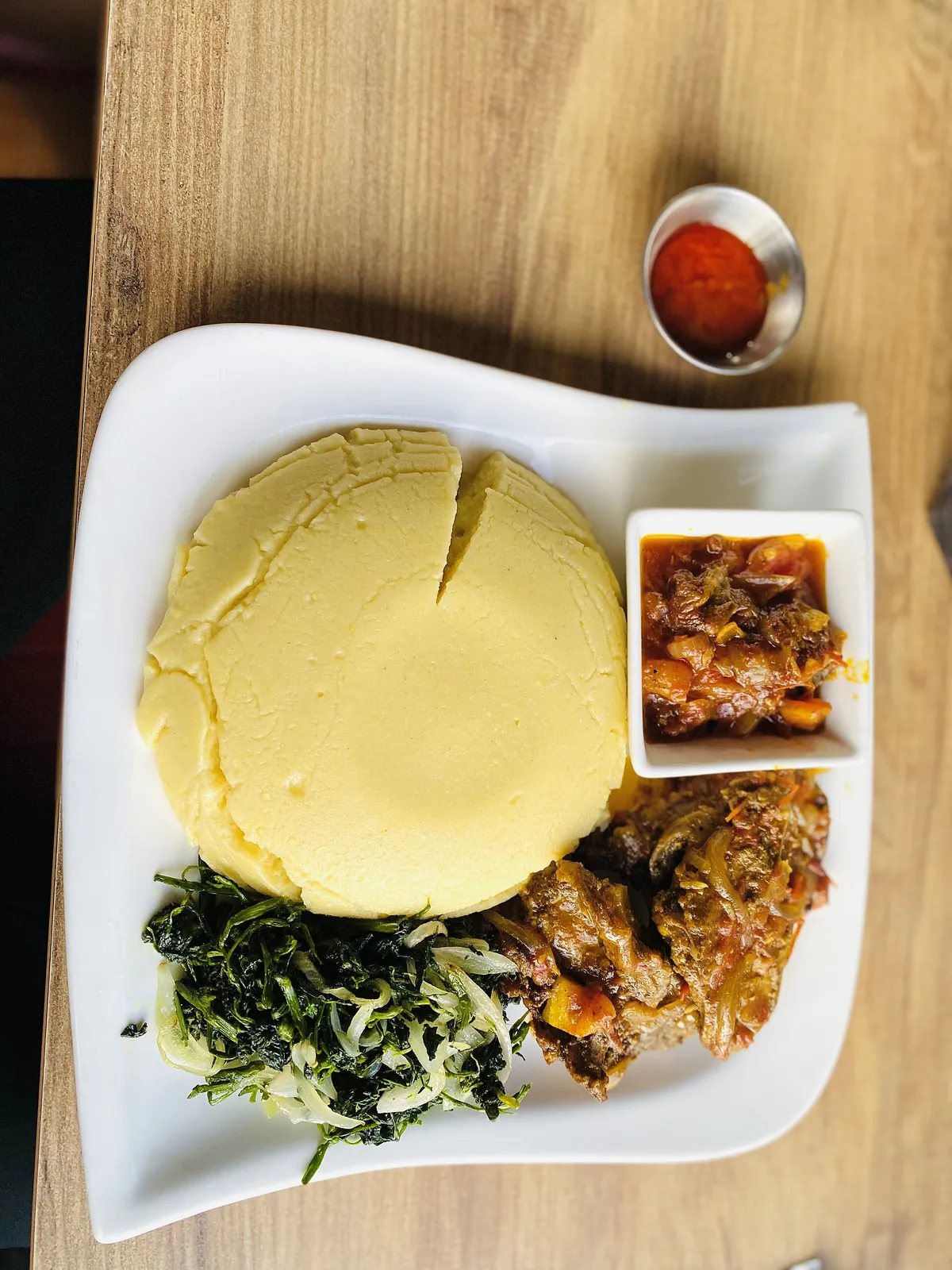
njama njama(カメルーンで栽培されるナス科ソラナム属の葉野菜、英名 garden huckleberry)を刻んで玉ねぎと炒め煮した状態。fufu corn and khati khati の副菜として皿の左下に盛られている。皿全体は khati khati 料理の一例であり、葉野菜単体の標本写真ではない。
加工後写っているもの: Solanum scabrum(原典表記 njama njama / garden huckleberry)部位・状態: njama njama(ナス科ソラナム属の葉野菜)を刻んで玉ねぎと共に炒め煮した状態。皿の左下に添えられている。とうもろこしフフ、肉のトマト煮と一緒に盛り付け
写真: Adesolive/ CC BY-SA 4.0/ 原画像/ 台帳の原画像
写真の範囲と来歴
被写体の確認: 原典の記載による同定。原典キャプションは njama njama をナス科(Solanaceae)の植物とし、英名 garden huckleberry、フフ・コーン and khati khati 料理の主原料と説明。学名の記載はなく、専門家による再同定は行っていない。写真は完成した一皿であり、葉野菜のみを写した標本写真ではない。
掲載画像: Wikimedia Commons の1920px版。苦味研究所では切り抜き・色調変更なし。 表示用には幅1200px上限のWebPを配信し、台帳の原画像は上のリンクから確認できます。
On this page (6 sections)
Reading the bitterness
African nightshade leaves are a collective term for edible leafy vegetables of the genus Solanum in sub-Saharan Africa, including several related species such as S. retroflexum, S. scabrum, S. nigrum, S. americanum, and S. villosum. A 2020 review says the cooked leaves accompany staple starch dishes such as maize porridge and tomato relish, and that some preparations ferment them with milk. These bitter leaves become a dish by first being boiled and served alongside a staple.
The bitterness is described as deriving from anti-nutritional constituents, including solanaceous glycoalkaloids. The same review says traditional preparation methods such as blanching, ordinary cooking, and fermentation have been widely used in southern Africa to reduce the bitterness from these constituents, and cites an example of blanching at 95°C for 5 minutes. It does not, however, report thresholds linking individual glycoalkaloids and concentrations to perceived bitterness or sensory values showing how much bitterness falls after processing.
Sources for this overview
Checked for this overview: The portion checked in the review describing boiled leaves served with staples and preparations fermented with milk. / The portion checked in the review attributing bitterness to solanaceous glycoalkaloids and related compounds. / The portion checked in the review describing reduction of bitterness through blanching, cooking, and fermentation, including the 95°C for 5 minutes example.
Structured claims — open a section to read each claim's confidence, evidence and limits
Composition and content (1)
Scope: Leaves.
Note: This source does not identify which glycoalkaloid is bitter at which concentration (threshold).
Show data
ingredient-african-nightshade-leaves —contains→ "Anti-nutritional compounds described as contributors to bitterness (including solanaceous glycoalkaloids)."How processing and cooking change it (2)
Scope: Sub-Saharan Africa, especially southern and eastern regions.
Show data
ingredient-african-nightshade-leaves —is_eaten_as→ "A leafy vegetable boiled and served with staples such as maize porridge; some preparations ferment the leaves with milk."Scope: Traditional preparation in southern Africa; a review focusing on S. retroflexum.
Show data
ingredient-african-nightshade-leaves —has_perceived_bitterness_affected_by→ "Traditional preparation methods such as blanching (for example, 95°C for 5 minutes), cooking, and fermentation reduce bitterness and make the leaves more palatable."