kola nut
ingredient / ingredient-kola-nut
コーラナッツ
Kola nut is the seed of Cola nitida or C. acuminata. Containing caffeine and theobromine, it has long been chewed in West Africa as an item for enjoyment and offered in hospitality. It is also a flavoring ingredient in cola-type drinks.
Photographs (captions in Japanese)
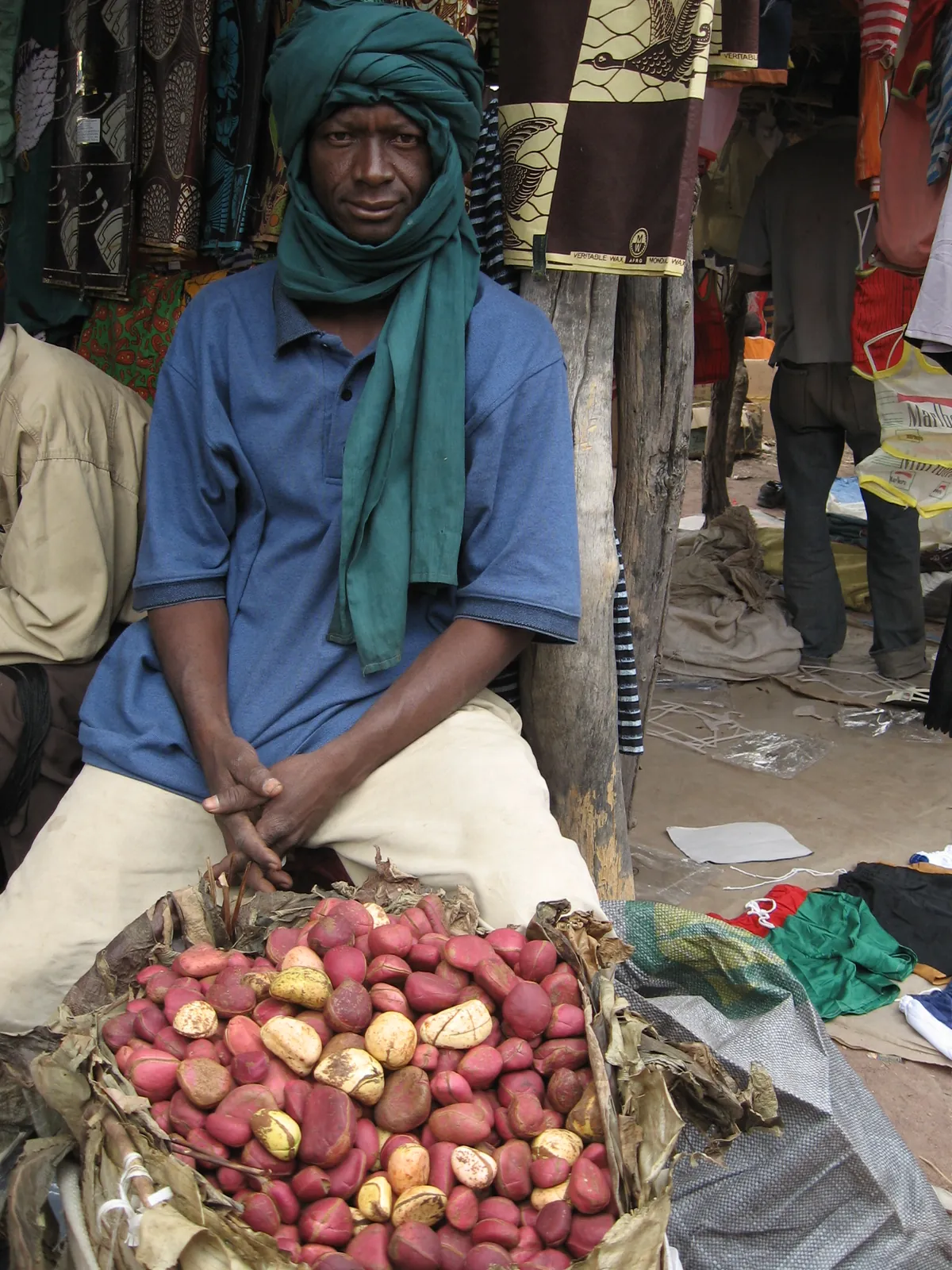
西アフリカの市場で売られるコーラナッツ。赤紫色と淡黄白色の2色の種子が入り混じって籠に山盛りにされ、売り子がそれを抱えている状態で、外皮(種皮)が乾いた葉に包まれている。
写っているもの: Cola(コーラノキ属。種までは原典に記載なし)部位・状態: 市場で売り子が抱える籠に山盛りにされた、赤紫色〜クリーム色のコーラナッツ(種子)
写真: Barry Pousman/ CC BY 2.0/ 原画像/ 台帳の原画像
写真の範囲と来歴
被写体の確認: 原典の記載による同定。原典キャプションに種の学名記載はなく、Cola属のどの種かは写真からは同定できない。撮影地の詳細情報も原典には記載がない。
掲載画像: Wikimedia Commons の原寸版。苦味研究所では切り抜き・色調変更なし。 表示用には幅1200px上限のWebPを配信し、台帳の原画像は上のリンクから確認できます。
On this page (7 sections)
Reading the bitterness
Kola nuts are primarily the seeds of the tropical trees Cola nitida or Cola acuminata and are described as containing caffeine and theobromine as two important constituents. Both compounds also occur in cacao and tea and may contribute to bitterness, but this source gives no numerical content values.
A historical study records kola nuts as long used in West Africa for chewing, served on occasions such as naming ceremonies and weddings, and treated as signs of hospitality and wealth. It also describes Cola nitida in particular as a major trade good for centuries on north–south routes linking the forest belt with savanna and the southern Sahara. This historical account covers West Africa from precolonial to modern periods; it does not represent every regional or temporal variation.
Sources for this overview
Safety assessment of kola nut extract as a food ingredient
Checked for this overview: Checked that the source species of kola nuts are recorded as Cola nitida and C. acuminata. / Checked the description of caffeine and theobromine as important constituents.
Kola in the History of West Africa
Checked for this overview: Checked the historical account of chewing and ceremonial use in West Africa. / Checked its position as a major good in north–south trade.
Follow the connections
kola nut →is derived from→ kola tree
kola nut →contains→ caffeine →is a poor universal prototy…→ bitterness
kola nut →contains→ theobromine →contributes to→ bitterness
Structured claims — open a section to read each claim's confidence, evidence and limits
Composition and content (3)
Scope: The source of kola-nut extract used as a food ingredient.
Note: C. nitida is the linked species; C. acuminata is listed on an equal footing.
Show data
ingredient-kola-nut —is_derived_from→ organism-cola-nitidaScope: The source lists 「コーラナッツの2つの重要成分」 (in translation: "two important constituents of kola nuts") as caffeine and theobromine
Note: Content values are not reported in the abstract.
Show data
ingredient-kola-nut —contains→ compound-caffeineScope: The source lists caffeine and theobromine as 「コーラナッツの2つの重要成分」 (in translation: "2 important constituents of kola nuts").
Note: No content values are stated in the abstract.
Show data
ingredient-kola-nut —contains→ compound-theobromineCulture (2)
Scope: West Africa from the precolonial period to modern times.
Note: Based on a historical overview.
Show data
ingredient-kola-nut —is_used_as→ "Chewed in West Africa, offered at naming ceremonies, weddings, and other rituals, and treated as a symbol of hospitality and wealth."Scope: West Africa from the precolonial period to modern times.
Show data
ingredient-kola-nut —was_major_trade_commodity_in→ "North–south West African trade linking the forest belt with savanna and the southern Sahara; a major trade good for centuries, especially Cola nitida."