chokeberry
ingredient / ingredient-aronia
アロニア / aronia (chokeberry) / Aronia melanocarpa (Michx.) Elliott
Chokeberry is a fruit of the chokeberry genus whose bitterness is measured as a separate attribute alongside sourness and astringency in a sensory evaluation panel. Astringency intensity has been reported to correlate negatively with liking.
Photographs (captions in Japanese)
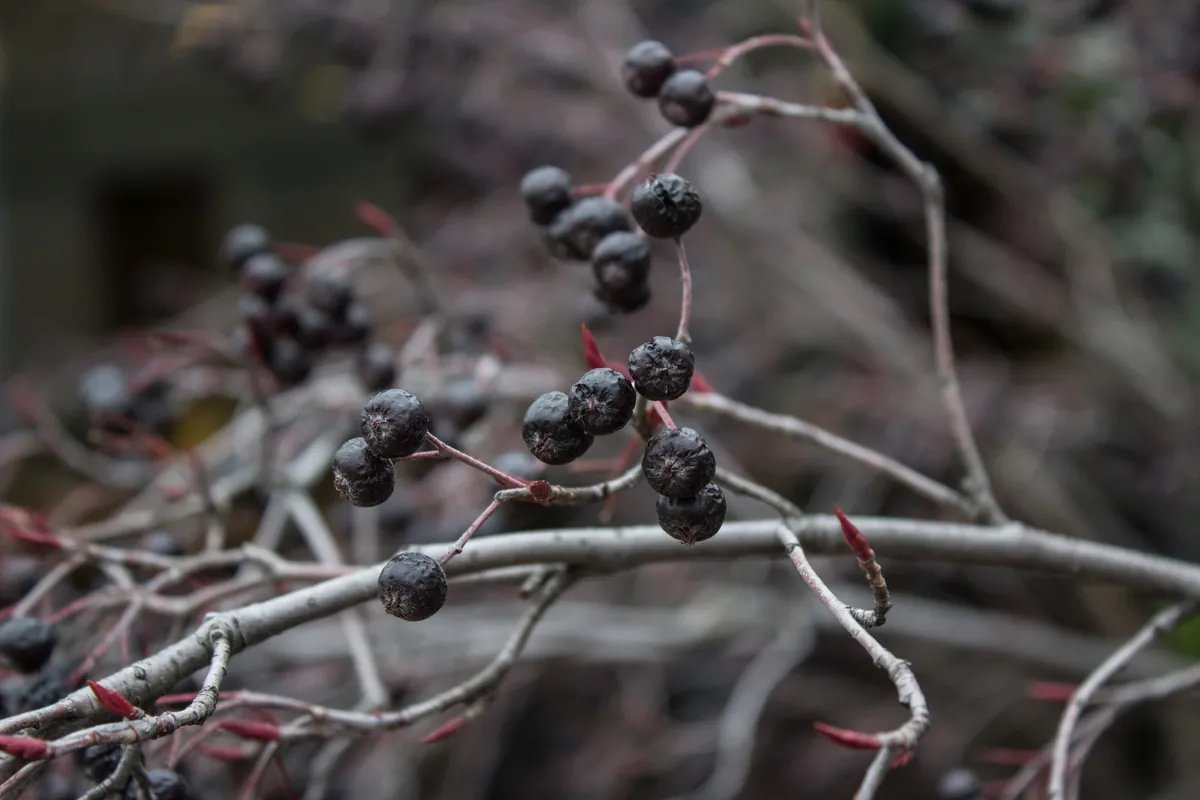
落葉後のアロニア(Aronia melanocarpa)の枝に房状に付く、光沢のある黒紫色の成熟果実。
現地観測写っているもの: Aronia melanocarpa部位・状態: 落葉後の枝に残る成熟果実の房。表面に光沢のある黒紫色の果実が複数個ずつ房状に付く
写真: Jason Zhang (User:Hiàn)/ CC BY-SA 3.0/ 原画像/ 台帳の原画像
写真の範囲と来歴
被写体の確認: 原典の記載による同定。説明文に学名が明記され、entities.csvの学名(Aronia melanocarpa (Michx.) Elliott)と属種一致。原寸5184x3456 画像を開いて確認。学名どおりAronia melanocarpaと明記され、黒紫色の果実の房が複数、赤みを帯びた枝に付いている
掲載画像: Wikimedia Commons の原本を長辺2400pxへ縮小。切り抜き・色調変更なし。 表示用には幅1200px上限のWebPを配信し、台帳の原画像は上のリンクから確認できます。
On this page (6 sections)
Reading the bitterness
A descriptive sensory panel of 50 participants evaluated polyphenol-rich aronia berry juice, rating sweetness, sourness, saltiness, bitterness, astringency, and liking as separate attributes. As the harvest progressed, the study reports that astringency fell to 「弱いよりやや上(just above weak)」 (in translation: "slightly above weak"), and bitterness to 「弱いよりやや下(just below weak)」 (in translation: "slightly below weak"). Bitterness showed no significant correlation with any measured chemical constituent.
In the same study’s correlation analysis, the study reports that overall liking of the juice correlated strongly and primarily with perceived sweetness intensity (ρ=0.96), while astringency correlated negatively with liking. In other words, stronger astringency was associated with lower liking. However, a correlation coefficient for bitterness and liking themselves cannot be confirmed from the study’s summary. Astringency (a puckering sensation akin to touch) and bitterness (a taste) were measured as separate attributes by the same panel, leaving a record that does not conflate them.
Sources for this overview
Characterizing and improving the sensory and hedonic responses to polyphenol-rich aronia berry juice
Checked for this overview: Used the findings that rated bitterness and astringency as separate attributes as evidence. / Used the negative correlation between astringency and liking as evidence for this paragraph.
Follow the connections
chokeberry →— sensory attribute→ bitterness →can be measured separately …→ astringency
chokeberry →— sensory attribute→ astringency →is not synonymous with→ bitterness
astringency →reduces taste preference for→ chokeberry
Structured claims — open a section to read each claim's confidence, evidence and limits
Sensory (3)
Scope: Polyphenol-rich aronia berry juice; descriptive sensory panel of 50 participants rating sweetness, sourness, saltiness, bitterness, astringency, and liking.
Note: As the harvest progressed, the study reports that astringency declined to 『just above weak(弱いよりやや上)』 (in translation: "slightly above weak") and bitterness to 『just below weak(弱いよりやや下)』 (in translation: "slightly below weak"). Bitterness was described as showing no significant correlation with any of the measured chemical constituents.
Show data
ingredient-aronia —has_sensory_attribute→ sensation-bitterScope: The same panel as above.
Note: Astringency was rated as an independent attribute in the same descriptive panel as bitterness.
Show data
ingredient-aronia —has_sensory_attribute→ sensation-astringentScope: Correlation analysis of ratings of overall liking in the same study.
Note: The study reports that liking correlated strongly and primarily with perceived sweetness intensity (ρ=0.96), while astringency correlated negatively with liking. The correlation between bitterness and liking cannot be confirmed from this abstract, so this claim records only the astringency correlation.
Show data
sensation-astringent —reduces_taste_preference_for→ ingredient-aronia