Chenpi
ingredient / ingredient-chenpi-cn-aged
陳皮
"chenpi", a Chinese medicinal-and-food material made by drying and long-term aging the peel of ripe citrus fruits.
Photographs (captions in Japanese)
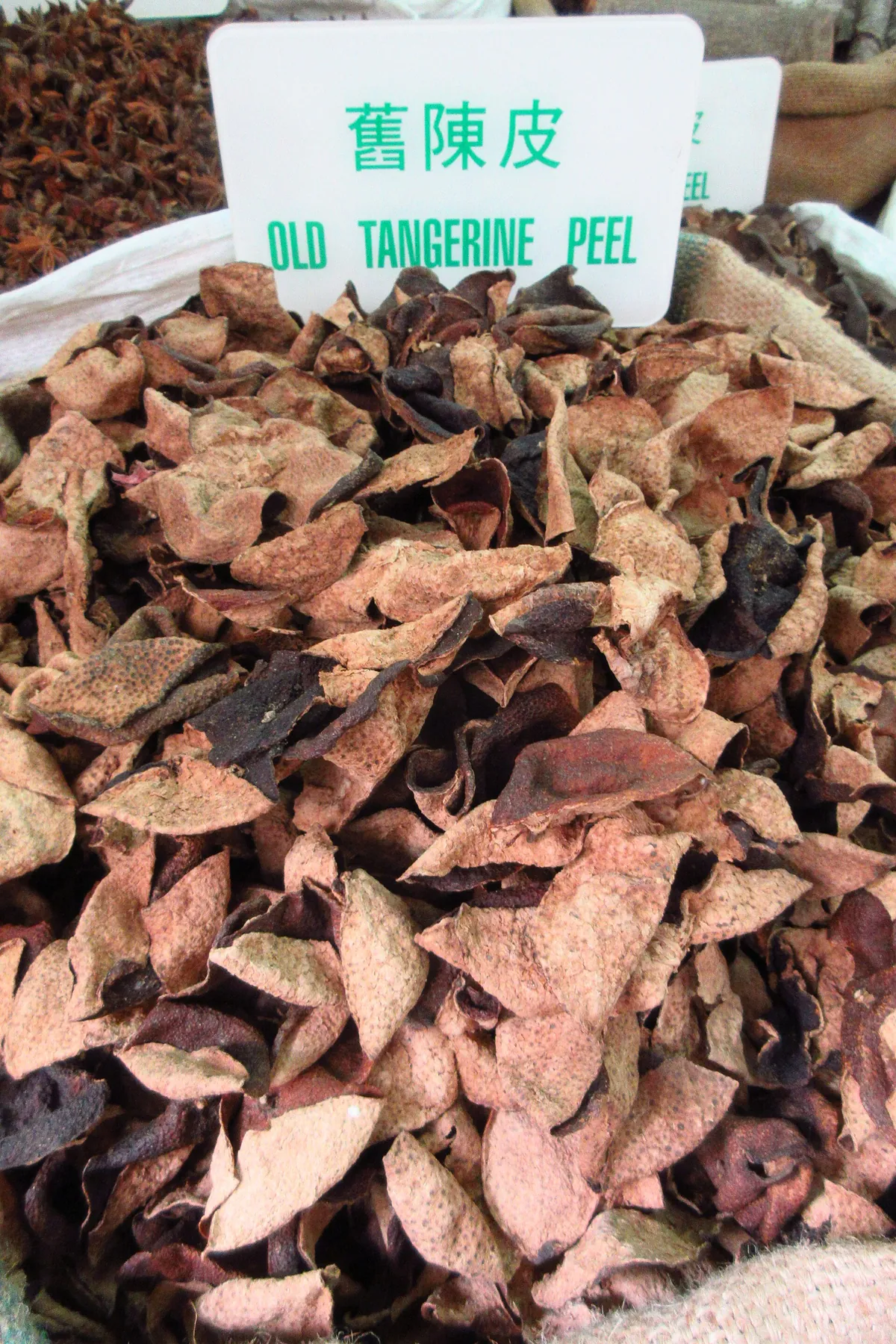
陳皮(乾燥させたみかん類の果皮)のうち、長期熟成させた「舊陳皮(老陳皮)」。香港の香辛料店で「OLD TANGERINE PEEL」の札を添えて量り売りされている状態で、表面が黒ずみ縁が反り返っている。
写っているもの: Citrus reticulata(原典は舊陳皮=老陳皮と表示)部位・状態: 香港の乾物・香辛料店で「舊陳皮 OLD TANGERINE PEEL」の札とともに山積みされた、黒ずんだ古い陳皮(乾燥みかん果皮)の破片
写真: Borshingwoods/ CC BY-SA 4.0/ 原画像/ 台帳の原画像
写真の範囲と来歴
被写体の確認: 原典の記載による同定。原典キャプションは店頭の陳列写真であり、柑橘の学名・産地の記載なし。「陳皮」全般の標準形ではなく、香港の一店舗が「舊陳皮(老陳皮)」として販売する商品の一例。
掲載画像: Wikimedia Commons の1920px版。苦味研究所では切り抜き・色調変更なし。 表示用には幅1200px上限のWebPを配信し、台帳の原画像は上のリンクから確認できます。
On this page (9 sections)
Reading the bitterness
Chenpi is a Chinese medicinal-and-food material made by drying and aging the peel of ripe citrus fruits over a long period. In traditional Chinese medicine's classification of properties and flavors, it is described as warm in nature, as combining pungency and bitterness, and as acting on the spleen and lung meridians. This is recorded as a position within a traditional-medicine classification system, not as bitterness measured in a sensory test.
This long aging characterizes chenpi. A 2026 review describes aging as a complex process of biotransformation that requires at least 3 years. The evaluation 「古いほど良い」 (in translation: "the older, the better") is linked to the gradual accumulation of phenolic acids with aging, and polymethoxyflavones are also described as continuing to increase through aging. The review also refers to studies of products aged for 5-30 years.
Reported total flavonoid content ranges from 36.24 to 88.64 mg/g, of which hesperidin accounts for 71-92%. Hesperidin is chenpi's principal flavonoid, but is not itself a bitter glycoside. The review does not claim that hesperidin content itself is the main cause of bitterness and does not determine which components cause bitterness.
Sources for this overview
Checked for this overview: The section checked for the traditional Chinese medicine classification of warm nature, pungent-bitter flavor, and action on the spleen and lung meridians. / The section checked for at least 3 years of aging, phenolic-acid accumulation, and references to products aged 5-30 years. / The section checked for the figures for total flavonoids and the proportion of hesperidin.
Other names: 陈皮 (zh), Citri Reticulatae Pericarpium (la)
Follow the connections
Chenpi →is produced through→ chenpi aging
Structured claims — open a section to read each claim's confidence, evidence and limits
Composition and content (1)
Scope: Chenpi
Note: Hesperidin itself is not a bitter glycoside (the bitter compounds are of the naringin type). This claim does not assert an attribution of bitterness.
Show data
ingredient-chenpi-cn-aged —contains→ "Total flavonoids of 36.24 to 88.64 mg/g. Hesperidin accounts for 71 to 92% of total flavonoids"How processing and cooking change it (1)
Scope: Chenpi (Citri Reticulatae Pericarpium)
Show data
ingredient-chenpi-cn-aged —is_produced_through→ process-chenpi-agingCulture (1)
Scope: Traditional classification in Chinese medicine
Note: This is a traditional classification, not a sensory measurement. It is retained in the bitterness database as a cultural positioning.
Show data
ingredient-chenpi-cn-aged —is_classified_by→ "In traditional Chinese medicine's taste-and-nature classification, a warm nature and a pungent, bitter taste (targeting the spleen and lung meridians)"