Kawachi bankan
ingredient / ingredient-kawachi-bankan
河内晩柑
Kawachi bankan is a mid-to-late-season citrus described as an accidental seedling of the pomelo lineage discovered in Kawachi Village, Kumamoto (now Kawachi-machi, Nishi Ward, Kumamoto City). In Ehime Prefecture it is distributed under names such as Uwa Gold and Ainan Gold. Chemical analysis detects naringin, limonin, and nomilin, while a producer-region introduction also describes it as "a Japanese grapefruit without bitterness".
Photographs (captions in Japanese)
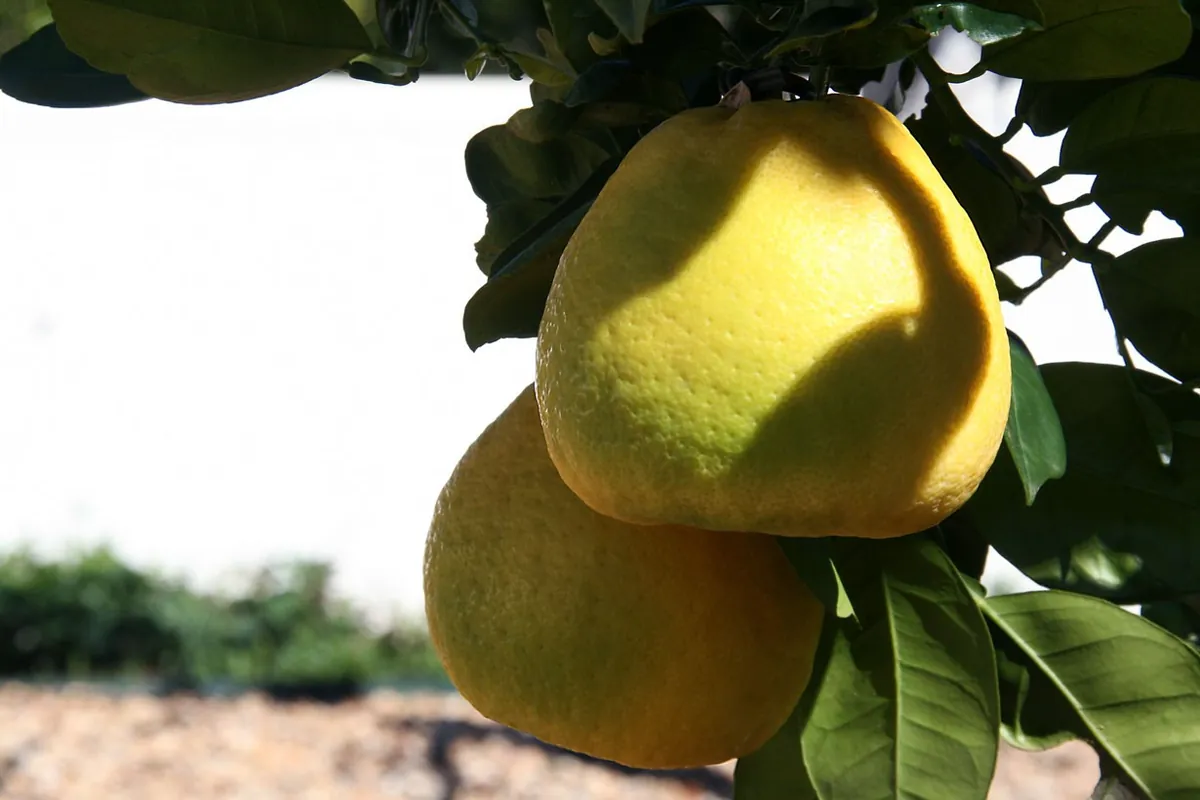
3月の樹上に生る、まだ緑がかった未熟な河内晩柑の果実2個。
写っているもの: Citrus sp.(河内晩柑)部位・状態: 樹上の未熟果実2個(葉付き)
写真: Jpbrigand2/ CC BY-SA 4.0/ 原画像/ 台帳の原画像
写真の範囲と来歴
被写体の確認: 原典の記載による同定。ファイル名・説明文(仏語「kawachi bankan immature en mars」=3月の未熟な河内晩柑)ともに品種名を明記。 画像を開き、樹上に垂れ下がる黄緑色の未熟な果実2個を確認した。
掲載画像: Wikimedia Commons の原本と同寸。切り抜き・色調変更なし。 表示用には幅1200px上限のWebPを配信し、台帳の原画像は上のリンクから確認できます。
On this page (8 sections)
Reading the bitterness
Kawachi Bankan is a citrus described as an accidental seedling of the pomelo lineage discovered in 1935 in Kawachi Village, Hōtaku District, Kumamoto (now Kawachi-machi, Nishi Ward, Kumamoto City). It was introduced to Ainan, Ehime Prefecture, in 1971; because the warm climate suited long maturation on the tree, it came to be distributed there under names such as Uwa Gold and Ainan Gold.
In a bitter-constituent survey of 8 citrus varieties conducted by the Kumamoto Prefectural Technology Center from fiscal 2005 to 2007, Kawachi Bankan was classified with Kawano natsudaidai, 「大橙」 (Ōdaidai), and Banpeiyu as a 「苦味系」 (in translation: "bitter group") containing much naringin in juice and peel. These 4 varieties are positioned as a group also containing much limonin, but the detailed detection results name Ponkan, Banpeiyu, and Sweet Spring for limonoids; Kawachi Bankan is mentioned only on the peel side (all varieties other than satsuma mandarin). All are classifications of presence or absence only, and quantitative values cannot be confirmed from this source.
In the same comparison of 8 varieties, Kawachi Bankan is stated to be the only one among the 8 tested varieties containing nomilin in its peel. Meanwhile, official Ainan materials introduce Kawachi Bankan as having a taste like 「ほどよい酸味の効いた、苦味のない和製グレープフルーツ」 (in translation: "a Japanese grapefruit with a moderate acidity and no bitterness"). The Kumamoto analysis detected naringin, limonin, and nomilin in Kawachi Bankan and identifies it as the only variety containing nomilin among the 8; numerically, this is inconsistent with the region’s account 「苦味がない」 (in translation: "no bitterness"). Which reflects the actual condition as a sensory evaluation cannot be confirmed within this source.
Sources for this overview
Checked for this overview: Used as evidence for the official account of its discovery in 1935 and introduction in 1971. / Used as evidence for the wording in which the production region introduces it as having no bitterness.
Checked for this overview: Used as evidence for the description classifying 4 varieties by naringin as a bitter group. / Used as evidence for the detailed listing of varieties in which limonin was detected. / Used as evidence for the statement that Kawachi Bankan alone among 8 varieties contains nomilin. / Used as evidence for the observation that the analytical results and the regional account are inconsistent.
Other names: 美生柑 (ja, identification medium), 宇和ゴールド (ja), 愛南ゴールド (ja)
Follow the connections
Kawachi bankan →contains→ naringin →is associated with→ bitterness
Kawachi bankan →contains→ limonin →is associated with→ bitterness
Kawachi bankan →contains→ nomilin
Hypotheses and recipe candidates for this entry are on the Japanese page.
Structured claims — open a section to read each claim's confidence, evidence and limits
Composition and content (3)
Scope: Kumamoto Prefectural Industrial Technology Center research, 2005-2007 fiscal years, 8-variety comparison
Show data
ingredient-kawachi-bankan —contains→ compound-naringinScope: Kumamoto Prefectural Industrial Technology Center research, 2005-2007 fiscal years, 8-variety comparison
Note: The summary and detailed sections of the source material do not match in their enumeration of varieties; both are recorded as stated.
Show data
ingredient-kawachi-bankan —contains→ compound-limoninScope: Kumamoto Prefectural Industrial Technology Center research, 2005-2007 fiscal years, 8-variety comparison
Note: This statement concerns the peel (Table 2); it does not address the juice. Nomilin is not recorded for kawano natsudaidai, otachibana, or banpeiyu.
Show data
ingredient-kawachi-bankan —contains→ compound-nomilinCulture (2)
Scope: An account in official materials from Ainan Town, Ehime Prefecture
Note: The discoverer's name and the discovery year (accounts differ between 1934 and 1935) vary in how they are recorded across sources. Multiple secondary sources also mention a genomic analysis said to make a variant of Yuge-hyoukan the leading theory, but that analysis paper could not be identified or confirmed by cross-checking sources, so it is not included here.
Show data
ingredient-kawachi-bankan —has_discovery_history→ "A chance seedling of the pomelo lineage discovered in 1935 (Showa 10) in Kawachi village, Hotaku district, Kumamoto Prefecture (now Kawachi-machi, Nishi-ku, Kumamoto City). It reached Ainan, Ehime Prefecture in 1971 (Showa 46), where the warm climate suited long, on-tree ripening."Scope: Product introduction text in official materials from Ainan Town, Ehime Prefecture
Show data
ingredient-kawachi-bankan —is_presented_as→ "It is described, in the producing region's introductory text, as tasting like 『ほどよい酸味の効いた、苦味のない和製グレープフルーツ』 (in translation: "a Japanese-made grapefruit with just the right tartness and no bitterness")."