huazontle inflorescence
ingredient / ingredient-huazontle-inflorescence
ワソントレの花序 / Chenopodium berlandieri subsp. nuttalliae
Young huazontle inflorescences. An edible part in traditional cuisine of the Mexican Basin. A report that saponin concentration is high in the outer layer concerns seeds of a congeneric plant; saponin distribution in the inflorescences themselves was not reported in the collected sources.
Photographs (captions in Japanese)
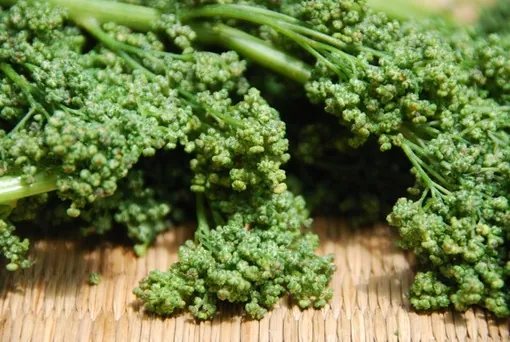
ワウソントレ(Chenopodium berlandieri subsp. nuttalliae)の若い花序を付けた茎。メキシコ盆地の伝統料理で食用にされる部位。
写っているもの: Chenopodium berlandieri subsp. nuttalliae(ワウソントレ)部位・状態: 若い花序を付けた茎
写真: Pabs004/ CC BY-SA 3.0/ 原画像/ 台帳の原画像
写真の範囲と来歴
被写体の確認: 原典の記載による同定。低解像度(510×342px、長辺510px)だが、Commons上でこの部位を明示的に示す唯一クラスの写真であるため採用。
掲載画像: Wikimedia Commons の原寸ファイル。苦味研究所では切り抜き・色調変更なし。 表示用には幅1200px上限のWebPを配信し、台帳の原画像は上のリンクから確認できます。
On this page (8 sections)
Reading the bitterness
Young huazontle inflorescences are analyzed in a 2025 thesis as an edible part alongside seeds. The thesis analyzes chemical composition using an inflorescence decoction and dichloromethane:MeOH extracts, supporting that this part is treated as both food and a research subject.
The thesis mentions bitterness from Chenopodium-genus saponins as background information for the species as a whole, but this generalizes findings reported for seeds of a congeneric plant to an edible inflorescence and is not a sensory test of the inflorescence itself. Sources directly showing saponin distribution within the inflorescence were outside the collection scope.
A monograph published by SIAP under Mexico’s Ministry of Agriculture and Rural Development records stems, leaves, and flowers (spike-like inflorescences) as harvested parts and states that they contain saponins, substances that give food slight bitterness. From the paragraph structure, it cannot be determined precisely whether the subject refers to the flowers just mentioned or the plant as a whole.
Sources for this overview
Checked for this overview: Confirmed the description of the inflorescence as an edible part and experimental subject. / Confirmed that the genus-level saponin bitterness description was generalized to the inflorescence as background.
Huauzontle (monografía de producto)
Checked for this overview: Confirmed the SIAP monograph’s description of slight bitterness from saponins.
Other names: huazontle (es)
Follow the connections
huazontle inflorescence →is prepared from→ huazontle / quelite cenizo
huazontle inflorescence →— bitterness is attributed …→ Chenopodium triterpenoid saponins →— sensory attribute→ bitterness
Structured claims — open a section to read each claim's confidence, evidence and limits
Composition and content (2)
Scope: Young inflorescences, as well as seeds, are used as edible parts.
Show data
ingredient-huazontle-inflorescence —is_prepared_from→ organism-chenopodium-berlandieri-nuttalliaeScope: Layer: Public source. The SIAP/SADER one-page monograph was read in full. From the paragraph structure it cannot be determined precisely whether the saponin attribution is limited to the inflorescence or refers to the whole plant.
Show data
ingredient-huazontle-inflorescence —is_documented_as_having→ "A SIAP/SADER agricultural monograph states that stems, leaves, and flowers (spike-like inflorescences) are harvested parts, contain saponins, and that these substances give food slight bitterness."Sensory (1)
Scope: Positioning of genus (Chenopodium) level saponin description as generalization to the edible flower clusters of huazontle.
Note: A limitation is that this is not a sensory test of the flower clusters themselves.
Show data
ingredient-huazontle-inflorescence —has_bitterness_attributed_to→ compound-class-chenopodium-saponins