quelites
ingredient / ingredient-quelites
ケリテス
Quelites: a Mexican cultural category of edible wild and partly cultivated young leaves, stems, flowers, and other parts. The word derives from Nahuatl quilitl (edible plant) and encompasses more than 350 species rather than a single taxon.
Photographs (captions in Japanese)
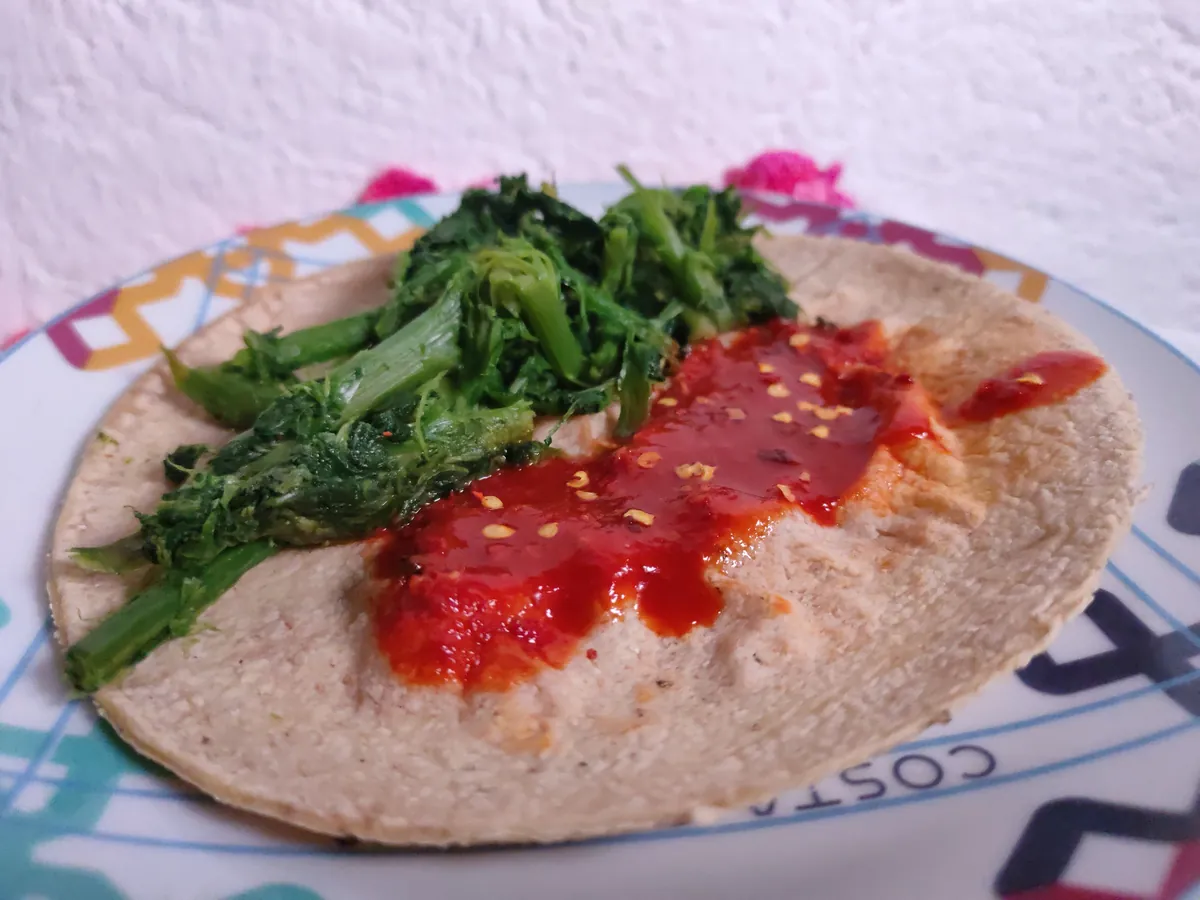
トルーカ渓谷のオトミ族の伝統に基づき、茹でたケリテス(野生の若葉類の総称)を詰めてサルサを添えたタコス。ケリテスは350種以上を束ねる文化的カテゴリーで単一の植物種を指さないため、この写真も特定の種を示すものではない。
加工後写っているもの: 該当なし(メキシコの野生・半栽培若葉の総称カテゴリー、単一分類群ではない)部位・状態: 茹でたケリテスを詰めたタコス
写真: Natho Nzujni/ CC BY-SA 4.0/ 原画像/ 台帳の原画像
写真の範囲と来歴
被写体の確認: 原典の記載による同定。ケリテス単体ではなく調理・盛り付け後の姿。単一分類群ではないため個別種の同定はできない。
掲載画像: Wikimedia Commons の原寸ファイルを sips で長辺2400pxに縮小。苦味研究所では切り抜き・色調変更なし(リサイズのみ)。 表示用には幅1200px上限のWebPを配信し、台帳の原画像は上のリンクから確認できます。
On this page (7 sections)
Reading the bitterness
According to an official page from Mexico’s National Commission for the Knowledge and Use of Biodiversity (CONABIO), quelite derives from the Nahuatl quilitl, meaning an edible plant or tender vegetable, and has corresponding words in several Indigenous languages.
A 2025 thesis on the chemical composition of huazontle (Chenopodium berlandieri subsp. nuttalliae) inflorescences says in its background discussion that quiyollotl, derived from quilitl, refers to young stems, shoots, and sprouts, citing descriptions by Sahagún (ca. 1577) and Hernández (ca. 1571). This is a secondary presentation in a thesis, however, not direct consultation of the colonial-period originals.
The same CONABIO page defines quelites broadly as edible young parts: the whole plant excluding the root, seedlings, young branches and sprouts, tender leaves, leaves without veins, petioles, and stems. It says that more than 350 species are selected and eaten in Mexico according to local traditions.
A catalogue of quelites published by Mexico’s Secretariat of Agriculture and Rural Development (SADER) describes one of those more than 350 species, "flor de colorín" (in translation: "colorín flower") (Erythrina genus). It says that, besides smooth-textured young leaves, flower buds and fully opened flowers are eaten. When preparing the flowers, the center is removed to keep a stew from becoming bitter.
Sources for this overview
Checked for this overview: Confirmed CONABIO’s explanation deriving the word from quilitl. / Confirmed the definition of edible quelite parts and the reported species count.
Checked for this overview: Confirmed the meaning of quiyollotl and the context of the citations to primary historical sources.
Los quelites, tradición milenaria en México
Checked for this overview: The preparation step of removing the center of colorín flowers to avoid bitterness.
Other names: quilitl (nah), quiyollotl (nah, identification medium)
Structured claims — open a section to read each claim's confidence, evidence and limits
Composition and content (2)
Scope: The etymological explanation on an official CONABIO page.
Show data
ingredient-quelites —has_name_etymology→ "Derived from Nahuatl quilitl (edible plant or tender vegetable). The derivative quiyollotl refers to young stems, shoots, and sprouts."Scope: Mexico-wide; the official CONABIO definition.
Show data
ingredient-quelites —is_defined_as→ "A broad term for edible young parts, including the whole plant excluding its root, seedlings, young branches or shoots, tender leaves, leaves without veins, petioles, and stems. More than 350 species are selected and consumed in Mexico according to regional traditions."How processing and cooking change it (1)
Scope: Layer: literature (official source). A preparation description in SADER’s quelites catalogue (read in full) for one listed Erythrina spp. type (colorín), not for quelites in general.
Note: Quelites is a cultural category encompassing more than 350 species. This account concerns preparation of one of them, colorín, and does not establish bitterness for the category as a whole.
Show data
ingredient-quelites —is_documented_as_having→ "SADER’s quelites catalogue says that for one listed type, "flor de colorín" (in translation: "colorín flower") (Erythrina spp.), young leaves, flower buds, and mature flowers are eaten, but the flower center is removed before cooking to keep the dish from becoming bitter."