日本語版

limonin

compound / compound-limonin

リモニン

Limonin is a citrus limonoid associated with delayed bitterness in citrus products.

Photographs (captions in Japanese)
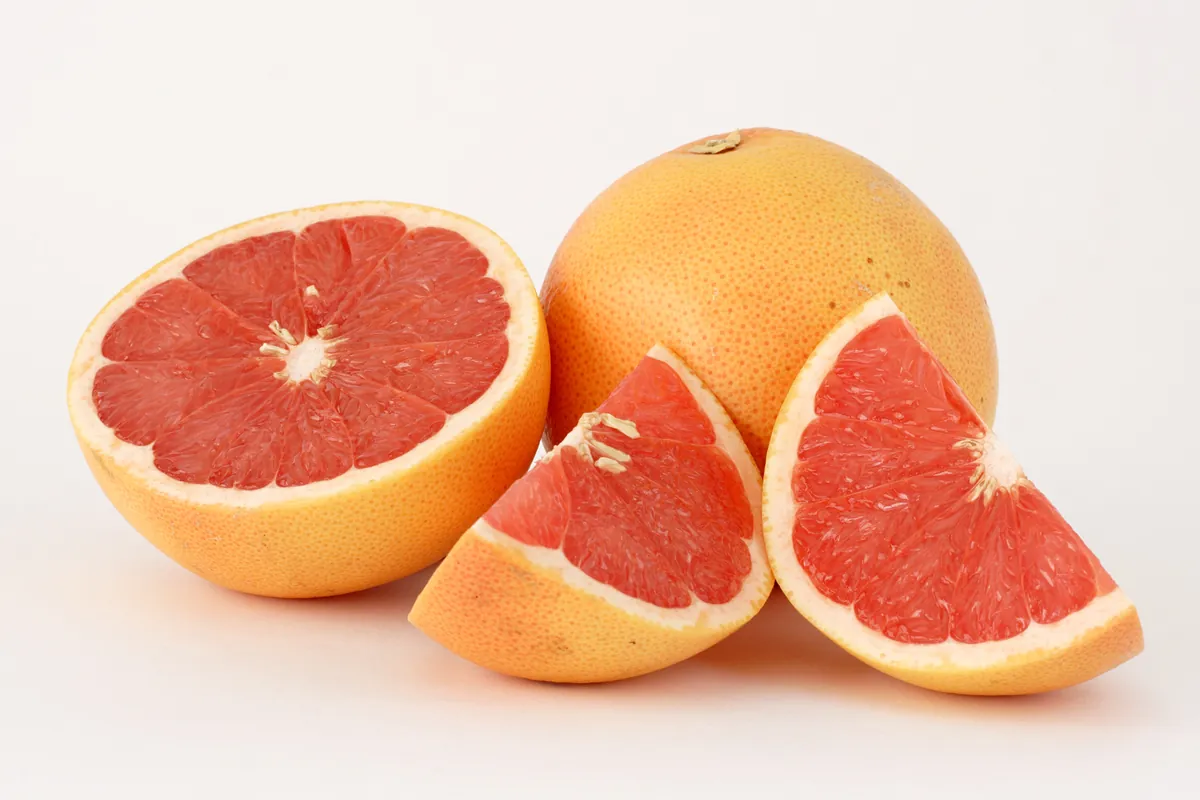
ピンク色を帯びたグレープフルーツの果実が写っている写真

グレープフルーツ(Citrus paradisi)の果実。limonin は柑橘製品の遅発性苦味に関連するリモノイドであり、化合物そのものではなく代表的な給源果実の写真である。

原料写っているもの: Citrus paradisi(グレープフルーツ)部位・状態: 果実(外観)

写真: א (Aleph)/ CC BY-SA 2.5/ 原画像/ 台帳の原画像

写真の範囲と来歴

被写体の確認: 原典の記載による同定。ingredient-grapefruit-juice・compound-naringin で使用した写真とは別ファイル(重複回避)。

掲載画像: Wikimedia Commons の原寸ファイル。苦味研究所では切り抜き・色調変更なし。 表示用には幅1200px上限のWebPを配信し、台帳の原画像は上のリンクから確認できます。

On this page (10 sections)
  1. Overview
  2. Sources for this overview (5)
  3. Topic hubs
  4. Follow the connections
  5. Related entries (10)
  6. Measured values (3)
  7. Composition and content (8)
  8. Sensory (5)
  9. Mechanism and receptors (3)
  10. How processing and cooking change it (4)
↑

Reading the bitterness

Limonin is a compound involved in delayed bitterness (「遅発性苦味」, in translation: "delayed bitterness") in citrus juice that intensifies gradually after expression. Before expression, the fruit contains not limonin itself but its tasteless precursor (limonoate A-ring lactone, LARL), which converts to bitter limonin under acidic conditions when tissue ruptures during expression. The recognition threshold for limonin bitterness in distilled water is approximately 1 mg/L, and this threshold rises several-fold when sugar or citric acid is present. Thus, at the same limonin concentration, palatability varies depending on the surrounding sugar and acid levels.

In orange juice, the discrimination threshold for limonin is highest at pH 3.8 (6.5 mg/kg), making bitterness least perceptible. As pH deviates from this value, the threshold decreases and bitterness becomes more prominent. Research using Navel orange juice has confirmed that limonin concentration increases during storage and stabilizes at a certain level; heating and acidification accelerate this increase but do not change the final concentration; and filtration or expressing juice after prolonged fruit storage lowers the final concentration.

Regarding the mechanism of conversion from precursor to limonin, research perspectives diverge. Studies using seedless Navel orange juice treat this conversion as an acid- and heat-driven reaction, largely excluding enzyme involvement. Conversely, research using enzyme purified from citrus seeds positions the conversion as enzyme-catalyzed. The presence or absence of seeds in fruit may explain this difference, but the sources reviewed do not explicitly address this point.

Sources for this overview

  1. Citrus Taste Modification Potentials by Genetic Engineering

    Li LJ; Tan WS; Li WJ; Zhu YB; Cheng YS; Ni H / 2019 / review / full text checked

    Checked for this overview: Confirmed the conversion process of delayed bitterness from precursor to limonin.

  2. Effect of some citrus juice constituents on taste thresholds for limonin and naringin bitterness

    Guadagni DG; Maier VP; Turnbaugh JG / 1973 / journal article / abstract checked

    Checked for this overview: Confirmed recognition threshold of 1 mg/L in distilled water and effects of sugar and acid.

  3. Grapefruit Debittering by Simultaneous Naringin Hydrolysis and Limonin Adsorption Using Naringinase Immobilized in Agarose Supports

    Munoz M; Holtheuer J; Wilson L; Urrutia P / 2022 / journal article / full text checked

    Checked for this overview: Confirmed threshold of 6.5 mg/kg at pH 3.8 in orange juice.

  4. Effects of Postharvest Time, Heat Treatment, pH and Filtration on the Limonin Content in Newhall Navel Orange (Citrus sinensis Osbeck cv. Newhall) Juice

    Zhang J; Yang Z; Liang Y; Zhang L; Ling W; Guo C; Liang G; Luo G; Ye Q; Zhong B / 2018 / journal article / full text checked

    Checked for this overview: Confirmed concentration increase during storage and effects of heating and filtration. / Confirmed the perspective of acid-promoted reaction in seedless juice.

  5. Purification and characterization of limonin D-ring lactone hydrolase from sweet orange (Citrus sinensis (L.) Osbeck) seeds

    Zhang N; Xu Y; Jia X; Li X; Ren J; Pan S; Fan G; Yang J / 2024 / journal article / abstract checked

    Checked for this overview: Confirmed the opposing view of enzyme-mediated conversion from seed sources.

Follow the connections

limonin →is associated with→ bitterness →can be measured separately …→ astringency

Hassaku →contains→ limonin

amanatsu (Citrus natsudaidai) →contains→ limonin

Measured values (3)

KindCompoundTargetValueConditionsSource
human recognition thresholdlimonin—1 mg/LDistilled water (threshold rises several-fold when sugar and acid are present)Guadagni DG, 1973
concentrationlimoninpomelo pith0.2907 mg/g DWUntreated Kao Nampung pomelo albedo (Table 3。)Jaroennon Pattamaporn, 2025
concentrationlimoninpomelo pith0.0776 mg/g DW0.7% β-CD plus ultrasonic treatment (Table 3。)Jaroennon Pattamaporn, 2025

Values are the reported values of each source (with units and conditions). Thresholds and EC50 depend on the panel and method; they are not single true values.

Structured claims — open a section to read each claim's confidence, evidence and limits

Composition and content (8)

Hassaku contains limoninsupported

Scope: Hassaku fruit (juice, inner peel, outer peel); analysis by TLC and HPLC

Note: Note that these are not the bitter limonin (aglycone) itself, but glycosides whose bitterness has been weakened through glucose conjugation. This connects, as data on debittering through sugar conjugation during ripening, separately from the existing claim (compound-limonin's delayed bitterness).

Separated and quantified 6 limonoid glycosides in the juice, inner peel, and outer peel of hassaku fruit by TLC and HPLC, and reported that limonin 17-β-D-glucopyranoside accounted for 148 ppm of the 314 ppm total in the juice (47%). 3100 ppm in the dried inner peel, 2300 ppm in the dried outer peel.
Limitations: What was detected were the weakly bitter glycosides (the glucose-conjugated form); a direct correspondence with bitterness sensory perception could not be confirmed from this abstract alone.
Source: ハッサク果実のリモノイド配糖体 (前田久夫; 尾崎嘉彦; 三宅正起; 伊福靖; 長谷川信, 1990) · full text checked
Show dataingredient-hassaku —contains→ compound-limonin
claim: clm-w40b-hassaku-limonoid-glycosides / type: composition / updated: 2026-09-02
amanatsu (Citrus natsudaidai) contains limoninsupported

Scope: Kumamoto Prefectural Industrial Technology Center research, 2005-2007 fiscal years, 8-variety comparison

Note: The summary and detailed sections of the source material do not match in their enumeration of varieties; both are recorded as stated.

The summary section of the document states that Kawano Natsudaidai, Daiorange, Kawachibankan, and Banpeiyu 「果汁及び果皮にナリンギン、リモニンを多く含む」 (in translation: "contain much naringin and limonin in juice and peel"). In the detailed section, however, the varieties named as having bitter limonoids in juice are Ponkan, Banpeiyu, and Sweet Spring, with no explicit mention of Kawano Natsudaidai juice. Peel limonin is present in all 7 varieties except Satsuma mandarin. Nomilin is contained only in Kawachibankan (Table 2, in the peel description).
Limitations: Quantitative values have not been confirmed (presence/absence classification only). Tables 1 and 2 (images) have not been checked.
Source: カンキツ類の苦味成分と加熱による臭いの変化 (熊本県産業技術センター, 2008) · full text checked
Show dataingredient-amanatsu —contains→ compound-limonin
claim: clm-w40b-amanatsu-limonin / type: composition / updated: 2026-09-02
Citrus maxima contains limoninsupported

Scope: Kumamoto Prefectural Industrial Technology Center research, 2005-2007 fiscal years, 8-variety comparison

The summary section states that Kawano Natsudaidai, Daiorange, Kawachibankan, and Banpeiyu 「果汁及び果皮にナリンギン、リモニンを多く含む」 (in translation: "contain much naringin and limonin in juice and peel"). In the detailed section, these 4 varieties contain bitter naringin, and Banpeiyu, together with Ponkan and Sweet Spring, is listed as containing bitter limonoids in its juice. The document has no category word 「苦味系」 (in translation: "bitter type"); the grouping is by the presence of naringin. All varieties except Satsuma mandarin have peel limonin. Nomilin is contained only in Kawachibankan.
Limitations: Quantitative values have not been confirmed (presence/absence classification only).
Source: カンキツ類の苦味成分と加熱による臭いの変化 (熊本県産業技術センター, 2008) · full text checked
Show dataingredient-banpeiyu —contains→ compound-limonin
claim: clm-w40b-banpeiyu-limonin / type: composition / updated: 2026-10-06
Kawachi bankan contains limoninsupported

Scope: Kumamoto Prefectural Industrial Technology Center research, 2005-2007 fiscal years, 8-variety comparison

Note: The summary and detailed sections of the source material do not match in their enumeration of varieties; both are recorded as stated.

Kawachibankan peel contains limonin (though this is a common feature of all 7 varieties except Satsuma mandarin and is not limited to the 4 bitter-taste types). Kawachibankan does not appear in the explicit list of juice limonin varieties.
Limitations: Quantitative values have not been confirmed (presence/absence classification only).
Source: カンキツ類の苦味成分と加熱による臭いの変化 (熊本県産業技術センター, 2008) · full text checked
Show dataingredient-kawachi-bankan —contains→ compound-limonin
claim: clm-w40b-kawachibankan-limonin / type: composition / updated: 2026-09-02
Citrus natsudaidai contains limoninsupported

Scope: Part-by-part analysis of 1 sample of natsumikan (from Ehime). The division of parts is the same as in Morohoshi and Sugawara (1971). Quantified by a color development method as total limonoids in limonin equivalents.

Note: This is the amount of limonoids (bitter substances mainly limonin), not a sensory evaluation of bitterness. The content is total limonoids, not limonin alone. Unlike the distribution of naringin (higher in the albedo and segment membrane than in the flavedo), limonoids are higher in the flavedo than in the albedo and segment membrane, and highest in the seeds. The color development is unstable, measurement was made within 3 minutes after color development, and the recovery of added amounts is stated as ±10%.

Table 1 shows flavedo 3.38, albedo 1.00, segment membrane 1.63, juice 0.15, residue 1.38 and seeds 8.88 (all mg%).
Limitations: The numbers of replicates and individual fruits are not given. No sensory evaluation of bitterness.
Source: マーマレード作製中のリモノイド量の変化について (諸星俊雄; 菅原龍幸, 1973) · full text checked
Show dataingredient-natsumikan —contains→ compound-limonin
claim: clm-hnprep-natsumikan-limonoid-parts-morohoshi-1973 / type: composition / updated: 2026-10-13
Hassaku contains limoninsupported

Scope: Limonin and nomilin by part (flesh, segment membrane, seeds, peel) of hassaku fruit (Ehime Prefecture), quantified with a dual-wavelength thin-layer chromatography scanner. Harvested on November 16, January 18, March 23 and May 17.

In the Hassaku row of Table 4, limonin (ppm) was, on Nov. 16, Pu. 62, S.W. 646, S. 2534 and Pe. 185; on Jan. 18, 32, 534, 1914 and 191; on Mar. 23, 20, 496, 1200 and 187; and on May 17, 22, 447, 1130 and 147. Nomilin was, on Nov. 16, 29, 1297, 2100 and 96; on Jan. 18, 4, 152, 1404 and 23; on Mar. 23, 4, 57, 1067 and nd; and on May 17, 4, 38, 941 and nd (Pu. = flesh, S.W. = segment membrane, S. = seeds, Pe. = peel, nd = not detected). The main text states that by cultivar, the limonin and nomilin contents were highest in hassaku, followed by 4 cultivars including natsumikan, and then Satsuma mandarin.
Limitations: No sensory evaluation of bitterness. The number of fruits at each harvest time is not given. The main text's "hassaku is highest" does not match Table 4 for the seeds.
Source: 柑橘果実の苦味物質の含量と時期別変化 (福谷敬三; 宮本等, 1983) · full text checked
Show dataingredient-hassaku —contains→ compound-limonin
claim: clm-hnprep-hassaku-limonin-nomilin-parts-fukutani-1983 / type: composition / updated: 2026-10-13
Hassaku contains limoninsupported

Scope: Fruit collected at about 1-month intervals from July 28 to January 17 from 2 hassaku trees aged 12 years at the attached farm of the Faculty of Agriculture, Kagoshima University (10 M-grade fruits, in 2 replicates of 5 fruits each). 40 g of flesh, 10 g of segment membrane and other parts were extracted with methylene chloride and quantified by thin-layer chromatography.

Note: This is the amount of limonoids as bitter substances, not a sensory evaluation. The author states that part of the bitterness of hassaku may depend on limonoids, and that the bitterness of nomilin is stronger than that of limonin (citing earlier studies). The limonoids in the segment membrane of natsumikan follow the same pattern of change as in hassaku, with the content said by the author to be about 2 times higher in hassaku.

The main text states that in the segment membrane, limonin was the main limonoid from September onward, peaked (500 ppm) from September to October, then decreased from October to January to 200 ppm in January, and that nomilin was highest in July and August when the fruit was immature. The summary states that limonin is the main limonoid in the flesh of hassaku, at 50 ppm in September, and that nomilin in the flesh and segment membrane was highest in August (20 ppm and 500 ppm) and then fell sharply. The discussion states that the proportion of the bitter limonin and nomilin in total limonoids is 82 to 86% in hassaku.
Limitations: No sensory evaluation. Values were not read from the figures.
Source: ハッサク及びブンタン果実のリモノイドの時期別変化 (橋永文男; 伊藤三郎, 1983) · full text checked
Show dataingredient-hassaku —contains→ compound-limonin
claim: clm-hnprep-hassaku-segment-membrane-limonoid-hashinaga-1983 / type: composition / updated: 2026-10-13
Citrus natsudaidai contains limoninpreliminary

Scope: Natsumikan grown on the grounds of the Faculty of Agriculture, Yamaguchi University. The peel, segment membrane and seeds were dried and ground, extracted with benzene, and the weight of the precipitate separated with ether was taken as limonoids (from September 1962 to April 1963).

Note: This is a research note; limonoids were measured by the weight of the precipitate, and the composition is unconfirmed (mainly limonin). The result that limonoids in the segment membrane increase with ripening runs opposite to later reports by thin-layer chromatography and HPLC (Hashinaga and Ito 1983, Fukutani and Miyamoto 1983: limonoids in each part decrease as the fruit ripens), and this may be due to the difference in measurement method (precipitate weight method). The author states that values were disturbed from January 1963 onward by frost damage.

Table 1, for harvest dates of September 12, October 10, November 2, November 28 and December 20, gives peel (400 g dry matter) of 0.76, 1.08, 0.93, 0.92 and 0.90 g, segment membrane (400 g dry matter) of 1.05, 1.32, 2.06, 2.15 and 2.25 g, and seeds (40 g defatted) of 0.77, 0.55, 0.50, 0.47 and 0.44 g. The discussion states that the limonoid amount in the outer peel was roughly constant throughout ripening, but the limonoids in the seeds decreased with ripening and those in the segment membrane increased, and that the fact that the segment membrane has many limonoids is noteworthy.
Limitations: The precipitate weight method does not show the purity of the components. From January 1963 onward the fruit were frost-damaged. Replicates are not given.
Source: 夏ミカン果実中のリモノイド (野村男次, 1963) · full text checked
Show dataingredient-natsumikan —contains→ compound-limonin
claim: clm-hnprep-natsumikan-limonoid-seasonal-nomura-1963 / type: composition / updated: 2026-10-13

Sensory (5)

limonin is associated with bitternessestablished

Scope: In many of the citrus products where it occurs, a delayed bitterness contribution

Note: Matrix and precursor conversion affect how it is perceived over time.

Verbatim: "The gradual conversion of the non-bitter precursors to the bitter limonoids is known as the process of delayed bitterness." During juicing, "the precursors NARL and LARL are converted to the bitter nomilin and limonin, respectively, under the acidic condition (pH < 6.5)", and this is accelerated once membrane vesicles rupture, by limonoid D-ring lactone hydrolase. Citrus limonoids exist as "the bitter aglycones and non-bitter glucosides", and limonoid aglycones are partly converted to glucosides during fruit maturation (a natural debittering by limonoid glucosyltransferase).
Limitations: A review; gives no numerical thresholds. The review names naringin (grapefruit) and neohesperidin (sour orange) as the main flavanone bitterness contributors, and limonin as the delayed-bitterness contributor.
Source: Citrus Taste Modification Potentials by Genetic Engineering (Li LJ; Tan WS; Li WJ; Zhu YB; Cheng YS; Ni H, 2019) · full text checked
Limonin's bitterness threshold in distilled water was 1 mg/l and rose several-fold in the presence of sucrose and citric acid; the optimum pH at which limonin's bitterness suppression is greatest (the threshold is highest) was 3.8 both in the model system and in natural orange juice (maximum recognition threshold 6.5 mg/kg), and on either side of that pH the threshold fell, making the bitterness more noticeable.
Limitations: Quantifies the matrix-dependence of limonin's bitterness but does not address the kinetics of delayed precursor conversion. The abstract was reconstructed from OpenAlex (single pathway).
Source: Effect of some citrus juice constituents on taste thresholds for limonin and naringin bitterness (Guadagni DG; Maier VP; Turnbaugh JG, 1973) · abstract checked
Show datacompound-limonin —is_associated_with→ sensation-bitter
claim: clm-citrus-limonin / type: sensory / updated: 2026-08-30
limonin — bitter recognition threshold: 1 mg/L in distilled water. Maximum recognition threshold of 6.5 mg/kg in orange juice at pH 3.8supported

Scope: A panel of 20-27 screened judges. Distilled water, sucrose, and citric acid model systems, and orange juice

Note: Sucrose and citric acid raise the threshold. In both the model systems and the juice, the pH optimum for suppression is 3.8. Later debittering literature cites the 6.5 ppm juice value from this same lineage.

The threshold in distilled water was 1 mg/l for limonin and 20 mg/l for naringin. The maximum recognition threshold for limonin in orange juice was 6.5 mg/kg, occurring at pH 3.8, and the maximum value of 11 mg/kg in the model system also occurred at pH 3.8.
Limitations: Abstract only; panel procedure details and inter-individual variation cannot be read.
Source: Effect of some citrus juice constituents on taste thresholds for limonin and naringin bitterness (Guadagni DG; Maier VP; Turnbaugh JG, 1973) · abstract checked
Context: States that the threshold of limonin in orange juice is affected by pH, and is 6.5 ppm at pH 3.8.
Limitations: A secondhand citation of the Guadagni lineage, not an independent measurement.
Show datacompound-limonin —has_bitter_recognition_threshold→ "1 mg/L in distilled water. Maximum recognition threshold of 6.5 mg/kg in orange juice at pH 3.8"
claim: clm-limonin-threshold / type: sensory / updated: 2026-08-30
limonin — perceived bitterness is unchanged by: Addition of citric acid (did not lower the perceived bitterness from limonin and nomilin in orange juice)preliminary

Scope: Layer: food. A threshold and intensity panel using natural orange juice (Dea et al. 2013).

"Added sucrose, but not citric acid, decreased the perception of bitterness induced by limonin and nomilin in orange juice."
Limitations: Confirmed from the abstract only; the full text has not been read. The details of the added concentrations cannot be confirmed from the abstract information.
Source: Interactions and Thresholds of Limonin and Nomilin in Bitterness Perception in Orange Juice and Other Matrices (Dea Sharon; Plotto Anne; Manthey John A; Raithore Smita; Irey Mike; Baldwin Elizabeth, 2013) · abstract checked
Show datacompound-limonin —has_perceived_bitterness_unchanged_by→ "Addition of citric acid (did not lower the perceived bitterness from limonin and nomilin in orange juice)"
claim: clm-w67b-orangejuice-citricacid-unchanged / type: sensory / updated: 2026-09-06
limonin — recognition thresholds: Recognition thresholds in natural orange juice were 4.7 mg/L for limonin and 2.6 mg/L for nomilin. In a simple matrix for comparison (sucrose, citric acid), they were 4.0 mg/L for limonin and 5.4 mg/L for nomilin. When the two were mixed 1:1, they acted synergistically and both thresholds decreased.preliminary

Scope: Layer: food. A recognition-threshold panel using natural orange juice (Dea et al. 2013). For comparison, the same threshold measurement was also carried out in a simple matrix containing sucrose and citric acid.

"In orange juice, recognition thresholds were 4.7 and 2.6 mg/L for limonin and nomilin, respectively." In a simple matrix (sucrose, citric acid) for comparison, the thresholds were 4.0 mg/L for limonin and 5.4 mg/L for nomilin. "Together in a 1:1 ratio, limonin and nomilin acted synergistically and both thresholds decreased."
Limitations: Confirmed from the abstract only; the full text has not been read. Which system the synergy was confirmed in cannot be identified from the abstract information alone.
Source: Interactions and Thresholds of Limonin and Nomilin in Bitterness Perception in Orange Juice and Other Matrices (Dea Sharon; Plotto Anne; Manthey John A; Raithore Smita; Irey Mike; Baldwin Elizabeth, 2013) · abstract checked
Show datacompound-limonin —has_recognition_thresholds_of→ "Recognition thresholds in natural orange juice were 4.7 mg/L for limonin and 2.6 mg/L for nomilin. In a simple matrix for comparison (sucrose, citric acid), they were 4.0 mg/L for limonin and 5.4 mg/L for nomilin. When the two were mixed 1:1, they acted synergistically and both thresholds decreased."
claim: clm-w67b-limonin-nomilin-synergy-thresholds / type: sensory / updated: 2026-09-06
limonin — bitter recognition threshold: In the same model solution (sugar content 12°Bx, acid 0.45 g/100 g, pH 3.5), more than half of the panel perceived bitterness for limonin at 4 ppm (55% in the table) and 100% at 12 ppm, and for nomilin 50% at 3 ppm and 100% at 8 ppm. The bitterness of limonin and nomilin tended to linger somewhat longer in the mouth after being perceived.supported

Scope: A panel of 10 laboratory researchers, repeated 2 times, ascending series of the method of limits. Limonin and nomilin were extracted and purified from natsumikan seeds and adjusted to 1 to 12 ppm.

The main text states that the lowest concentration at which 50% of the panel perceived bitterness was 4 ppm for limonin and 3 ppm for nomilin, and the lowest at which 100% perceived it was 12 ppm for limonin and 8 ppm for nomilin, and that the bitterness of limonin and nomilin tended to linger somewhat longer in the mouth after perception. In Table 6, limonin is 55% at 4 ppm, 65% at 5, 85% at 6, 90% at 10 and 100% at 12, and nomilin is 50% at 3 ppm, 75% at 5, 90% at 6 and 100% at 8.
Limitations: The panel is 10 laboratory researchers. These are thresholds in a model solution.
Source: 柑橘果実の苦味物質の含量と時期別変化 (福谷敬三; 宮本等, 1983) · full text checked
Show datacompound-limonin —has_bitter_recognition_threshold→ "In the same model solution (sugar content 12°Bx, acid 0.45 g/100 g, pH 3.5), more than half of the panel perceived bitterness for limonin at 4 ppm (55% in the table) and 100% at 12 ppm, and for nomilin 50% at 3 ppm and 100% at 8 ppm. The bitterness of limonin and nomilin tended to linger somewhat longer in the mouth after being perceived."
claim: clm-hnprep-limonin-nomilin-bitter-threshold-fukutani-1983 / type: sensory / updated: 2026-10-13

Mechanism and receptors (3)

limonin is produced through: In citrus juice after pressing, the conversion of the non-bitter precursor limonoate A-ring lactone (LARL) into bitter limoninsupported

Scope: Citrus juice that develops delayed bitterness during storage after pressing

The limonin content of freshly squeezed navel orange juice rose during storage and reached a constant maximum value; the paper describes delayed bitterness as limonin formation, after pressing, from the non-bitter precursor LARL.
Limitations: A single seedless cultivar; no human sensory measurement.
Source: Effects of Postharvest Time, Heat Treatment, pH and Filtration on the Limonin Content in Newhall Navel Orange (Citrus sinensis Osbeck cv. Newhall) Juice (Zhang J; Yang Z; Liang Y; Zhang L; Ling W; Guo C; Liang G; Luo G; Ye Q; Zhong B, 2018) · full text checked
States as background that citrus's delayed bitterness arises from the conversion of the non-bitter precursor limonoate A-ring lactone (LARL) into limonin.
Limitations: Abstract only. This statement frames the enzyme study; it is not a new demonstration.
Source: Purification and characterization of limonin D-ring lactone hydrolase from sweet orange (Citrus sinensis (L.) Osbeck) seeds (Zhang N; Xu Y; Jia X; Li X; Ren J; Pan S; Fan G; Yang J, 2024) · abstract checked
Show datacompound-limonin —is_produced_through→ "In citrus juice after pressing, the conversion of the non-bitter precursor limonoate A-ring lactone (LARL) into bitter limonin"
claim: clm-limonin-delayed-formation / type: mechanism / updated: 2026-08-30
limonin — currently proposed mechanisms: Acid-promoted lactonization of LARL versus conversion catalyzed by limonin D-ring lactone hydrolase (LDLH)contested

Scope: Post-pressing limonin formation in citrus juice. Kinetic evidence from seedless Newhall navel orange juice versus an enzyme purified from seeded sweet-orange seeds

Note: Zhang 2018 concludes the reaction is acid-promoted and likely excludes enzyme involvement in seedless juice. Zhang 2024 places LDLH catalysis as the source of delayed bitterness formation. Whether seeds are present could reconcile the two, but no source read here states this explicitly.

The authors take limonin formation from LARL in navel orange juice as one that "should be an acid-promoted reaction which was accelerated by the addition of acid and heat treatment", and likely exclude the involvement of limonoid D-ring lactone hydrolase. The authors note that this enzyme's activity has been reported only in citrus seeds, and that Newhall fruit is normally seedless.
Limitations: The exclusion of enzyme involvement is an inference from reaction kinetics and from reports of the enzyme's localization in seeds, not a direct enzyme assay in the juice itself.
Source: Effects of Postharvest Time, Heat Treatment, pH and Filtration on the Limonin Content in Newhall Navel Orange (Citrus sinensis Osbeck cv. Newhall) Juice (Zhang J; Yang Z; Liang Y; Zhang L; Ling W; Guo C; Liang G; Luo G; Ye Q; Zhong B, 2018) · full text checked
Contradicts: Describes delayed bitterness as arising from the conversion of LARL to limonin "under the catalysis of limonin D-ring lactone hydrolase (LDLH)", and purifies a pH- and heat-stable LDLH (active pH 3-9, stable for 120 minutes at 50°C) from sweet-orange seeds.
Limitations: Abstract only; since the enzyme comes from seeds, this discrepancy may not apply to seedless juice. Neither paper read here resolves the point.
Source: Purification and characterization of limonin D-ring lactone hydrolase from sweet orange (Citrus sinensis (L.) Osbeck) seeds (Zhang N; Xu Y; Jia X; Li X; Ren J; Pan S; Fan G; Yang J, 2024) · abstract checked
Show datacompound-limonin —has_currently_proposed_mechanisms→ "Acid-promoted lactonization of LARL versus conversion catalyzed by limonin D-ring lactone hydrolase (LDLH)"
claim: clm-limonin-conversion-driver / type: mechanism / updated: 2026-08-30
limonin — perceived bitterness is affected by: Cyclization and bitterness development from tasteless precursor by heating or storage (12-24 hours)contextual

Scope: Review of bitter taste components in food (Kiyokazu Hagihara, Cooking Science vol. 13, no. 1)

Note: This is a review account of the general mechanism of limonoid bitterness development in citrus and other Rutaceae, not a direct measurement targeting yuzu peel.

Context: 「新鮮なオレンジジュースは苦くないが,加熱または12時間から24時間貯蔵によって苦味が生じる場合がある。これは,組織中の無味成分,すなわちリモニンのラクトン環が開いた形で存在する物質が加熱また貯蔵中に閉環することによって苦味を呈するためであると考えられている」 (in translation: "Fresh orange juice is not bitter, but bitterness may develop after heating or storage for 12 to 24 hours. This is thought to result from the cyclization of the open-ring form of a tasteless compound in the tissue, namely the open-ring form of limonin lactone, during heating or storage, which imparts bitterness")
Limitations: This describes the general mechanism for citrus and related fruits, not an experiment targeting yuzu peel itself.
Source: 食品の苦味成分 (萩原清和, 1980) · full text checked
Show datacompound-limonin —has_perceived_bitterness_affected_by→ "Cyclization and bitterness development from tasteless precursor by heating or storage (12-24 hours)"
claim: clm-aprep-limonin-delayed-bitterness-review / type: mechanism / updated: 2026-09-13

How processing and cooking change it (4)

limonin — juice content is affected by: Post-harvest fruit storage time (the juice maximum fell from about 24.24 to 1.04 mg/L over 0-45 days), heat processing, pH, and filtrationsupported

Scope: Newhall navel orange juice stored after pressing. 3 harvest batches

Note: Heat processing and acidification only sped up limonin formation; they did not change the maximum steady-state value itself. Filtration and longer fruit storage lowered the maximum value.

Limonin's maximum constant value (MCV) fell with time after harvest (about 24.24, 6.68, 4.15, and 1.04 mg/L for fruit pressed 0, 9, 25, and 45 days after harvest). Heat processing and acidification only sped up limonin formation and did not change the MCV. Filtered juice had lower limonin (1.15 versus 1.30 mg/L).
Limitations: A single cultivar from a single origin. The mg/L values are chemical content, not linked to a sensory panel.
Source: Effects of Postharvest Time, Heat Treatment, pH and Filtration on the Limonin Content in Newhall Navel Orange (Citrus sinensis Osbeck cv. Newhall) Juice (Zhang J; Yang Z; Liang Y; Zhang L; Ling W; Guo C; Liang G; Luo G; Ye Q; Zhong B, 2018) · full text checked
Show datacompound-limonin —has_juice_content_affected_by→ "Post-harvest fruit storage time (the juice maximum fell from about 24.24 to 1.04 mg/L over 0-45 days), heat processing, pH, and filtration"
claim: clm-limonin-mcv-processing / type: processing / updated: 2026-08-30

Scope: Same as above (grapefruit juice, naringinase immobilized on an agarose carrier)

Note: The same treatment is reported to have reduced limonin concentration by 76%, bringing both naringin and limonin below their detection thresholds.

The same treatment is reported to have reduced limonin concentration by 76%, bringing both naringin and limonin below their detection thresholds.
Limitations: A laboratory-scale treatment; a track record of application on a commercial line cannot be confirmed from this paper.
Show dataprocess-citrus-enzymatic-naringinase-debittering —reduces→ compound-limonin
claim: clm-w51-naringinase-reduces-limonin / type: processing / updated: 2026-09-03

Scope: Layer: Food. Grapefruit juice treated with enzyme immobilized on butyl-glyoxyl agarose (BGA) support.

"Enzyme immobilized in BGA reduced naringin and limonin concentrations by 54 and 100%, respectively, while the use of catalyst immobilized in OGA allowed a reduction of 74 and 76%, respectively, obtaining a final concentration of both bitter components under their detection threshold."
Limitations: Lab-scale processing; no commercial application is evident from the text.
Show dataprocess-citrus-enzymatic-naringinase-debittering —reduces→ compound-limonin
claim: clm-w71c2-naringinase-bga-support-reduction / type: processing / updated: 2026-09-07
limonin — juice content is affected by: Warming juice. When fresh commercial grapefruit juice was warmed to 60°C over 15 minutes, limonin, a bitter component, increased as the temperature rose (read from Figure 1, from almost 0 ppm near 20°C to about 8 ppm near 50°C) and decreased slightly at 60°C. Naringin, another bitter component, also increased slightly with temperature and was about 38% higher at 60°C than at 20°C. Even when the juice was left to cool after warming, limonin, nomilin and naringin tended to increase gradually. Limonate A-ring lactone, the precursor of limonin, decreased gradually from around 10 ppm.supported

Scope: One lot of juice pressed from 20 commercial grapefruits. The composition just after pressing, according to the original's abstract and Table 1, was naringin 47.5 mg%, limonin 10.0 ppm, nomilin 6.0 ppm, organic acids 1.44% and sugar content 9.2% (however, the starting point for limonin in Figure 1 is about 0.5 ppm, and the 10.0 ppm in Table 1 matches the value for limonate A-ring lactone). Quantified by HPLC. A measurement of components, not a sensory evaluation

Note: The abstract and Table 1 of the text give limonin in fresh juice as 10.0 ppm, but in Figure 1 limonin increases from almost 0 ppm while limonate A-ring lactone decreases from 10 ppm, so the value in Table 1 may have been mixed up with the figure for limonate A-ring lactone. Because of this change in components, the study warmed the juice for sensory evaluation to 60°C once and then froze it to standardize conditions. The numbers are read from the figure; the only figure stated in the text is "an increase of about 38%". This concerns warming juice; changes in components during jam or marmalade making, where peel and flesh are cooked, were not measured. The authors speculate that naringin increases because naringin present in an insoluble form in the flesh dissolves on heating (speculation).

The text states that when juice was warmed to 60°C over 15 minutes, the amount of limonin increased with rising temperature and showed a slight decrease at 60°C, and that limonin showed a higher rate of increase with temperature than the other limonoids. It also states that limonate A-ring lactone, the precursor of limonin, showed no rise with temperature and decreased gradually from 10 ppm. For naringin it states a slight increase with rising temperature and an increase of about 38% at 60°C compared with 20°C after 15 minutes of warming; after cooling, it describes a gradual increasing tendency for both limonin and nomilin, and a slight increasing tendency for naringin.
Limitations: A measurement of the components of one lot of juice, with no description of replication or statistics. The 10.0 ppm of limonin in Table 1 does not match Figure 1, and it is suspected to be mixed up with the value for limonate A-ring lactone. Values read from the figure are approximate. Not the cooking step of jam or marmalade.
Source: グレープフルーツ果汁ゲルの硬さと保温条件の相違が苦味に及ぼす影響 (森下敏子; 和田令子; 藤井治子, 1989) · full text checked
Show datacompound-limonin —has_juice_content_affected_by→ "Warming juice. When fresh commercial grapefruit juice was warmed to 60°C over 15 minutes, limonin, a bitter component, increased as the temperature rose (read from Figure 1, from almost 0 ppm near 20°C to about 8 ppm near 50°C) and decreased slightly at 60°C. Naringin, another bitter component, also increased slightly with temperature and was about 38% higher at 60°C than at 20°C. Even when the juice was left to cool after warming, limonin, nomilin and naringin tended to increase gradually. Limonate A-ring lactone, the precursor of limonin, decreased gradually from around 10 ppm."
claim: clm-limonin-grapefruit-juice-warming-increase-morishita-1989 / type: processing / updated: 2026-10-15

↑ Top of page · ← Encyclopedia (English entries)