日本語版

Radicchio Variegato di Castelfranco

ingredient / ingredient-radicchio-castelfranco

カステルフランコ斑入りラディッキオ / Cichorium intybus L. var. silvestre

Radicchio Variegato di Castelfranco is an Italian variegated chicory with reddish-purple mottling on cream-colored leaves.

Photographs (captions in Japanese)
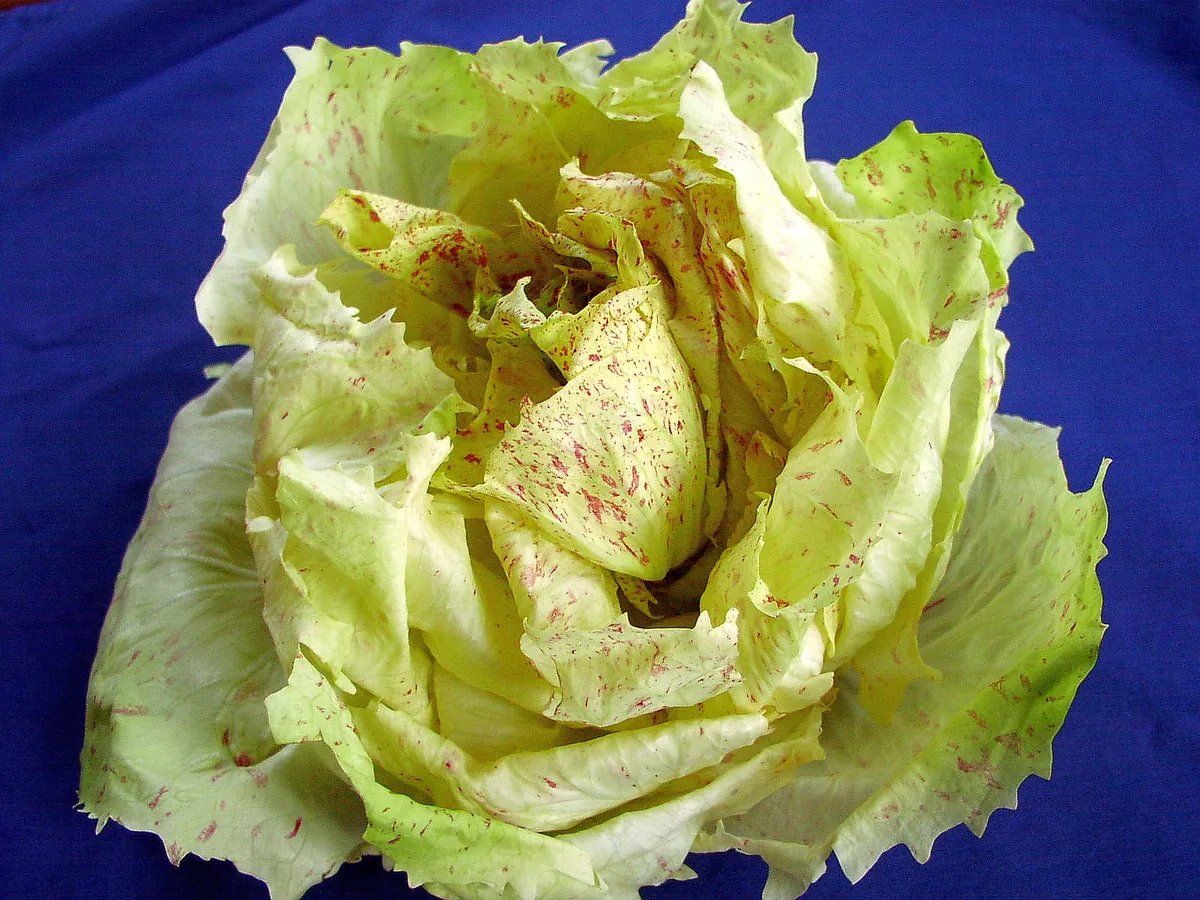
青い布の上に、バラの花のように幾重にも重なった葉の結球が置かれている。葉はクリーム色から淡黄緑色で、表面全体に赤紫色の細かい斑点が散っている。

ラディッキオ・ヴァリエガート・ディ・カステルフランコの結球した株が1個写っている。クリーム色〜淡黄緑色の葉に赤紫の斑点が散った、この品種特有の模様がよく見える。原典ページは『Radicchio type Castelfranco』とのみ記載し、学術種名の記載はない。

写っているもの: Cichorium intybus(Variegato di Castelfranco)部位・状態: 収穫された結球状の株全体。クリーム色〜淡黄緑色の葉に赤紫の斑点が入った状態が見えている

写真: Goldlocki/ CC BY-SA 3.0/ 原画像/ 台帳の原画像

写真の範囲と来歴

被写体の確認: 原典の記載による同定。原典ページは被写体を『Radicchio type Castelfranco』とのみ記載し、学術種名(品種名の学術的位置づけ)の記載はない。専門家による再同定は行っていない。

掲載画像: Wikimedia Commons の原寸版。苦味研究所では切り抜き・色調変更なし。 表示用には幅1200px上限のWebPを配信し、台帳の原画像は上のリンクから確認できます。

On this page (8 sections)
  1. Overview
  2. Sources for this overview (1)
  3. Topic hubs
  4. Follow the connections
  5. Related entries (10)
  6. Composition and content (1)
  7. Sensory (1)
  8. How processing and cooking change it (1)
↑

Reading the bitterness

Castelfranco variegated radicchio is an Italian variegated chicory with reddish-purple spots scattered over cream-colored leaves. The EU geographical-indication specification defines it as a variegated form belonging to the silvestre variety (var. silvestre) of the genus Cichorium (Cichorium intybus). The reddish-purple pattern on a white ground is itself an appearance condition set by the legal specification.

This appearance does not arise from natural growth alone. The same specification positions the process of forming new leaves in a shaded environment (forcing and blanching) as an essential and irreplaceable production stage. The mottled pattern is created not only by the cultivar but also by people adding this process.

In terms of taste, the same specification describes the leaves as 「甘味から心地よい苦味へ続く繊細な味」 (in translation: "a delicate taste continuing from sweetness to pleasant bitterness"). Bitterness is not excluded as a defect but treated as one characteristic of this vegetable. However, this is a legal quality description for the geographical indication, not bitterness intensity measured numerically by trained assessors, and it does not guarantee the range of taste in individual plants.

Sources for this overview

  1. Summary of requirements: Radicchio Variegato di Castelfranco PGI

    European Commission / 2007 / government document / full text checked

    Checked for this overview: The classification rule defining it as a variegated form of Cichorium intybus var. silvestre. / The description of forcing and blanching under shade. / The sensory description of a taste continuing from sweetness to pleasant bitterness.

Follow the connections

Radicchio Variegato di Castelfranco →is a type of→ chicory

Radicchio Variegato di Castelfranco →is processed by→ radicchio forcing and blanching

Structured claims — open a section to read each claim's confidence, evidence and limits

Composition and content (1)

Radicchio Variegato di Castelfranco is a type of chicorysupported

Scope: Classification under the EU PGI specification

Note: A variegated form of Cichorium intybus var. silvestre.

Defined as a variegated form of the genus Cichorium, species intybus, variety silvestre.
Limitations: This is the legal specification, not a molecular phylogenetic analysis.
Source: Summary of requirements: Radicchio Variegato di Castelfranco PGI (European Commission, 2007) · full text checked
Show dataingredient-radicchio-castelfranco —is_a_type_of→ ingredient-chicory
claim: clm-castelfranco-chicory / type: taxonomy / updated: 2026-08-31

Sensory (1)

Radicchio Variegato di Castelfranco — sensory attribute: A delicate taste running from sweetness to a pleasant bitternesssupported

Scope: The sensory description at shipment under the EU specification

Note: Described not as bitterness alone, but as a continuum with sweetness.

Defines the taste of the leaves as a delicate taste, sweet to pleasantly bitter.
Limitations: A quality descriptor with no measurement scale.
Source: Summary of requirements: Radicchio Variegato di Castelfranco PGI (European Commission, 2007) · full text checked
Art. 6: through the forzatura-imbianchimento process, the leaves "assumono croccantezza ed un sapore gradevolmente amarognolo" (in translation: "take on a crunchy texture and a pleasantly bitter taste"). Art. 7: "Sapore: foglie di sapore dal dolce al gradevolmente amarognolo molto delicato" (in translation: "the taste of the leaves runs from sweet to a very delicate, pleasantly bitter taste").
Limitations: A description in the specification document, not a measurement by a sensory panel.
"Sapore: foglie di sapore dal dolce al gradevolmente amarognolo molto delicato" (verbatim). Defines an extremely delicate taste that runs from sweetness to a pleasant bitterness.
Limitations: A quality descriptor with no measurement scale.
Show dataingredient-radicchio-castelfranco —has_sensory_attribute→ "A delicate taste running from sweetness to a pleasant bitterness"
claim: clm-castelfranco-bitter / type: sensory / updated: 2026-08-31

How processing and cooking change it (1)

Radicchio Variegato di Castelfranco is processed by radicchio forcing and blanchingsupported

Scope: Traditional process in the EU specification

Note: Forcing and blanching to form new leaves under shade.

The explanation describes forcing and blanching as essential and irreplaceable stages and forming new leaves under shade.
Limitations: It cannot be generalized to other chicory types.
Source: Summary of requirements: Radicchio Variegato di Castelfranco PGI (European Commission, 2007) · full text checked
"La forzatura del radicchio variegato di Castelfranco avviene: a) immergendo i cespi verticalmente, fino al colletto, per un periodo massimo di 20 giorni, in acqua sorgiva a circa l1 gradi C° fatta scorrere in ampie vasche di cemento protette; oppure b) in magazzini, serre, tunnel o anche direttamente in pieno campo garantendo comunque un giusto grado di umidità dell'apparato radicale, somministrando calore alle piante, riducendo l'intensità della luce" (verbatim). It also specifies a finishing process on a sand bed at 18 degrees C: "A completamento delle operazioni di imbianchimento e forzatura i cespi sono portati su strati di sabbia... in ambiente a temperatura costante di 18 gradi C°" (verbatim).
Limitations: The existing English source summary does not include the two methods (water immersion / warehouse, greenhouse, or field), the water-temperature, maximum-days, or finishing-temperature figures. These details were confirmed only in the Italian original. The Italian original's edition publication year is unknown, unlike the existing English source, which is from 2007.
Show dataingredient-radicchio-castelfranco —is_processed_by→ process-radicchio-forcing-blanching
claim: clm-castelfranco-forcing / type: processing / updated: 2026-08-31

↑ Top of page · ← Encyclopedia (English entries)