Radicchio Rosso di Treviso precoce
ingredient / ingredient-radicchio-treviso-precoce
トレヴィーゾ・プレコーチェ / Cichorium intybus L. var. silvestre
Radicchio Rosso di Treviso precoce is an early type with tightly formed bright red leaves and white veins.
Photographs (captions in Japanese)
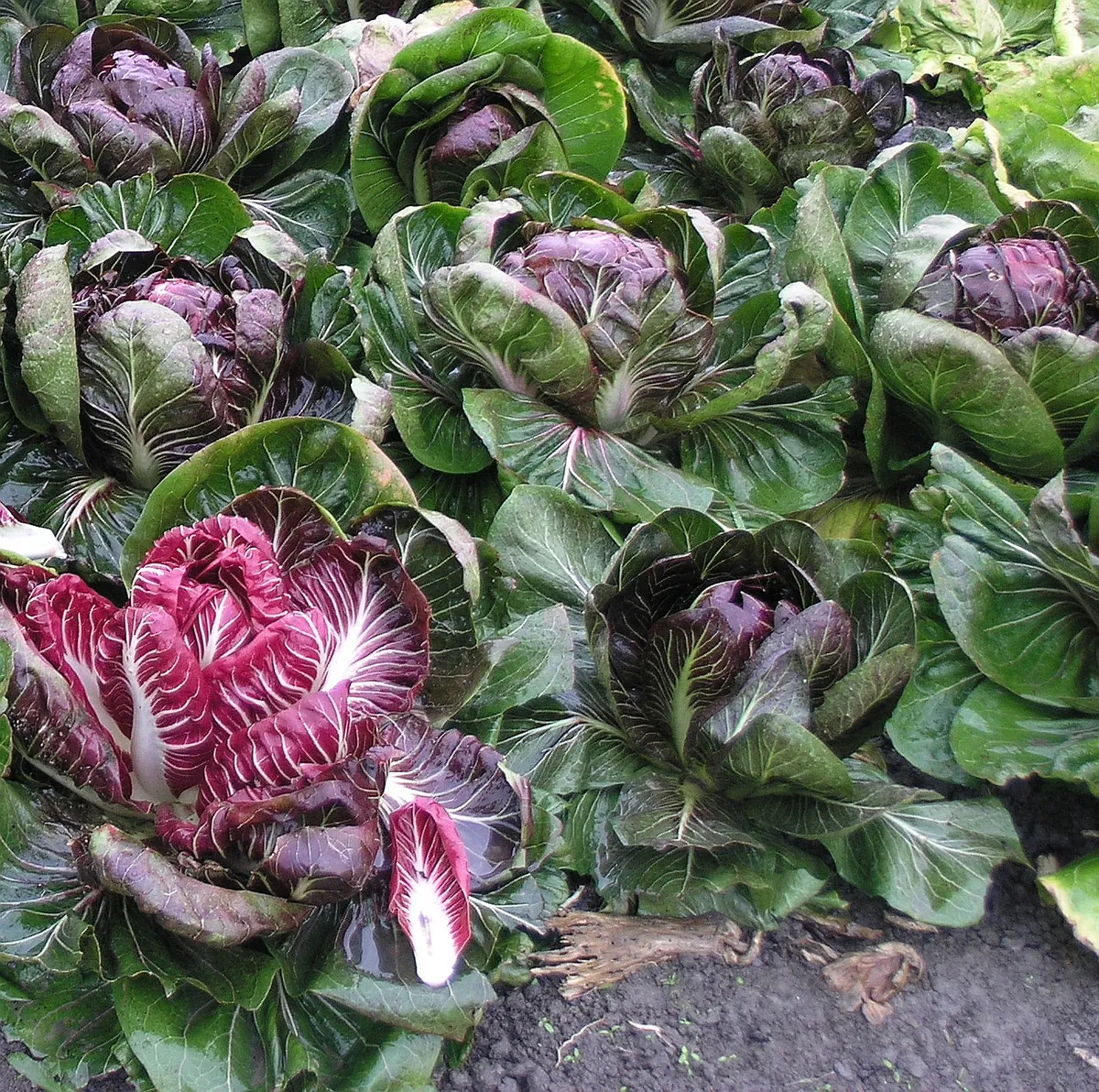
ファイル名・説明文とも「Radicchio Treviso precoce」と明記された、結球した早生タイプのラディッキオ・ディ・トレヴィーゾの畑の写真。
写っているもの: Cichorium intybus L. var. silvestre部位・状態: 結球した株(畑)
写真: Goldlocki/ CC BY-SA 3.0/ 原画像/ 台帳の原画像
写真の範囲と来歴
被写体の確認: 原典の記載による同定。
掲載画像: リサイズ・トリミング・色調変更なし。Wikimedia Commons のオリジナル画像をそのまま使用。 表示用には幅1200px上限のWebPを配信し、台帳の原画像は上のリンクから確認できます。
On this page (9 sections)
Reading the bitterness
The EU geographical-indication (PGI) specification positions precoce among the 2 types of Radicchio Rosso di Treviso as an early type with tightly formed bright red leaves and white veins. The same document only stipulates that there are 2 types, precoce and tardivo; it does not state the bitterness intensity specific to precoce.
The original production specification (disciplinare) describes precoce leaves as 『sapore leggermente amarognolo e di consistenza mediamente croccante(軽い苦味を帯び、中程度のパリッとした食感)』 (in translation: "slightly bitter in flavor and moderately crisp in texture"). This differs in intensity wording from the known tardivo description 『gradevolmente amarognolo(心地よく、いくらか苦い)』 (in translation: "pleasantly somewhat bitter"), but this is a difference in wording in a specification document, not a measured comparison by a trained sensory panel.
According to the original production specification (Articolo 5), precoce is described as being blanched through a process called 『legatura』 (in translation: "tying"), in which the heads are tied while growing in the field to inhibit photosynthesis. This differs from the forcing and blanching by water immersion used by tardivo and should not be confused with it. The existing English summary of the EU Official Journal does not state this distinction between process names; this distinction was newly confirmed here in the Italian original provision.
Sources for this overview
Single document: Radicchio Rosso di Treviso PGI
Checked for this overview: The specification of the precoce/tardivo division and confirmation that bitterness intensity is not stated.
Disciplinare di produzione - Radicchio Rosso di Treviso IGP
Checked for this overview: The original provision describing precoce bitterness and texture.
Disciplinare di produzione - Radicchio Rosso di Treviso IGP
Checked for this overview: The original provision describing the precoce legatura process.
Other names: precoce (it)
Follow the connections
Radicchio Rosso di Treviso precoce →is subtype of→ Radicchio Rosso di Treviso
Radicchio Rosso di Treviso precoce →— sensory attribute→ bitterness →can be measured separately …→ astringency
Radicchio Rosso di Treviso precoce →is processed by→ radicchio legatura (leaf-tying)
Structured claims — open a section to read each claim's confidence, evidence and limits
Composition and content (2)
Scope: The precoce category under the EU specification.
Note: No specific bitterness intensity is inferred from this part of the specification.
Show data
ingredient-radicchio-treviso-precoce —is_subtype_of→ ingredient-radicchio-trevisoScope: Quantification by Orbitrap-HRMS/MS-MS (part of a comparison among cultivars)
Note: Confirmed at the abstract level. The precoce type, a cultivar that undergoes tying, showed a higher total SL amount than the tardivo type, which undergoes forcing (blanching) by water immersion in the dark. This does not attribute the difference simply to the process -- confounding by cultivar, growing region, harvest timing, and the like is possible.
Show data
ingredient-radicchio-treviso-precoce —has_composition→ "Total amount of 8 sesquiterpene lactones: 189.71 ug/g (highest among the 4 cultivars surveyed), of which lactucopicrin was 99.36 ug/g"Sensory (1)
Scope: The sensory description of the precoce type in the original Italian-language disciplinare (Art. 6, comma 2, lettera c)
Show data
ingredient-radicchio-treviso-precoce —has_sensory_attribute→ sensation-bitterHow processing and cooking change it (1)
Scope: The precoce process in the Italian original disciplinare (Articolo 5).
Note: Unlike the tardivo forcing and blanching by water immersion, precoce is blanched by tying (legatura) in the field to inhibit photosynthesis. The existing English EU Official Journal summary does not state the distinction between process names; this distinction was newly confirmed in the Italian provision.
Show data
ingredient-radicchio-treviso-precoce —is_processed_by→ process-radicchio-legatura