Citrus unshiu Marcowicz
organism / organism-citrus-unshiu
ウンシュウミカン
Citrus unshiu Marcowicz is a citrus plant in the rue family listed as one source species for chinpi by the eighteenth revised Japanese Pharmacopoeia.
Photographs (captions in Japanese)
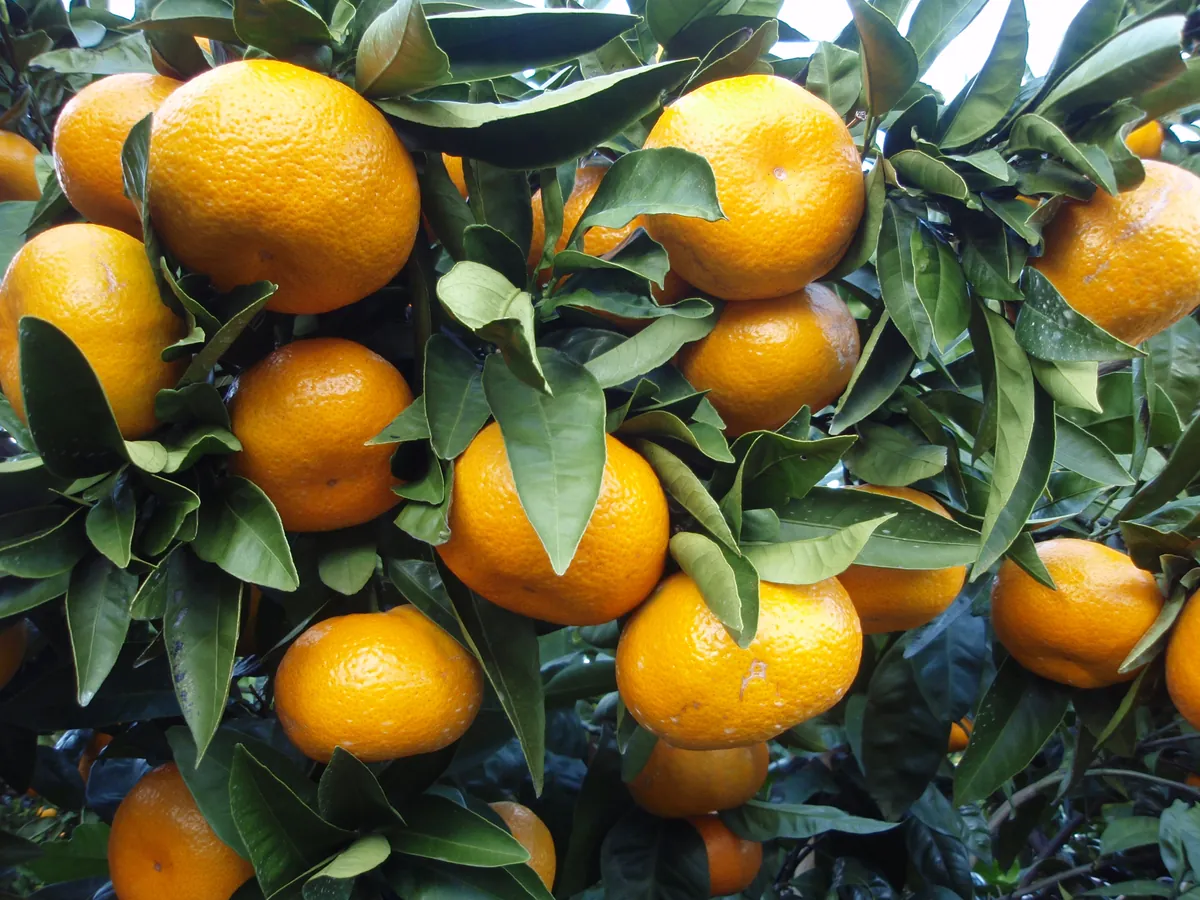
静岡県産のウンシュウミカン(Citrus unshiu)が枝についたままの状態。
写っているもの: Citrus unshiu Marcowicz部位・状態: 果実(樹上)
写真: Batholith/ Public domain/ 原画像/ 台帳の原画像
写真の範囲と来歴
被写体の確認: 原典の記載による同定。
掲載画像: リサイズ・トリミング・色調変更なし。Wikimedia Commons のオリジナル画像をそのまま使用。 表示用には幅1200px上限のWebPを配信し、台帳の原画像は上のリンクから確認できます。
On this page (6 sections)
Reading the bitterness
Unshu mikan (Citrus unshiu Marcowicz) is a citrus plant in the rue family listed by the eighteenth revised Japanese Pharmacopoeia as one source species for the crude drug chinpi. Its monograph defines chinpi as the mature peel of either Unshu mikan or Citrus reticulata Blanco, placing this species as one of the two sources.
Under the Pharmacopoeia, the mature peel of Unshu mikan is treated as a source of chinpi, and the monograph sets out the properties and quality specifications of the standardized crude drug on that basis. This is a statement about the source of a medicinally standardized crude drug, however, not a survey of the origins and cultivar composition of all edible or homemade dried mandarin peel in the market.
A study following fruit tissues of the Unshu mikan (Citrus unshiu Marc.) lineage 「'国庆一号'」 (Guoqing No. 1) across 3 growing seasons reported that contents of the main bitter compounds, nomilin, limonin, and naringin, tended generally to decrease as fruit developed, although they varied substantially from year to year. This has been checked only at the abstract level.
The same study reported differences in the accumulation of bitter compounds among fruit tissues: the outer peel (flavedo) had the lowest naringin content, while the segment membrane accumulated much limonin and nomilin. This has been checked only at the abstract level.
Sources for this overview
Checked for this overview: Checked the chinpi source definition in the eighteenth revised Japanese Pharmacopoeia. / Checked that the mature peel of Unshu mikan is explicitly named as a source of chinpi.
Checked for this overview: The declining trend in bitter-compound content as the fruit develops. / Differences in bitter-compound accumulation among fruit tissues.
Follow the connections
chinpi (Japanese Pharmacopoeia chenpi) →is the mature peel of→ Citrus unshiu Marcowicz
Citrus unshiu Marcowicz →provides the material for→ chinpi (Japanese Pharmacopoeia chenpi) →— sensory attribute→ bitterness
Structured claims — open a section to read each claim's confidence, evidence and limits
Composition and content (4)
Scope: The chenpi entries of the Japanese Pharmacopoeia
Note: This is a record of the crude drug's botanical origin under the Pharmacopoeia, not a classification covering dried mandarin peel used as food in general.
Show data
ingredient-chenpi-jp-pharmacopoeia —is_mature_peel_of→ organism-citrus-unshiuScope: The chenpi entries of the Japanese Pharmacopoeia
Note: Those entries record the mature peel of this species as one of the botanical origins of chenpi.
Show data
organism-citrus-unshiu —provides_material_for→ ingredient-chenpi-jp-pharmacopoeiaScope: Layer: food (fruit tissue, abstract-level evidence). Analysis followed fruit development across 3 growing seasons.
Note: The full text could not be accessed because of Elsevier's subscription restriction; checked against the PubMed abstract (abstract_checked).
Show data
organism-citrus-unshiu —has_composition→ "In fruit tissues of the 「'国庆一号'」 (Guoqing No. 1) Unshu mikan lineage (Citrus unshiu Marc.), the three main bitter compounds were nomilin, limonin, and naringin. Across 3 growing seasons (growth years), their contents showed a generally declining trend during fruit development, despite substantial year-to-year variation."Scope: Layer: food (analysis by fruit tissue, abstract-level evidence).
Show data
organism-citrus-unshiu —has_composition→ "Even within the same fruit, bitter-compound accumulation differed by tissue: flavedo (outer peel) had the lowest naringin content, while the segment membrane accumulated much limonin and nomilin, indicating a tissue difference."