infusion time
process / process-brewing-time
浸出時間
Extraction time when brewing tea.
Photographs (captions in Japanese)
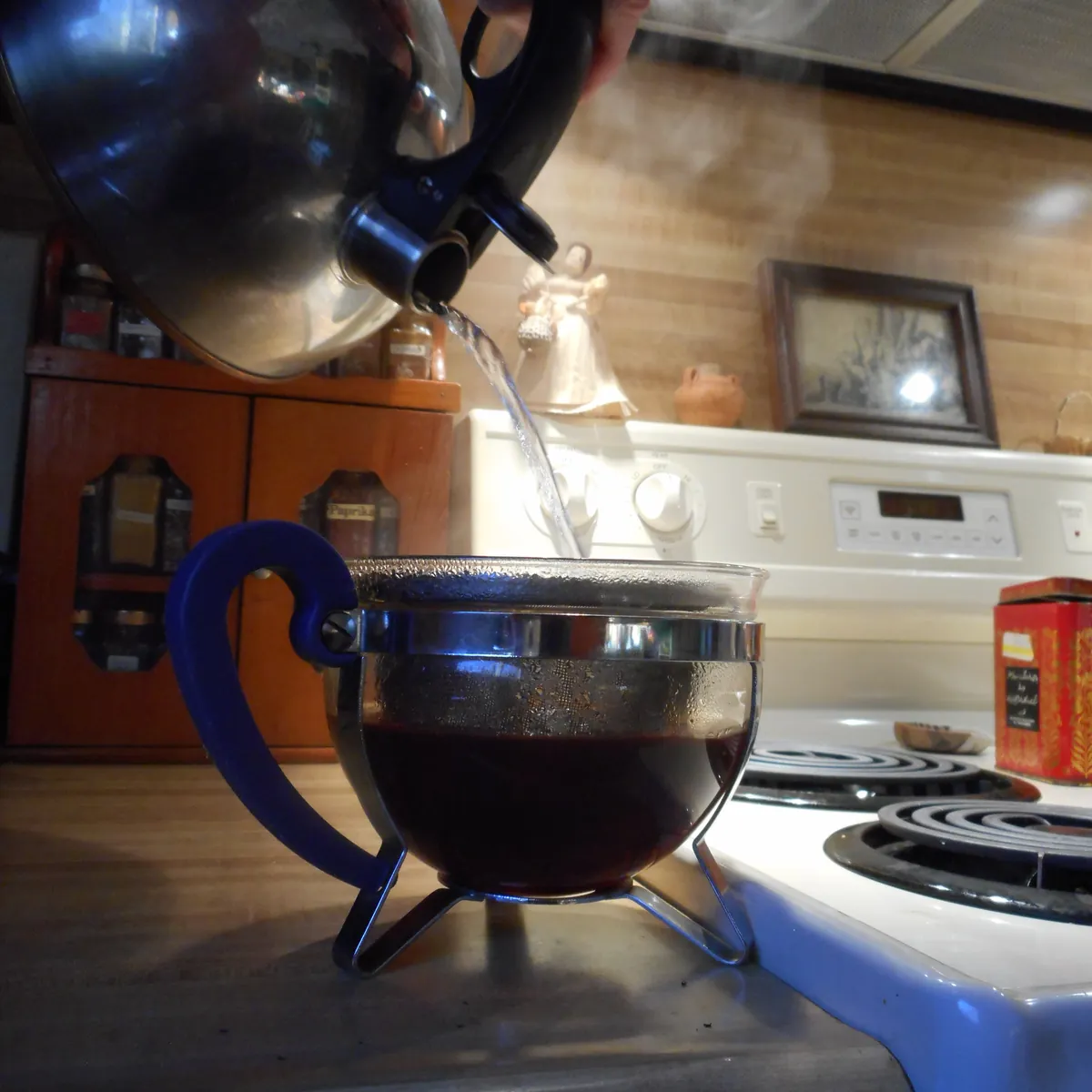
やかんから急須へ湯を注ぎ、茶葉の浸出が始まる瞬間。抽出時間(浸出時間)という工程の実施場面を示す一般的な写真であり、特定の銘柄・茶種を示すものではない。
写っているもの: 該当なし(茶の浸出という工程)部位・状態: 湯を急須へ注ぎ、茶葉が浸出を始める瞬間
写真: Wuerzele/ CC BY-SA 4.0/ 原画像/ 台帳の原画像
写真の範囲と来歴
被写体の確認: 原典の記載による同定。茶種・銘柄はファイルページに記載されていないため断定しない。
掲載画像: Wikimedia Commons の原寸ファイル。苦味研究所では切り抜き・色調変更なし。 表示用には幅1200px上限のWebPを配信し、台帳の原画像は上のリンクから確認できます。
On this page (6 sections)
Reading the bitterness
Steeping time in tea brewing can also affect astringency, a sensation distinct from bitterness. In an artificial oil-body experiment, 3 g of oolong tea leaves were added to 150 mL of boiling water, kept in a 70°C water bath, and sampled every 10 minutes through 40 minutes. With longer extraction, catechin content and model-estimated astringency rose. Galloylated catechins EGCG and ECG increased by 107% and 145% from 10 to 40 minutes, more than the 77% and 65% increases for non-galloylated EGC and EC. The authors describe a large, rather than gradual, increase in astringency. This result concerns one type of oolong at 70°C and is a model estimate, not a human sensory assessment.
A green-tea study extracted tea at 85–95°C for 30–45 minutes to examine bitterness itself. On a 0–10 acceptability scale used by 9 trained panelists, taste scores fell to 1.7 after 45 minutes at 85°C and 0.1 after 45 minutes at 95°C; panelists attributed this to perceived bitterness. EGCG, meanwhile, peaked at 50.69 mg/100 mL after 3 minutes at 85°C, when the taste score was 8.4, and then declined. The paper does not link bitterness after prolonged extraction to a particular compound, and the score measured overall acceptability rather than bitterness intensity directly.
Sources for this overview
Checked for this overview: Checked the extraction conditions, increases in galloylated catechins, and numerical rise in astringency.
Checked for this overview: Checked the decrease in green-tea taste score with extraction time and the EGCG peak.
Follow the connections
infusion time →can increase→ astringency →is not synonymous with→ bitterness
infusion time →can increase→ bitterness →can be measured separately …→ astringency
Structured claims — open a section to read each claim's confidence, evidence and limits
How processing and cooking change it (2)
Scope: Tea infusions in an artificial oil-body study.
Note: Human sensory confirmation and details of the extraction conditions are needed.
Show data
process-brewing-time —can_increase→ sensation-astringentScope: Green tea extracted at 85-95 C for 30-45 minutes. Taste scores fell to 1.7 (85 C, 45 minutes) and 0.1 (95 C, 45 minutes) on a 0-10 scale, attributed by the panel to perceived bitterness. EGCG itself peaked early (50.69 mg/100 ml at 85 C, 3 minutes) and then declined.
Note: The trained panel of n=9 rated acceptability, not bitterness intensity directly. The paper does not attribute bitterness after prolonged extraction to a specific compound.
Show data
process-brewing-time —can_increase→ sensation-bitter