日本語版

quinine

compound / compound-quinine

キニーネ

Quinine is a bitter cinchona alkaloid used as an experimental bitter stimulus and in tonic beverages.

Photographs (captions in Japanese)
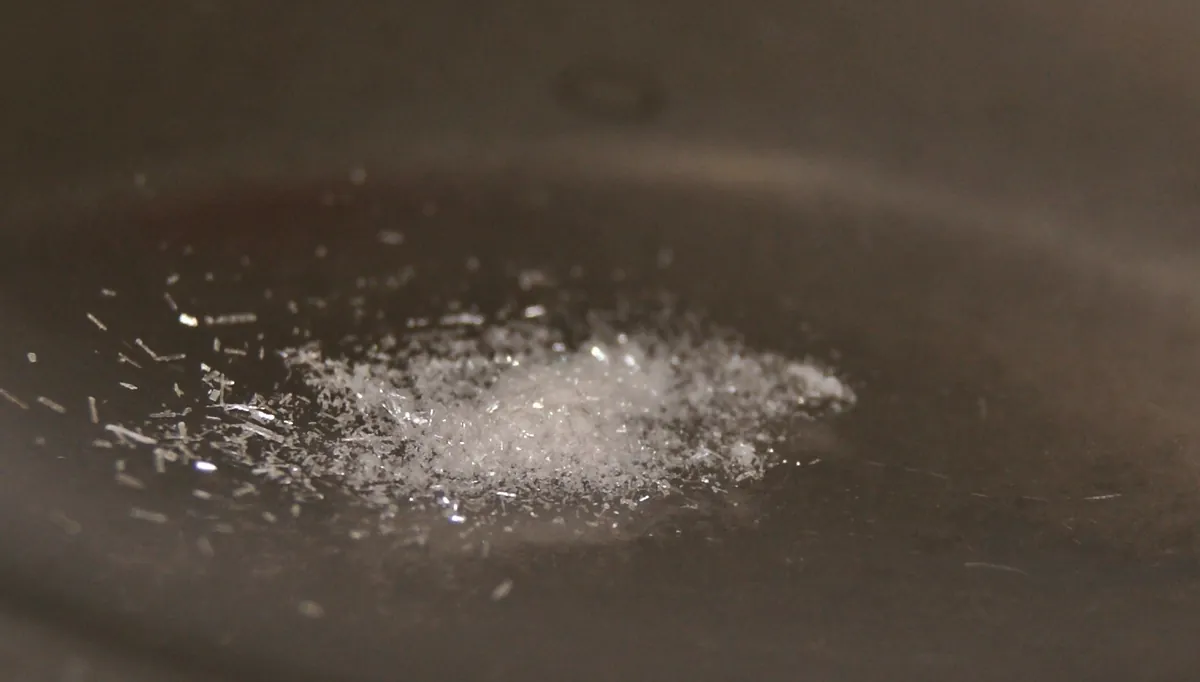
金属皿の上に集まった白い粉状・結晶状のキニーネ塩酸塩

小皿に集められた白色のキニーネ塩酸塩(Chininhydrochlorid)の結晶。ファイルページの記載に基づく。

写っているもの: 該当なし(生物ではなく化合物の結晶)部位・状態: 結晶(塩酸キニーネ)

写真: Danny S./ CC BY-SA 3.0/ 原画像/ 台帳の原画像

写真の範囲と来歴

被写体の確認: 原典の記載による同定。エンティティ compound-quinine は一般名としてのキニーネだが、本写真は塩酸塩(hydrochloride)の結晶。硫酸キニーネ等の他の塩とは分子形が異なるが、同一アルカロイドの塩の一種として代表的な結晶写真に採用した。

掲載画像: リサイズ・トリミング・色調変更なし。Wikimedia Commons のオリジナル画像をそのまま使用。 表示用には幅1200px上限のWebPを配信し、台帳の原画像は上のリンクから確認できます。

On this page (11 sections)
  1. Overview
  2. Sources for this overview (8)
  3. Topic hubs
  4. Follow the connections
  5. Related entries (10)
  6. Composition and content (2)
  7. Sensory (9)
  8. Mechanism and receptors (4)
  9. How processing and cooking change it (1)
  10. Safety and regulation (5)
  11. Culture (1)
↑

Reading the bitterness

Quinine is an alkaloid found in cinchona bark and a compound used as an experimental bitter stimulus. In one human taste test, a standard scale was created assigning bitterness scores from 0 to 4 to quinine hydrochloride solutions of 0.01, 0.03, 0.10, 0.30, 1.00 mM, and subjects first memorized these standard solutions and then rated the bitterness of other stimuli. It is also widely known as the component that imparts bitterness to tonic water.

However, quinine bitterness does not simply disappear when sweetness or saltiness is added. A human taste test reports that suppressing the bitterness of 0.1 mM quinine hydrochloride by approximately 80% required 800 mM sucrose, 8 mM aspartame, and 300 mM sodium chloride, with aspartame being approximately 100 times as efficient as sucrose on a molar basis. In another independent study, salt suppression of quinine bitterness has been confirmed, but the degree of suppression differed depending on salt type. The common trend is that suppression requires relatively high concentrations.

The relationships among suppressant substances are also not simple. In one study, when tannic acid was increased from 0.005% to 0.05% (w/v), the bitterness score of 0.1 mM quinine decreased to approximately 61% of the control, but when further increased to 0.15%, suppression weakened rather, and the bitterness score exceeded the control. The authors attribute this reversal to astringency of the high-concentration tannic acid solution, but also note that the magnitude of the astringency itself was not reported. 「キニーネの苦味閾値」 (in translation: "the bitterness threshold for quinine") shows large variation as a single number. In studies measuring by the criterion of answering "taste recognized", approximately 0.011-0.018 mM has been reported, while in another study measuring by a looser criterion of answering "taste detected", approximately 0.67-2.0 mM has been reported—values nearly 2 orders of magnitude higher. Moreover, in the latter study, when the same population was retested, values shifted by approximately 3-fold.

There are also legal limits on quinine use in tonic water. In the United States, when used as a flavoring in carbonated beverages, it must not exceed 83 ppm on a quinine-equivalent basis, and labeling is required. When 2 commercial tonic water brands were measured by fluorescence spectroscopy, they contained 64.60 ppm and 64.50 ppm, below the limit. In Australia and New Zealand, limits of 100 mg/kg for tonic drinks and 300 mg/kg for wine-based beverages are set under both frameworks of naturally occurring toxic substances and food additives. These are legally permitted levels, not values directly indicating perceived bitterness intensity or safety margins.

Sources for this overview

  1. The effect of various substances on the suppression of the bitterness of quinine-human gustatory sensation, binding, and taste sensor studies

    Nakamura T; Tanigake A; Miyanaga Y; Ogawa T; Akiyoshi T; Matsuyama K; Uchida T / 2002 / journal article / full text checked

    Checked for this overview: Confirms the 0.01-1.00 mM bitterness standard scale as the reference description in the text / Confirms the high concentrations of sucrose, aspartame, and NaCl required for suppression / Confirms in the text the reversal from bitterness suppression to enhancement with tannic acid concentration

  2. Suppression of bitterness by sodium: variation among bitter taste stimuli

    Breslin PA; Beauchamp GK / 1995 / journal article / abstract checked

    Checked for this overview: Confirms that salt suppression of quinine bitterness is also reported in independent studies

  3. Repeatability of Taste Recognition Threshold Measurements with QUEST and Quick Yes-No

    Höchenberger R; Ohla K / 2019 / journal article / full text checked

    Checked for this overview: Confirms in the text the threshold value of 0.011-0.018 mM measured by recognition criterion

  4. Comparison of techniques for the evaluation of taste sensitivity

    Juratli JH; Kaeb I; Haehner A; Hummel T / 2026 / journal article / full text checked

    Checked for this overview: Confirms that the detection threshold is 2 orders of magnitude higher and varies 3-fold between tests

  5. Quinine (21 CFR §172.575)

    U.S. Food and Drug Administration / 2023 / government document / full text checked

    Checked for this overview: Confirms in the text the 83 ppm limit for carbonated beverages and labeling requirement in the United States

  6. Fluorescence Analysis of Quinine in Commercial Tonic Waters

    Harcher A; Ricard C; Connolly D; Gibbs I; Shaw J; Butler J; Perschbacher J; Replogle L; Eide M; Grissom M; O'Neal O; Nguyen Q; Nguyen VH; Hunnicutt M; Mahmoud R; Dhakal S / 2025 / journal article / full text checked

    Checked for this overview: Confirms that measured values of 64.60 and 64.50 ppm for 2 commercial brands are below the limit / Measured values of 64.60 and 64.50 ppm for 2 commercial tonic water brands by fluorescence spectroscopy

  7. Australia New Zealand Food Standards Code - Schedule 19 - Maximum levels of contaminants and natural toxicants (Compilation No. 6)

    Food Standards Australia New Zealand / 2024 / government document / full text checked

    Checked for this overview: Confirms in the text the 100 mg/kg and 300 mg/kg limits by beverage category in Australia and New Zealand

  8. Australia New Zealand Food Standards Code - Schedule 15 - Substances that may be used as food additives (Compilation No. 16)

    Food Standards Australia New Zealand / 2026 / government document / full text checked

    Checked for this overview: Confirms that these values are set under both frameworks of naturally occurring toxic substances and food additives

Follow the connections

quinine →elicits→ bitterness →can be measured separately …→ astringency

quinine →activates→ TAS2R14

quinine →activates→ TAS2R40

quinine →can enhance→ umami →does not significantly infl…→ bitterness

Structured claims — open a section to read each claim's confidence, evidence and limits

Composition and content (2)

quinine64.60 ± 3.66 ppm (Canada Dry) and 64.50 ± 2.68 ppm (Schweppes), against a cited typical range of ~25-60 ppm for commercial products has a measured concentration in commercial tonic water of: supported

Scope: 2 tonic-water brands in the U.S. market, undiluted. Fluorescence spectroscopy using an external standard (ex 350 nm / em 450 nm). 5 replicate student groups

Note: Both values are about 22% below the U.S. upper limit of 83 ppm (this comparison is our own arithmetic derivation; the paper itself only states that the values are below the maximum permitted concentration). Made in the context of an educational protocol, not a market survey.

Undiluted Canada Dry was measured at quinine 64.60 ± 3.66 ppm, and Schweppes at 64.50 ± 2.68 ppm (mean ± SD across 5 replicate group datasets); the paper also cites approximately 25-60 ppm as the typical concentration range for quinine in commercial tonic water.
Limitations: An educational protocol carried out by 5 student groups; only 2 brands; not a market survey.
Source: Fluorescence Analysis of Quinine in Commercial Tonic Waters (Harcher A; Ricard C; Connolly D; Gibbs I; Shaw J; Butler J; Perschbacher J; Replogle L; Eide M; Grissom M; O'Neal O; Nguyen Q; Nguyen VH; Hunnicutt M; Mahmoud R; Dhakal S, 2025) · full text checked
Show datacompound-quinine —has_measured_concentration_in_commercial_tonic_water_of→ "64.60 ± 3.66 ppm (Canada Dry) and 64.50 ± 2.68 ppm (Schweppes), against a cited typical range of ~25-60 ppm for commercial products"
claim: clm-tonic-water-quinine-content / type: composition / updated: 2026-08-30
tonic waterquinine is bittered with supported

Scope: Commercial tonic water (undiluted) in the U.S. market. Measured by fluorescence spectroscopy

Canada Dry 64.60±3.66 ppm, Schweppes 64.50±2.68 ppm (external-standard fluorescence spectroscopy, ex 350 nm / em 450 nm, 5 replicate student groups).
Limitations: A measurement made in the context of an educational protocol, not a market survey.
Source: Fluorescence Analysis of Quinine in Commercial Tonic Waters (Harcher A; Ricard C; Connolly D; Gibbs I; Shaw J; Butler J; Perschbacher J; Replogle L; Eide M; Grissom M; O'Neal O; Nguyen Q; Nguyen VH; Hunnicutt M; Mahmoud R; Dhakal S, 2025) · abstract checked
Context: In the United States, quinine as a flavouring in carbonated beverages is permitted at 83 ppm or below, with a labelling requirement.
Limitations: A legal upper limit, not a measured value.
Source: Quinine (21 CFR §172.575) (U.S. Food and Drug Administration, 2023) · full text checked
Show dataingredient-tonic-water —is_bittered_with→ compound-quinine
claim: clm-tonic-water-bittered-with-quinine / type: composition / updated: 2026-08-31

Sensory (9)

quinine — perceived bitterness is suppressed by: Relatively high concentrations of sucrose, aspartame, and sodium chloridesupported

Scope: 0.1 mM quinine hydrochloride, in the human study cited

Note: The concentration required and the matrix are essential to interpretation.

Verbatim quotation from the abstract: An almost 80% inhibition of bitterness (calculated as concentration %) of a 0.1 mM quinine hydrochloride solution required 800 mM of sucrose, 8 mM of aspartame, and 300 mM NaCl. Sucrose, aspartame, and NaCl were all effective, but only at relatively high concentrations, and aspartame was about 100 times more efficient than sucrose on a molar basis. Phosphatidic acid (1.0 w/v%) and tannic acid (0.05 w/v%) reached comparable inhibition (81.7% and 61.0%) at far lower concentrations. In binding experiments, quinine did not bind to NaCl, sucrose, or aspartame, with the unbound fraction for these compounds close to 100%, which the authors attribute to these compounds being hydrophilic.
Limitations: An aqueous-solution test in which a 5 ml sample was held in the mouth for 15 s with a 20 min interval between samples; there is no food matrix. The panel comprised 11 volunteers, a small size for magnitude estimation. Because bitterness was scored on a 5-point scale anchored to quinine standard solutions of 0.01-1.00 mM, the reported percentages are inhibition rates converted to concentration, not a direct drop in scale value.
Source: The effect of various substances on the suppression of the bitterness of quinine-human gustatory sensation, binding, and taste sensor studies (Nakamura T; Tanigake A; Miyanaga Y; Ogawa T; Akiyoshi T; Matsuyama K; Uchida T, 2002) · full text checked
An independent human study on salt-bitter binary mixtures, using quinine hydrochloride as the bitter stimulus and NaCl, LiCl, KCl, L-arginine:L-aspartic acid, sodium acetate, and sodium gluconate as salts at 0, 0.1, 0.3, and 0.5 M, reports that perceived bitterness was suppressed by salt in most cases, though the degree of suppression varied. For urea, 3 sodium salts and a lithium salt all suppressed bitterness while KCl did not, identifying the active ingredient as the sodium or lithium ion, with an effect independent of perceived saltiness.
Limitations: The abstract does not isolate the magnitude of suppression specific to quinine, and the detailed ion analysis was carried out for urea rather than quinine. Panel size is not given in the abstract. The concentrations here (0.1-0.5 M NaCl) lie in a similarly high range to the 300 mM NaCl of Nakamura 2002, consistent with this claim that suppression requires relatively high concentrations.
Source: Suppression of bitterness by sodium: variation among bitter taste stimuli (Breslin PA; Beauchamp GK, 1995) · abstract checked
Limits: Reports that binary taste-mixture interactions are not a fixed property of human taste but vary with PROP taster status. Using the sucrose/quinine hydrochloride and NaCl/quinine hydrochloride mixtures among 4 pairs, supertasters rated all qualities and overall mixture intensity higher than medium and non-tasters, and in the sweet-bitter mixture, non-tasters did not show the suppression of sweetness intensity at the highest QHCl concentration that was evident in super- and medium tasters.
Limitations: The group difference stated in the abstract concerns the suppression of sweetness by quinine, not the suppression of quinine's bitterness by sucrose or NaCl. The abstract has no explicit statement about group differences in bitterness suppression. This therefore limits the generality of a single suppression value but does not directly contradict it. Group size is not given in the abstract.
Source: Binary taste mixture interactions in PROP non-tasters, medium-tasters and super-tasters (Prescott J; Ripandelli N; Wakeling I, 2001) · abstract checked
Show datacompound-quinine —has_perceived_bitterness_suppressed_by→ "Relatively high concentrations of sucrose, aspartame, and sodium chloride"
claim: clm-quinine-suppression / type: sensory / updated: 2026-08-30
quinine can show higher bitterness scores under: Tannic acid suppresses quinine bitterness to about 61% of the control up to 0.05 (w/v)%, but at 0.15 (w/v)% this reverses and the bitterness score exceeds the control (the direction of the effect flips with dose).preliminary

Scope: The specific concentrations used in the cited human study.

Note: This is presented as an example of interaction between descriptors, not as proof that astringency is a form of bitterness.

The relationship is non-monotonic. Raising tannic acid from 0.005 to 0.05 (w/v)% lowered the bitterness score of 0.1 mM quinine to about 61% of the control, but at 0.15 (w/v)% no further inhibition occurred — suppression weakened, and the resulting bitterness score of 1.5 was significantly higher than the control level. The unbound quinine fraction remained at about 72%, and unlike phosphatidic acid, tannic acid does not compete strongly at the receptor site (an adsorption effect of about 27.5% plus masking of the remaining receptor site of nearly 33%, totaling 61.0%), so the authors attribute this reversal not to a change in binding but to the astringency of the high-concentration tannic acid solution itself.
Limitations: The authors themselves state explicitly that the explanation by astringency is unproven, and the astringency intensity data are described as not shown. Because bitterness and astringency were rated on the same bitterness scale, the increase at 0.15 (w/v)% may partly reflect confusion between descriptors rather than a true increase in bitterness. Aqueous solution only; panel of 11.
Source: The effect of various substances on the suppression of the bitterness of quinine-human gustatory sensation, binding, and taste sensor studies (Nakamura T; Tanigake A; Miyanaga Y; Ogawa T; Akiyoshi T; Matsuyama K; Uchida T, 2002) · full text checked
Show datacompound-quinine —can_show_higher_bitterness_scores_with→ "Tannic acid suppresses quinine bitterness to about 61% of the control up to 0.05 (w/v)%, but at 0.15 (w/v)% this reverses and the bitterness score exceeds the control (the direction of the effect flips with dose)."
claim: clm-quinine-tannin-interaction / type: sensory / updated: 2026-08-30
quinine elicits bitternessestablished

Scope: Quinine hydrochloride solution in human taste tests

Note: Intensity varies with concentration and mixture context.

Verbatim: "The standard quinine hydrochloride concentrations used were 0.01, 0.03, 0.10, 0.30, and 1.00 mM." The corresponding bitterness scores were defined as 0, 1, 2, 3, and 4 respectively. Volunteer subjects (n = 11) memorized these standard solutions before testing. The 0.1 mM concentration was used as the control solution in the suppression experiment. Quinine hydrochloride was explicitly used as the bitterness standard in this study.
Limitations: 11 panelists. This design measures relative bitterness against a scale that references quinine itself; it establishes the graded bitterness of quinine at 0.01-1.00 mM in solution but gives neither an absolute threshold nor data in a food matrix.
Source: The effect of various substances on the suppression of the bitterness of quinine-human gustatory sensation, binding, and taste sensor studies (Nakamura T; Tanigake A; Miyanaga Y; Ogawa T; Akiyoshi T; Matsuyama K; Uchida T, 2002) · full text checked
Show datacompound-quinine —elicits→ sensation-bitter
claim: clm-quinine-bitter / type: sensory / updated: 2026-08-30
quinine has a reported human taste threshold of About 0.011-0.018 mM (recognition threshold, QUEST/qYN, 2019) versus 0.264-0.809 mg/mL ≈ 0.67-2.0 mM (detection threshold, QUEST, 2026) — the detection threshold should be ≤ the recognition threshold, yet the two diverge by roughly 2 orders of magnitude in the higher directioncontested

Scope: Human psychophysical measurement in healthy adults. Both studies presented quinine hydrochloride by spraying it onto the anterior tongue (2019: about 0.2 mL of mist onto the front half; 2026: a spray onto the front 2/3)

Note: The molar conversion (mg/mL → mM, using an anhydrous quinine HCl MW of ≈360.9) is our own derived value. The methods (detection vs. recognition, concentration series, judgment procedure) and panels differ (n=41, mean age 30 vs. n=100, ages 33-57, 86% female). Within Juratli 2026 alone, the value moves by about 3-fold from test 0.809 to retest 0.264 mg/mL. A case in point that no single 「キニーネ閾値」 (in translation: "quinine threshold") exists.

Recognition threshold for quinine hydrochloride (log10 mM): QUEST test -1.737 (SD 1.101), retest -1.889 (SD 0.953). qYN test -1.974 (SD 0.952), retest -1.980 (SD 0.962) — that is, about 0.010-0.018 mM. Stimulus: about 0.2 mL of mist sprayed onto the front half of the tongue. The concentration series ran across 21 log10 steps from 0.077e-3 mM to 3.131 mM.
Limitations: A recognition, not detection, criterion. A young sample with normal BMI. A test-retest SD of about 1 log unit indicates substantial between-person variability.
Source: Repeatability of Taste Recognition Threshold Measurements with QUEST and Quick Yes-No (Höchenberger R; Ohla K, 2019) · full text checked
Contradicts: QUEST spray detection threshold for quinine hydrochloride: test 0.809 (± 0.374) mg/mL, retest 0.264 (± 0.082) mg/mL (the ± as given in the table header; n=79/78), with the solution sprayed onto the front two-thirds of the tongue; the series ran across 18 levels from 0.00015-1.23 mg/mL. Despite using a looser detection criterion, these values are roughly 2 orders of magnitude higher than the 2019 recognition threshold, and test and retest differ by about 3-fold even within the same study.
Limitations: Differs from the 2019 study in concentration series, spray volume and coverage area, and population; an ICC of 0.567 indicates moderate reproducibility; the direction of the discrepancy (detection higher than recognition) is our own comparison, and neither paper discusses it.
Source: Comparison of techniques for the evaluation of taste sensitivity (Juratli JH; Kaeb I; Haehner A; Hummel T, 2026) · full text checked
Show datacompound-quinine —has_reported_human_taste_threshold_of→ "About 0.011-0.018 mM (recognition threshold, QUEST/qYN, 2019) versus 0.264-0.809 mg/mL ≈ 0.67-2.0 mM (detection threshold, QUEST, 2026) — the detection threshold should be ≤ the recognition threshold, yet the two diverge by roughly 2 orders of magnitude in the higher direction"
claim: clm-quinine-hcl-threshold-reports / type: sensory / updated: 2026-08-30
quinine has human taste thresholds of Mean detection threshold 7.2×10⁻⁶M (quinine sulfate, equivalent to 0.0006%)supported

Scope: Measured by Pfaffmann's single-point identification method in 28 trainees (19-40 years old, mean 25.61, including 1 woman) attending the 78th brewing course at the National Tax Agency's Brewing Research Institute. Of the 4 taste substances (glucose, malic acid, salt, quinine sulfate), quinine sulfate showed the largest individual variation, with a coefficient of variation (σ/x̄×100) reaching 136%. Subjects sensitive to quinine sulfate also tended to be sensitive to malic acid and salt.

Note: Oba et al. (1984). Note that this is baseline data for training and standardizing the discrimination ability of an alcoholic-beverage tasting panel (including sake), rather than a measurement of sake itself.

Mean stimulus thresholds for the 4 substances were: glucose 4.69×10⁻²M, malic acid 1.9×10⁻⁴M, salt 1.26×10⁻²M, and quinine sulfate 7.2×10⁻⁶M. There was individual variation in sensitivity to the 4 tastes, and subjects sensitive to quinine sulfate tended to also be sensitive to malic acid and salt.
Limitations: This is a baseline threshold measurement for training an alcoholic-beverage tasting panel, not a sensory evaluation of sake itself.
Show datacompound-quinine —has_human_taste_thresholds_of→ "Mean detection threshold 7.2×10⁻⁶M (quinine sulfate, equivalent to 0.0006%)"
claim: clm-quinine-threshold-panelist-training / type: sensory / updated: 2026-09-01
quinine can enhance umamipreliminary

Scope: Layer: solution. A sensory evaluation in which subthreshold quinine sulfate was added to umami solutions of monosodium glutamate and bonito-flavored seasoning (a panel of men and women aged 19-20, using a 100 mm Visual Analogue Scale). Umami solutions containing subthreshold quinine sulfate tended to show higher umami intensity, and the umami aftertaste was also significantly prolonged (Tsutsumi, Kawasaki & Mizusawa 2011).

Note: With subthreshold naringin, no significant difference in umami intensity was detected (a different result from quinine).

「閾値以下の硫酸キニーネを含むうま味溶液のうま味強度が高い傾向であった」 (in translation: "The umami solution containing subthreshold quinine sulfate tended to show higher umami intensity") 「うま味の後味は有意に伸びた」 (in translation: "The umami aftertaste was significantly prolonged"). Substances used: bitter substances (quinine sulfate, naringin), umami substances (monosodium glutamate, bonito-flavored seasoning). Evaluation method: 100 mm Visual Analogue Scale. Subjects: men and women aged 19-20.
Limitations: As this is a conference presentation abstract, specific concentrations, panel size, and statistical values are not given. Not a peer-reviewed paper. With subthreshold naringin, no significant difference was detected (a different result from quinine). The conference abstract does not give details of panel size or statistics.
Source: 閾値以下の苦味はうま味強度と後味に影響を与えた (堤愛子; 川崎寛也; 水澤一, 2011) · abstract checked
Show datacompound-quinine —can_enhance→ sensation-umami
claim: clm-w67b-subthreshold-quinine-enhances-umami / type: sensory / updated: 2026-09-06
quinine — perceived bitterness is associated with: Impaired spatial localization performance at the tip of the tongue when capsaicin (10 µM) was presented at 3 points simultaneously (localization error for 1.8 mM quinine sulfate increased significantly). In the same experiment, discrimination performance for sweet, sour, and salty stimuli did not change.preliminary

Scope: Layer: solution. Three-alternative forced choice (3-AFC) using three cotton swabs spaced 1 cm apart at the tongue tip. Stimuli: 1.8 mM quinine sulfate, water, capsaicin (10 µM added to all swabs vs. water-only control).

Note: Presented as psychophysical evidence that bitterness and pungency are perceptually similar.

Verbatim: "Capsaicin did not change performance on an alternative forced-choice (3-AFC) for sweet, sour, and salty stimuli, while the localization error for 1.8 mM quinine sulfate (QSO4) increased significantly."
Limitations: Confirmed at abstract level. Specific quantitative values for localization error (error rate, etc.) are not reported in the abstract.
Show datacompound-quinine —has_perceived_bitterness_associated_with→ "Impaired spatial localization performance at the tip of the tongue when capsaicin (10 µM) was presented at 3 points simultaneously (localization error for 1.8 mM quinine sulfate increased significantly). In the same experiment, discrimination performance for sweet, sour, and salty stimuli did not change."
claim: clm-w67c-capsaicin-quinine-spatial-discrimination / type: sensory / updated: 2026-09-06
capsaicin is correlated with quininepreliminary

Scope: Layer: solution. Experiment 2, in which pairs of stimuli were presented 2 cm apart on either side of the tongue tip, and perceptual similarity/dissimilarity was rated directly.

Verbatim: "In Experiment 2, perceptual similarity/dissimilarity of stimuli was directly measured using pairs of stimuli applied to opposite sides of the tongue tip separated by 2 cm. Multidimensional scaling analyses showed capsaicin fell nearer to QSO4 than any other stimulus. Cluster analysis corroborated this finding: capsaicin was linked with QSO4 and separated from the other stimuli... these findings imply that despite being mediated by different sensory modalities, bitterness and burn are qualitatively similar."
Limitations: This is an abstract-level check. Analytical details such as the number of MDS dimensions or the proportion of variance explained are not reported in the abstract.
Show datacompound-capsaicin —is_correlated_with→ compound-quinine
claim: clm-w67c-capsaicin-quinine-perceptual-cluster-close / type: sensory / updated: 2026-09-06
quinine — electronic-tongue bitterness response was reduced by: Glycated beef protein hydrolysate (a Maillard reaction product formed by reacting Alcalase/chymotrypsin hydrolysates of beef protein with glucose at 120°C for 30 minutes; BPAH-AGEs/BPCH-AGEs)supported

Scope: Layer: solution. 5 mg/mL of the glycated product (AGE sample) was added to a quinine solution (the source does not state the concentration of quinine itself at the time of the electronic-tongue measurement). Electronic-tongue measurement using a partial least squares regression model for bitterness.

Note: An experimental system that used an electronic tongue to confirm a bitterness-modifying effect of the Maillard reaction (glycation).

Adding BPAH-AGEs or BPCH-AGEs to the quinine solution significantly (p<0.05) reduced the electronic-tongue bitterness score by up to 38%. The degree of glycation was 47-55% for BPAH and 30-38% for BPCH.
Limitations: Confirmation with a human sensory panel is not included in this measurement, which rests on the electronic-tongue response alone. The detailed dose-response curve is reported only at the level of summary figures.
Source: Glycated Beef Protein Hydrolysates as Sources of Bitter Taste Modifiers (Zhang C; Alashi AM; Singh N; Chelikani P; Aluko RE, 2019) · full text checked
Show datacompound-quinine —has_e_tongue_bitterness_reduced_by→ "Glycated beef protein hydrolysate (a Maillard reaction product formed by reacting Alcalase/chymotrypsin hydrolysates of beef protein with glucose at 120°C for 30 minutes; BPAH-AGEs/BPCH-AGEs)"
claim: clm-w67d-maillard-glycation-etongue-quinine / type: sensory / updated: 2026-09-06

Mechanism and receptors (4)

quinine affects the cell-surface expression of T2R4, T2R7, T2R10, T2R39, and T2R46 in the cell system studiedpreliminary

Scope: A molecular and pharmacological experiment in a cultured-cell system

Note: Pharmacochaperone activity is distinct from perceived bitterness intensity. Note that 「活性化9受容体」 (in translation: "9 activated receptors") is a cited prior finding, while 「細胞表面発現(シャペロン様)増は5受容体」 (in translation: "increased cell-surface expression [chaperone-like] in 5 receptors") is this paper's own measurement -- these are distinct quantities (confirmed against the full text).

Verbatim: 'Along with T2R4, quinine was reported to activate T2R7, T2R10, T2R14, T2R39, T2R40, T2R43, T2R44 and T2R46' -- 9 receptors in total. This study's own result, verbatim: 'Significant increase in the cell surface expression of T2R4, T2R7, T2R10, T2R39 and T2R46 was observed upon quinine treatment. No significant change in expression of T2R14, T2R40, T2R43 and T2R44 was observed.' Cell-surface expression of T2R4 roughly doubled. Quinine was used at 1 mM, corresponding to the EC50 for T2R4, and pretreatment desensitized the subsequent quinine calcium response, verbatim: 'to 35 +/- 5% (equivalent to 60% +/- 5.2% desensitization).'
Limitations: The list of 9 activated receptors is cited from prior work (deorphanization by the Meyerhof group) and was not remeasured here. This study's own novel finding is receptor-subtype-selective pharmacochaperone activity in HEK293T cells. This is a heterologous expression cell system, and there is no human perceptual data.
Source: The Pharmacochaperone Activity of Quinine on Bitter Taste Receptors (Upadhyaya JD; Chakraborty R; Shaik FA; Jaggupilli A; Bhullar RP; Chelikani P, 2016) · full text checked
Show datacompound-quinine —affects_cell_surface_expression_of→ "T2R4, T2R7, T2R10, T2R39, and T2R46 in the cell system studied"
claim: clm-quinine-multiple-tas2r / type: mechanism / updated: 2026-08-31
quinine activates TAS2R14preliminary

Scope: A heterologous-expression screen curated by IUPHAR/BPS GtoPdb (25 hTAS2R x 104 compounds)

Note: Read at the level of a curated database only, from a single primary study. Meyerhof 2010's full text/supplement (paywalled) is reported to characterize a broader set of quinine receptors, but this is not claimed here.

GtoPdb lists quinine as an Agonist of human TAS2R14, with assayDescription giving Threshold=10 uM and citing Meyerhof 2010 (PMID 20022913).
Limitations: Curation-level evidence. The primary full text could not be read in this survey. GtoPdb lists quinine only against TAS2R14 and TAS2R40, which appears to be a curated subset of the primary data.
Source: IUPHAR/BPS Guide to PHARMACOLOGY: quinine (ligand 2510) interaction records (IUPHAR/BPS Guide to PHARMACOLOGY (curators), 2025) · full text checked
Show datacompound-quinine —activates→ receptor-tas2r14
claim: clm-quinine-activates-tas2r14 / type: mechanism / updated: 2026-08-30
quinine activates TAS2R40preliminary

Scope: A heterologous-expression screen curated by IUPHAR/BPS GtoPdb (25 hTAS2R x 104 compounds)

GtoPdb lists quinine as an Agonist of human TAS2R40, with assayDescription giving Threshold=10 uM, citing Meyerhof 2010 (PMID 20022913).
Limitations: Same limitations as the related record.
Source: IUPHAR/BPS Guide to PHARMACOLOGY: quinine (ligand 2510) interaction records (IUPHAR/BPS Guide to PHARMACOLOGY (curators), 2025) · full text checked
Show datacompound-quinine —activates→ receptor-tas2r40
claim: clm-quinine-activates-tas2r40 / type: mechanism / updated: 2026-08-30
quininePostprandial glucose in healthy men when 275 or 600 mg was administered intragastrically before a mixed nutritional drink. It stimulates insulin and GLP-1 while not delaying gastric emptying or reducing energy intake lowers preliminary

Scope: Double-blind randomized crossover trial in lean healthy men (part A n = 15, part B n = 12). Intragastric administration 30 minutes before a nutritional drink or buffet meal

Note: The strongest human in vivo evidence found for the effect of intestinal bitter stimulation on GLP-1; however, null results for gastric emptying and appetite effects predicted from rodent research. Receptor-mediated action is inference rather than demonstration here, with no TAS2R antagonist group. Extracted at abstract level.

Quinine 600 mg or 275 mg alone mildly stimulated insulin (P < 0.05). After the nutritional drink, both doses decreased plasma glucose and stimulated insulin (P < 0.05). The 275 mg dose stimulated GLP-1 (P < 0.05), and the 600 mg dose showed a trend toward stimulating GLP-1 (P = 0.066) and glucagon (P = 0.073) compared to control. Quinine did not affect gastric emptying or energy intake of the drink.
Limitations: Males only, single site, extracted at abstract level. Receptor mediation is inference rather than demonstration (no TAS2R antagonist arm). GLP-1 effect reached significance only at the lower dose.
Source: Intragastric administration of the bitter tastant quinine lowers the glycemic response to a nutrient drink without slowing gastric emptying in healthy men (Bitarafan V; Fitzgerald PCE; Little TJ; Meyerhof W; Jones KL; Wu T; Horowitz M; Feinle-Bisset C, 2020) · abstract checked
Show datacompound-quinine —lowers→ "Postprandial glucose in healthy men when 275 or 600 mg was administered intragastrically before a mixed nutritional drink. It stimulates insulin and GLP-1 while not delaying gastric emptying or reducing energy intake"
claim: clm-gut-quinine-human-glycemia / type: mechanism / updated: 2026-08-30

How processing and cooking change it (1)

pharmaceutical taste masking reduces quininepreliminary

Scope: Layer: food. Quinine sulfate pellets by extrusion-spheronization, 3 levels of Eudragit EPO coating concentration, bitterness evaluation by the Astree electronic-tongue system.

"pellets were prepared through extrusion-spheronization... Eudragit EPO was used as a coating agent to mask bitterness... Dissolution testing indicated that coatings of 10%, 20%, and 30% Eudragit EPO released 9.2%, 5.9%, and 2.1% of the drug dose within the first 5 min, respectively, correlating with bitterness scores obtained from the Astree sensor system. A 20% Eudragit EPO coating was deemed optimal for forming a uniform film and sufficiently delaying the release of quinine sulfate to mask bitterness after administration."
Limitations: The original source (Kayumba et al., reference 93) is cited secondhand through this review's description; the specific Astree sensor score values in the original, and whether human sensory data exist, are unconfirmed.
Show dataprocess-pharmaceutical-taste-masking —reduces→ compound-quinine
claim: clm-w71c1-quinine-eudragit-coating-masking / type: processing / updated: 2026-09-07

Safety and regulation (5)

quinine83 ppm as quinine, with a labelling requirement is permitted in US carbonated beverages up to: contextual

Scope: United States. Quinine hydrochloride or quinine sulfate used as a flavouring in carbonated beverages (21 CFR 172.575)

Note: A legal permission and upper limit, not a sensory or toxicological threshold.

Quinine, as the hydrochloride or sulfate salt, may be used as a flavouring in carbonated beverages, must not exceed 83 ppm as quinine, and requires prominent labelling.
Limitations: A legal upper limit; it says nothing about sensory intensity or safety margin.
Source: Quinine (21 CFR §172.575) (U.S. Food and Drug Administration, 2023) · full text checked
Context: Measured quinine in the 2 commercial tonic-water brands (~64.5-64.6 ppm) falls below the FDA limit of 83 ppm cited in the paper (verbatim: the U.S. Food and Drug Administration (FDA) has limited the maximum allowable amount of quinine in tonic water to 83 ppm), showing that the actual products are marketed at roughly 20-25% below the legal upper limit.
Limitations: The 20-25% figure is our own arithmetic. Only 2 brands.
Source: Fluorescence Analysis of Quinine in Commercial Tonic Waters (Harcher A; Ricard C; Connolly D; Gibbs I; Shaw J; Butler J; Perschbacher J; Replogle L; Eide M; Grissom M; O'Neal O; Nguyen Q; Nguyen VH; Hunnicutt M; Mahmoud R; Dhakal S, 2025) · full text checked
Show datacompound-quinine —is_permitted_in_us_carbonated_beverages_up_to→ "83 ppm as quinine, with a labelling requirement"
claim: clm-quinine-us-limit / type: regulatory / updated: 2026-08-30
quinine100 mg/kg for tonic drinks, bitter drinks and quinine drinks. 300 mg/kg for wine-based beverages and low-alcohol wine. 300 mg/kg for mixed alcoholic beverages not elsewhere classified has these maximum levels in Australia and New Zealand: contextual

Scope: Australia and New Zealand. Food Standards Code Schedule 19, S19-6(1) (maximum levels of natural toxicants)

Note: A legal upper limit, not a sensory or toxicological threshold. The same numeric levels also appear in Schedule 15 as maximum permitted levels for the additive (a dual listing; see the contextualizing evidence).

The table of maximum levels for natural toxicants sets quinine at 100 mg/kg for tonic drinks, bitter drinks and quinine drinks, 300 mg/kg for wine-based beverages and low-alcohol wine, and 300 mg/kg for mixed alcoholic beverages not elsewhere classified.
Limitations: A legal upper limit only, with no sensory information. The compilation in force as of 2024-09-13; amendments to Schedule 19 since then have not been checked.
Context: The same numeric upper limits (100 / 300 / 300 mg/kg) are also recorded in Schedule 15 as the maximum permitted amount for the additive, so the AU/NZ Code regulates quinine's upper limit consistently on both the natural-toxicant and food-additive sides.
Limitations: A structural observation drawn from the 2 Schedules; the text of the Code itself does not mention this overlap.
Show datacompound-quinine —has_au_nz_maximum_levels_of→ "100 mg/kg for tonic drinks, bitter drinks and quinine drinks. 300 mg/kg for wine-based beverages and low-alcohol wine. 300 mg/kg for mixed alcoholic beverages not elsewhere classified"
claim: clm-quinine-aunz-limits / type: regulatory / updated: 2026-08-30
quinine100 mg/kg (item 14.1.3), limited to tonic drinks, bitter drinks and quinine drinks among water-based flavoured beverages. 300 mg/kg for wine-based beverages and low-alcohol wine (14.2.3) and for alcoholic beverages not included in item 14.2 (14.3) is permitted as a food additive in Australia and New Zealand up to: contextual

Scope: Australia and New Zealand. Food Standards Code Schedule 15 (substances that may be used as food additives), Compilation No. 16 (2026-04-30)

Quinine is listed as a permitted food additive at 100 mg/kg for water-based flavoured beverages (limited to only tonic drinks, bitter drinks and quinine drinks), and at 300 mg/kg for wine-based beverages, low-alcohol wine, and alcoholic beverages not included in item 14.2.
Limitations: Legal permission and upper limit only.
Show datacompound-quinine —is_permitted_as_food_additive_in_au_nz_up_to→ "100 mg/kg (item 14.1.3), limited to tonic drinks, bitter drinks and quinine drinks among water-based flavoured beverages. 300 mg/kg for wine-based beverages and low-alcohol wine (14.2.3) and for alcoholic beverages not included in item 14.2 (14.3)"
claim: clm-quinine-aunz-additive-permission / type: regulatory / updated: 2026-08-30
quinineQuinine and/or caffeine used as a flavouring in the production or preparation of a food must be named explicitly in the list of ingredients immediately after the term 'flavouring(s)' must be named in the EU ingredient list when used as a flavouring: contextual

Scope: European Union. Regulation (EU) No 1169/2011, Annex VII, Part D, point 3 (based on the wording of the provision)

Note: The EU-level instrument is a labelling requirement. No EU-wide numeric upper limit for quinine was found in the text of Regulation (EC) 1334/2008, Annex III, Part B (see the contextualizing evidence). Member-state or category-specific rules may exist separately.

Verbatim provision: "Quinine and/or caffeine used as a flavouring in the production or preparation of a food shall be mentioned by name in the list of ingredients immediately after the term flavouring(s)."
Limitations: A labelling requirement only; it says nothing about permitted amounts. Consolidated amendments since 2011 have not been audited.
Source: Regulation (EU) No 1169/2011 on the provision of food information to consumers (European Parliament and Council of the European Union, 2011) · full text checked
Context: Because quinine appears in neither Annex III Part B (substances for which EU maximum levels are set in compound foods: beta-asarone, estragole, hydrocyanic acid, menthofuran, methyleugenol, pulegone, quassin, safrole, teucrin A, thujone, and coumarin) nor Part A, the 2008 flavouring regulation sets no EU-wide numeric upper limit for quinine; the EU-level instrument specific to quinine is the labelling rule.
Limitations: This statement of absence is limited to the 2008 Official Journal text. Amendments to Annex III since 2008 have not been audited in this investigation.
Source: Regulation (EC) No 1334/2008 on flavourings and certain food ingredients with flavouring properties (European Parliament and Council of the European Union, 2008) · full text checked
Show datacompound-quinine —must_be_named_in_eu_ingredient_list_when_used_as_flavouring→ "Quinine and/or caffeine used as a flavouring in the production or preparation of a food must be named explicitly in the list of ingredients immediately after the term 'flavouring(s)'"
claim: clm-quinine-eu-labelling / type: regulatory / updated: 2026-08-30
quinine is used as the sensory reference stimulus for bitternesscontextual

Scope: Part I, Table 1 of the same document. A table of guideline reference-solution concentrations used to train candidate sensory panelists in stimulus detection.

Note: In the alternative ISO 3972 table accompanying the same table, caffeine at 0.195 mg/L (the concentration detected and identified by 50% of novice subjects) is separately listed as the bitterness identification criterion.

Sets quinine sulfate at 6 mg/L as the reference solution for bitterness, and separately lists caffeine at 0.195 mg/L as the identification criterion in the alternative ISO 3972 table.
Limitations: Not a value indicating the bitterness intensity of any particular wine — merely a guideline stimulus concentration for training.
Source: Document sur l'analyse sensorielle du vin (OIV Sous-commission Méthodes d'analyses, 2016) · full text checked
Show datacompound-quinine —is_used_as_sensory_reference_for→ sensation-bitter
claim: clm-oiv-quinine-sulfate-bitter-reference / type: regulatory / updated: 2026-09-01

Culture (1)

quinine — discovery history: The Treccani encyclopedia records that in 1820 the French chemists Pelletier and Caventou discovered quinine (chinina) and cinchonine (cinchonina) from cinchona bark.contextual

Scope: Treccani encyclopedia, entry "china" (Enciclopedia Italiana)

Note: Recorded as a statement of chemical history. Technical details such as the isolation method or yield have not been confirmed from this encyclopedia entry.

Confirmed the sentence 'sin dal 1820 i chimici francesi Pelletier e Caventou, scoprendo la chinina e la cinchonina nelle cortecce di china' (in translation: "since 1820, when the French chemists Pelletier and Caventou discovered quinine and cinchonine in cinchona bark").
Limitations: A summary account of chemical history; the original paper itself (Pelletier & Caventou, Annales de Chimie et de Physique, 1820) has not been checked in this investigation.
Source: china - Enciclopedia Italiana (Istituto della Enciclopedia Italiana) · full text checked
Show datacompound-quinine —has_discovery_history→ "The Treccani encyclopedia records that in 1820 the French chemists Pelletier and Caventou discovered quinine (chinina) and cinchonine (cinchonina) from cinchona bark."
claim: clm-quinine-isolation-1820 / type: cultural / updated: 2026-09-01

↑ Top of page · ← Encyclopedia (English entries)