Pasta all'assassina
dish / dish-pasta-allassassina
パスタ・アッラッサシーナ
Pasta all'assassina is a pasta dish described as originating in Bari, Puglia. Uncooked pasta is dry-toasted, then seared directly against the bottom of the pan as tomato sauce is added, deliberately producing browning and light charring. The name means "assassin's pasta".
Photographs (captions in Japanese)
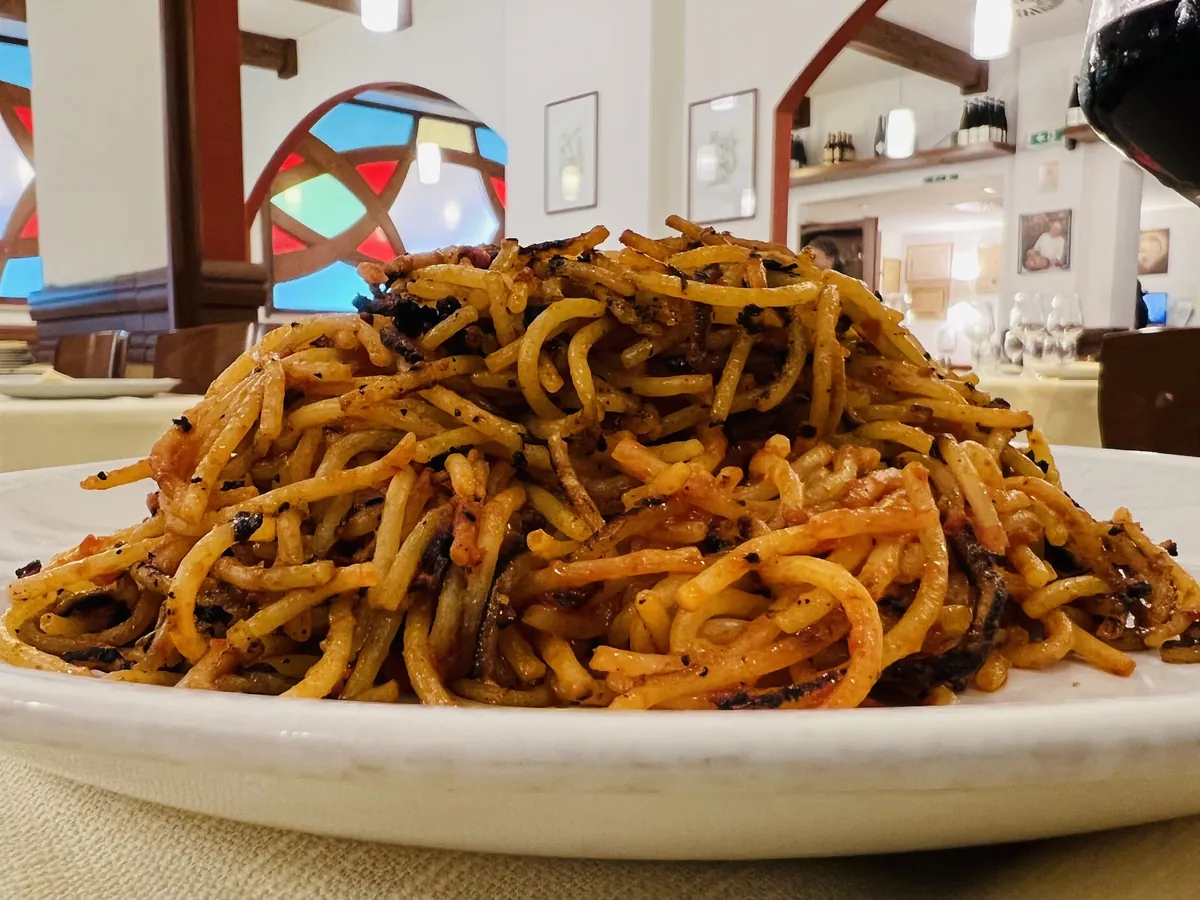
バーリの発祥店で供された、麺の一部が黒く焦げ付いたパスタ・アッラッサッシーナ。
料理写っているもの: 該当分類群なし(料理: spaghetti all’assassina、バーリ)部位・状態: 完成した一皿(麺の一部に黒く焦げた層を持つ)
写真: ScotInPuglia/ CC BY-SA 4.0/ 原画像/ 台帳の原画像
写真の範囲と来歴
被写体の確認: 原典の記載による同定。説明文に「発祥の地とされるバーリのAl Sorso Preferitoで供された一皿」と明記。 画像を開き、麺全体が赤茶色に染まり、部分的に黒く焦げた線が入っているのを確認した。
掲載画像: Wikimedia Commons の原本を長辺2400pxへ縮小。切り抜き・色調変更なし。 表示用には幅1200px上限のWebPを配信し、台帳の原画像は上のリンクから確認できます。
On this page (7 sections)
Reading the bitterness
「エンツォ・フランカヴィッラ」 (Enzo Francavilla), described as the creator of 「パスタ・アッラッサッシーナ」 (pasta all'assassina), was born in 1934 and is described as having devised it at 「アル・ソルソ・プレフェリート」 (Al Sorso Preferito) in Bari in 1967. Discussing the method of keeping uncooked pasta in direct contact with the pan while adding broth to finish it, he says that the small amount of smoke produced stays inside the pasta and flavors it. He explains that although it looks burned, it is actually browned and aromatically toasted. The interviewing journalist also summarizes authentic assassina as aromatically toasted and lightly toasted, but not burned.
Assessments of this dish's browned surface vary among writers. A media outlet specializing in Puglia describes its crisp, lightly charred crust as 「決して苦くはなく、いつも力強い(Never bitter, always bold)」 (in translation: "never bitter, always bold"), explicitly denying bitterness. Meanwhile, the Italian culinary magazine 「ラ・クチーナ・イタリアーナ」 (La Cucina Italiana) counts 「焦げ、パリッと感、辛さ(Burnt, crispy, and spicy)」 (in translation: "burnt, crispy, and spicy") as the dish's three essentials, yet also describes the finishing process as 「焦げるのではなくカラメル化する」 (in translation: "caramelizing rather than burning"). Thus, even within the same article, the characterization of burning is inconsistent.
Sources for this overview
Spaghetti all'Assassina. La vera ricetta descritta dal suo inventore Enzo Francavilla
Checked for this overview: Uses the creator's own explanation of the cooking method as evidence for this paragraph.
Made in Bari: Spaghetti all'Assassina
Checked for this overview: An expression explicitly denying bitterness.
Checked for this overview: The contrasting description that treats burning as an essential element.
Other names: pasta all'assassina (it), spaghetti all'assassina (it), spaghetti bruciati (it, identification medium)
Hypotheses and recipe candidates for this entry are on the Japanese page.
Structured claims — open a section to read each claim's confidence, evidence and limits
Sensory (2)
Note: This is a statement from an article in specialist regional media, without academic verification such as a sensory evaluation panel.
Show data
dish-pasta-allassassina —has_sensory_attribute→ "English-language media specializing in Puglia describe Assassina's charred crust as "Never bitter, always bold," treating a crunchy, slightly burnt crust as a desirable trait while explicitly denying bitterness."Note: An online article in a specialist culinary magazine (a secondary summary). Its descriptions are inconsistent: the same article affirms burnt as essential while also using the expression not burning.
Show data
dish-pasta-allassassina —has_sensory_attribute→ "The Italian culinary magazine La Cucina Italiana identifies 「焦げ、パリッと感、辛さ(Burnt, crispy, and spicy)」 (in translation: "burnt, crispy, and spicy") as the 3 essentials of assassina, while also describing the finishing stage as a process of 「焦げるのではなくカラメル化する(not burning, but caramelizing)」 (in translation: "not burning, but caramelizing")."How processing and cooking change it (1)
Scope: An interview with the creator himself (born in 1934, described as having devised the dish at "Al Sorso Preferito" in Bari in 1967).
Note: Note the authenticity dispute over its origins.
Show data
dish-pasta-allassassina —is_prepared_by→ "Sear uncooked pasta in direct contact with the pan, adding broth continuously to finish it. According to the creator, 「エンツォ・フランカヴィッラ」 (Enzo Francavilla), the smoke produced flavors the pasta; although it looks burned, it is actually browned and aromatically toasted (rosolati, abbrustoliti)."