white asparagus
ingredient / ingredient-asparagus-white
ホワイトアスパラガス / Asparagus officinalis L.
Asparagus harvested in darkness without allowing shoots to emerge above ground, by heaping soil over the ridges or using similar shading.
Photographs (captions in Japanese)
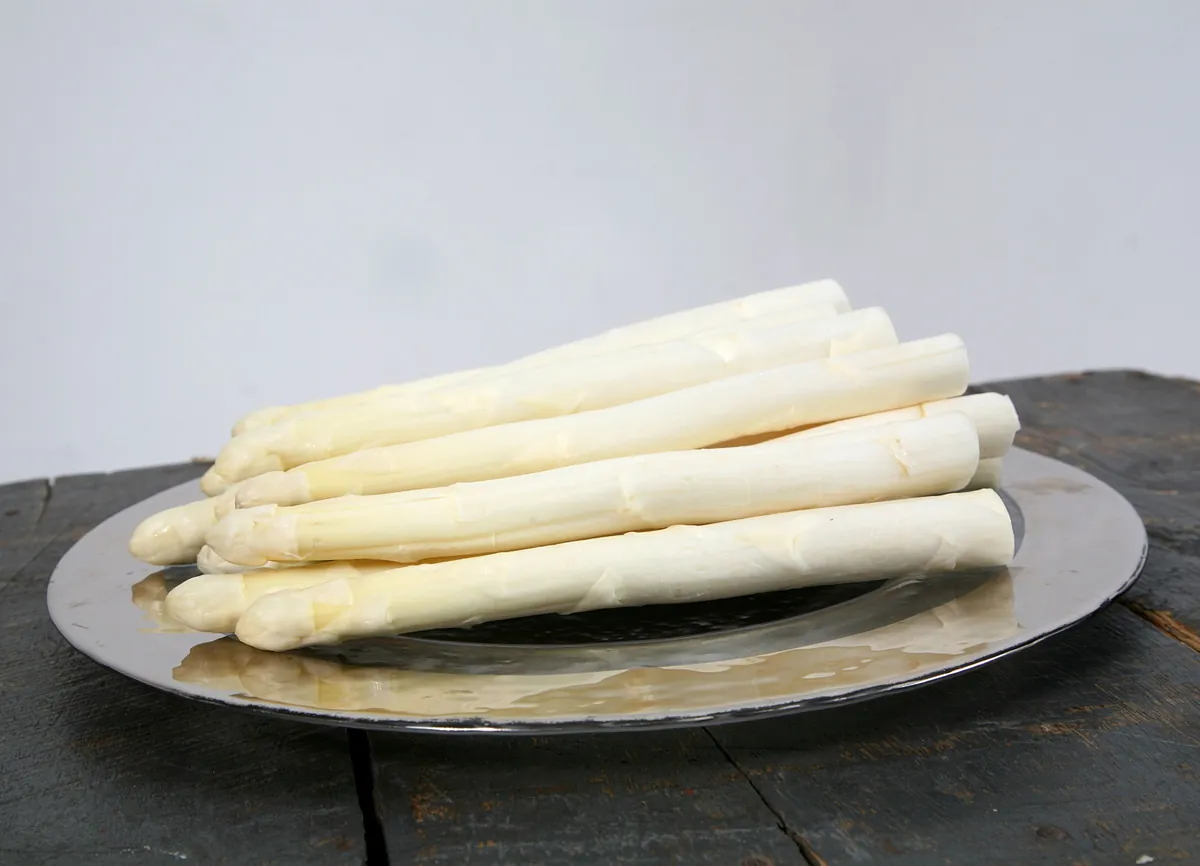
収穫直後と見られる、全体が白い生のアスパラガスの茎を金属皿に重ねたもの。
写っているもの: Asparagus officinalis部位・状態: 収穫された茎(生、未調理、遮光栽培による白色個体)
写真: Aspergekennis/ CC BY-SA 3.0/ 原画像/ 台帳の原画像
写真の範囲と来歴
被写体の確認: 原典の記載による同定。オランダの生産者団体アカウントによるアップロード。品種名の明記はなし。 画像を開き、茎全体が白〜クリーム色で、加熱や調味の跡が見られない生の状態であることを確認した。
掲載画像: Wikimedia Commons の原本を長辺2400pxへ縮小。切り抜き・色調変更なし。 表示用には幅1200px上限のWebPを配信し、台帳の原画像は上のリンクから確認できます。
On this page (8 sections)
Reading the bitterness
White asparagus is a cultivation type harvested underground in darkness after about 20 cm of additional soil is placed over the ridge. It contrasts with green asparagus, which emerges above ground after sprouting and grows in sunlight; the difference is whether shading is used.
The effect of shading cultivation is also reflected in composition. Steroid saponins such as protodioscin and shatavarin have been reported to be significantly more abundant in white type. Both are glycosides with steroid skeletons and are positioned as candidates for bitterness-contributing constituents discussed below.
Bitter constituents have also been identified. Using quantification by HPLC-MS/MS and calculation of dose-over-threshold (DoT), spirostane-type monodesmosidic saponins in raw spears and furostane-type bidesmosidic saponins after heating have each been reported as the main bitterness contributors. However, this remains confirmed only at abstract level; individual DoT values and panel size are not available from the abstract.
Sources for this overview
Checked for this overview: Used as support for blanching cultivation by adding soil. / Used as support for the contrast in shading with the green type. / Used as support for the report that steroid saponins are more abundant in white type. / Used as support for the description of shatavarin as a saponin more abundant in white type.
Checked for this overview: Used as support for the report that the main bitter saponins differ before and after heating.
Follow the connections
white asparagus →is processed by→ asparagus blanching (mounding)
green asparagus →differs from→ white asparagus
protodioscin →occurs in→ white asparagus
Structured claims — open a section to read each claim's confidence, evidence and limits
Composition and content (2)
Note: Reusing compound-protodioscin already recorded in the fenugreek context for the asparagus context.
Show data
compound-protodioscin —occurs_in→ ingredient-asparagus-whiteShow data
compound-shatavarin —occurs_in→ ingredient-asparagus-whiteSensory (1)
Scope: White asparagus spears, raw and after heating
Note: This is confirmation at abstract level; individual DoT values have not been confirmed.
Show data
ingredient-asparagus-white —has_principal_bitter_compound→ "Using quantification by HPLC-MS/MS and dose-over-threshold (DoT) calculation, spirostane-type monodesmosidic saponins in raw spears and furostane-type bidesmosidic saponins after heating were reported as main bitter contributors."How processing and cooking change it (2)
Show data
ingredient-asparagus-white —is_processed_by→ process-asparagus-blanchingShow data
ingredient-asparagus-green —differs_from→ ingredient-asparagus-white