green asparagus
ingredient / ingredient-asparagus-green
グリーンアスパラガス / Asparagus officinalis L.
Asparagus harvested after shoots emerge and elongate in sunlight without shading.
Photographs (captions in Japanese)
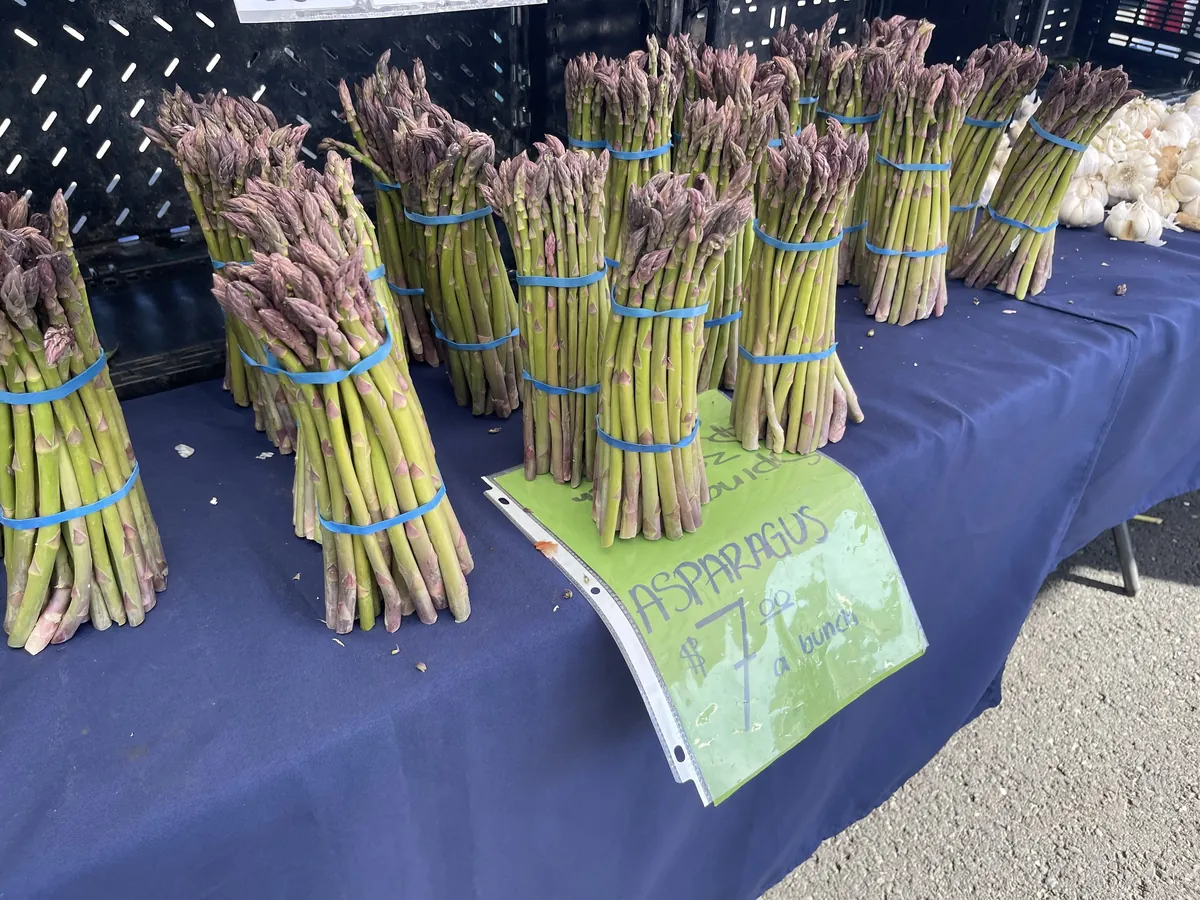
農産物直売所に並ぶ、輪ゴムで束ねられた生の緑アスパラガスの束。
写っているもの: Asparagus officinalis部位・状態: 収穫された茎(生、未調理、日光下栽培による緑色個体、穂先を含む)
写真: Missvain (Sarah Stierch)/ CC BY 4.0/ 原画像/ 台帳の原画像
写真の範囲と来歴
被写体の確認: 原典の記載による同定。米カリフォルニア州ナパの農産物直売所での撮影。品種名の明記はなし。 画像を開き、鮮やかな緑の茎と紫がかった穂先を持つ複数の束が市場の台に並んでいるのを確認した。
掲載画像: Wikimedia Commons の原本を長辺2400pxへ縮小。切り抜き・色調変更なし。 表示用には幅1200px上限のWebPを配信し、台帳の原画像は上のリンクから確認できます。
On this page (8 sections)
Reading the bitterness
Green asparagus is a cultivation type grown and harvested in sunlight after the shoots emerge and elongate without shading. It contrasts with white asparagus, which is kept in darkness below ground by adding about 20 cm of soil to the ridge and harvested there; the distinction is whether the crop is shaded.
In composition, phenolic compounds including flavonoids such as rutin are reported to be significantly more abundant in the green type. This is an example of different groups of components accumulating unevenly in the two types according to whether they are shaded.
As a flavor description citing earlier sensory analysis, green asparagus is described as having green, grassy, and bitter notes, while white asparagus has sweet corn, potato, and buttery notes. The sensory analysis was conducted in the cited earlier study, not independently in the paper discussing it. Separately, saponin concentrations that may relate to bitterness were reported to be higher in white asparagus, even though the bitter flavor note was assigned to green asparagus. The source records this as an example in which metabolite amount and flavor attribution do not correspond simply.
Sources for this overview
Checked for this overview: Used to support the contrast in shading between green and white asparagus. / Used to support the account that phenolic compounds are more abundant in green asparagus. / Used to support the flavor-note description cited from earlier sensory analysis.
Follow the connections
green asparagus →differs from→ white asparagus
rutin →occurs in→ green asparagus
green asparagus →— sensory attribute→ bitterness →can be measured separately …→ astringency
Structured claims — open a section to read each claim's confidence, evidence and limits
Composition and content (1)
Show data
compound-rutin —occurs_in→ ingredient-asparagus-greenSensory (1)
Scope: Earlier sensory analysis cited by Pegiou et al. 2021.
Note: Saponin concentration is reported to be higher in the white type, yet the bitter note is assigned to the green type. This is recorded as an example where metabolite amount and flavor attribution do not correspond simply.
Show data
ingredient-asparagus-green —has_sensory_attribute→ sensation-bitterHow processing and cooking change it (1)
Show data
ingredient-asparagus-green —differs_from→ ingredient-asparagus-white