Carciofo Violetto di Sant'Erasmo
ingredient / ingredient-artichoke-santerasmo
サンテラズモの紫アーティチョーク / Cynara scolymus L.
Carciofo Violetto di Sant'Erasmo is a purple artichoke grown on Sant’Erasmo and other islands in the Venetian Lagoon. It is associated with the practice of picking each plant’s first apical bud (castraura) early and is covered by a Slow Food Presidio.
Photographs (captions in Japanese)
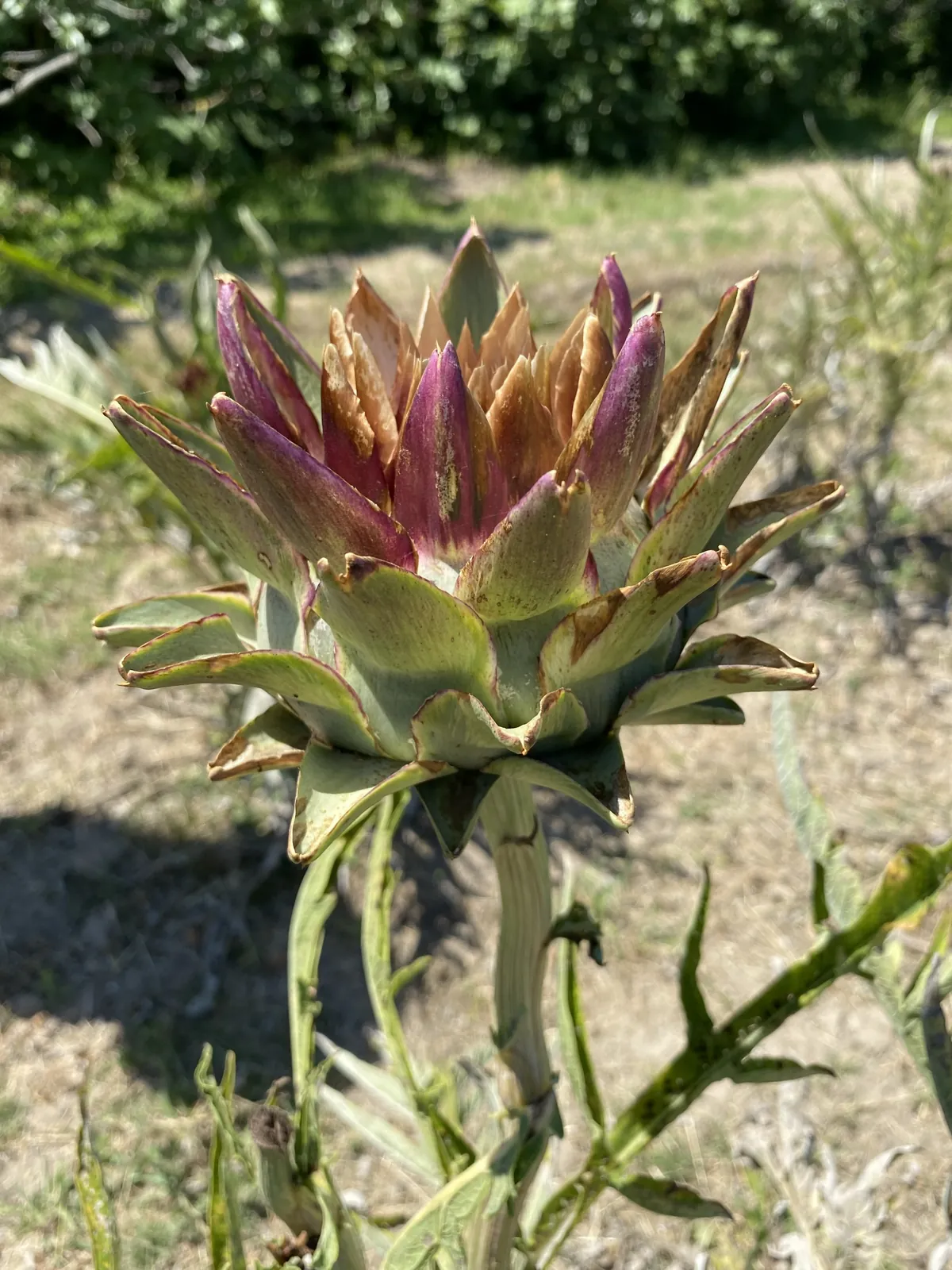
ヴェネツィア・サンテラズモ島産の紫アーティチョーク(Carciofo violetto di Sant’Erasmo)の花蕾。
写っているもの: Cynara cardunculus var. scolymus(サンテラズモ産ヴィオレット系アーティチョーク)部位・状態: 花蕾
写真: Antonella Dalle Zotte/ CC BY-SA 4.0/ 原画像/ 台帳の原画像
写真の範囲と来歴
被写体の確認: 原典の記載による同定。原典ページが産地・品種名を明記している直接一致の写真。
掲載画像: Wikimedia Commons の原寸ファイルを sips で長辺2400pxに縮小。苦味研究所では切り抜き・色調変更なし(リサイズのみ)。 表示用には幅1200px上限のWebPを配信し、台帳の原画像は上のリンクから確認できます。
On this page (9 sections)
Reading the bitterness
The purple artichoke of Sant’Erasmo (Carciofo Violetto di Sant’Erasmo, Cynara scolymus L.) is grown on Sant’Erasmo and other islands in the Venetian Lagoon. The Slow Food Presidio introduction presents it as a kind of globe artichoke (carciofo), but that classification comes from the page’s description and has not been tested by academic methods such as genetic analysis.
The Presidio introduction describes Sant’Erasmo, its growing area, as 「粘土質でよく排水され塩分濃度の高い土壌に、風味豊かな野菜が育つ(Sui terreni argillosi, ben drenati e con una salinità molto alta, crescono verdure saporite)」 (in translation: "Flavorful vegetables grow in clayey, well-drained soil with very high salinity"). It explains that the island as a whole has functioned since the 16th century as 「ひとつの大きな菜園(dal Cinquecento è un unico grandissimo orto)」 (in translation: "one very large vegetable garden").
This cultivar is associated with cutting the first small young apical bud (castraura) on each plant to encourage more vigorous growth of the other buds. The Presidio page describes the practice as "il primo piccolo germoglio apicale di carciofo, tenerissimo, che viene tagliato per permettere la crescita più rigogliosa degli altri germogli" (in translation: "the first very tender small apical artichoke bud, cut to allow the other buds to grow more vigorously") and states that harvest begins in late April. A total of 18–20 buds per plant per season are described as forming, but this is a general statement in an introduction, not a measured yield from a production study.
The introductory page explains that, in response to artichokes from other regions such as Puglia and Tuscany being sold under a false local origin, growers formed a consortium and a Slow Food Presidio was subsequently established to protect the product. The page does not state the exact year of establishment.
Sources for this overview
Carciofo Violetto di Sant'Erasmo (Presidio Slow Food)
Checked for this overview: Confirmed the description classifying it as a globe artichoke. / Confirmed the soil description and history of Sant’Erasmo as a vegetable garden. / Confirmed the practice of picking the castraura and the harvest season. / Confirmed the problem of false origin claims and the circumstances of the Presidio’s establishment.
Other names: castraure (it)
Follow the connections
Carciofo Violetto di Sant'Erasmo →is a type of→ globe artichoke
Carciofo Violetto di Sant'Erasmo →is processed by→ castratura (apical bud removal)
Carciofo Violetto di Sant'Erasmo →is grown in→ Veneto
Structured claims — open a section to read each claim's confidence, evidence and limits
Composition and content (1)
Scope: The classification description on the Slow Food Presidio introduction page.
Note: The classification is based on the Presidio introduction page and is contextual because it has not undergone academic taxonomic verification (such as genetic analysis).
Show data
ingredient-artichoke-santerasmo —is_a_type_of→ ingredient-artichoke-globeHow processing and cooking change it (1)
Scope: The cultivation practice described on the Slow Food Presidio introductory page.
Note: The practice of picking the apical bud to encourage growth of the other buds (18–20 per plant per season). This is a description in the Presidio introduction, not an academic yield study.
Show data
ingredient-artichoke-santerasmo —is_processed_by→ process-artichoke-castrauraCulture (2)
Scope: Sant’Erasmo in the Venetian Lagoon; clayey, well-drained soil with high salinity.
Note: Based on the Presidio introduction’s geographic and soil description.
Show data
ingredient-artichoke-santerasmo —grown_in→ region-venetoScope: Account of the circumstances on the Presidio introductory page.
Note: The Presidio introductory page does not state a year of establishment.
Show data
ingredient-artichoke-santerasmo —has_cultural_role_of→ "A regional food product protected through the establishment of a growers’ consortium and Slow Food Presidio in response to artichokes from other regions, including Puglia and Tuscany, being sold with false claims of local origin."