Citrus maxima
ingredient / ingredient-banpeiyu
晩白柚
Citrus maxima is a large citrus fruit described as native to the Malay Peninsula and Polynesia and introduced to the Yatsushiro area of Kumamoto Prefecture. It is a registered product under the geographical indication (GI) protection system. It has been analyzed as a "bitter-type" citrus containing abundant naringin and limonin.
Photographs (captions in Japanese)
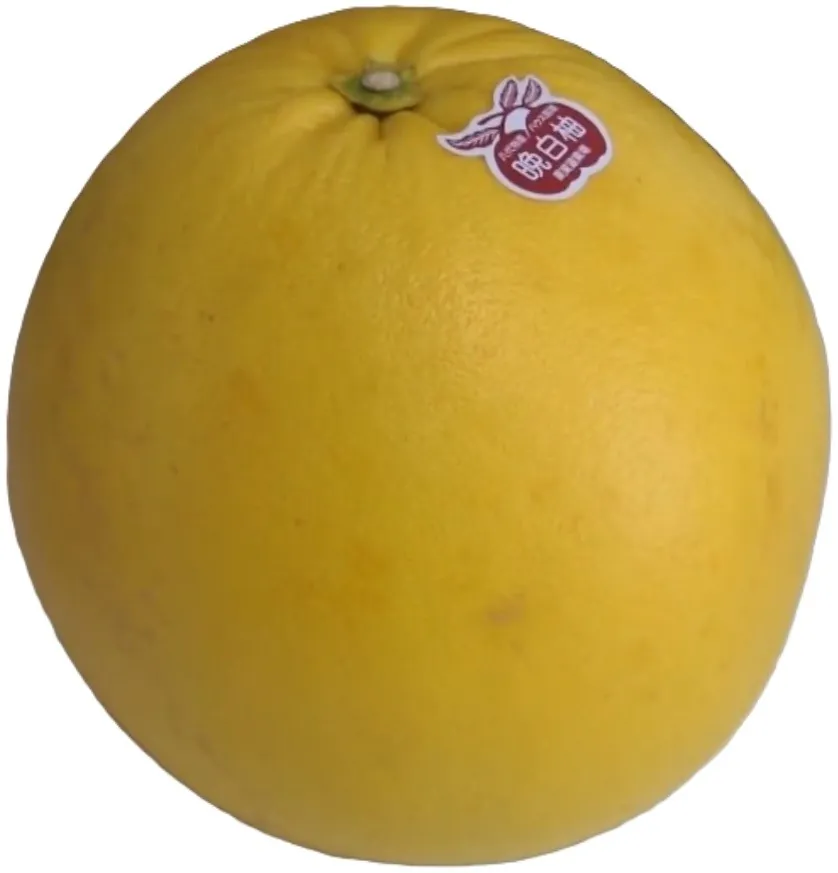
「晩白柚」のラベルが貼られた、大型で丸みのある黄色い果実。
写っているもの: Citrus maxima部位・状態: 果実全体(外皮、産地ラベル付き)
写真: Hồ Đức Hải/ CC BY-SA 4.0/ 原画像/ 台帳の原画像
写真の範囲と来歴
被写体の確認: 原典の記載による同定。説明文「Banpeiyu pomelo」。ラベルにより品種名が原典で明示されている。 画像を開き、果実に貼付されたラベルに「晩白柚」の文字が印字されているのを確認した。
掲載画像: Wikimedia Commons の原本と同寸。切り抜き・色調変更なし。 表示用には幅1200px上限のWebPを配信し、台帳の原画像は上のリンクから確認できます。
On this page (9 sections)
Reading the bitterness
Banpeiyu (Citrus maxima) is a large citrus fruit described as native to the Malay Peninsula and Polynesia; it was introduced to the Yatsushiro area of Kumamoto Prefecture, where it became a local specialty. According to the Ministry of Agriculture, Forestry and Fisheries’ geographical indication (GI) registration information, it was introduced to Japan in 1930, planted in Yatsushiro in 1951 when the area was found suitable, and given a shipping standard for large fruit in 1965. This differs from an alternative chronology on commercial sites and elsewhere, 『1920年に台湾へ、1935年に熊本県果樹試験場へ』 (in translation: "to Taiwan in 1920 and to the Kumamoto Prefectural Fruit Tree Experiment Station in 1935"); the government GI registration is given priority here.
Banpeiyu was registered under the geographical indication (GI) protection system on March 30, 2020, as 『八代特産晩白柚』 (in translation: "Yatsushiro Specialty Banpeiyu"), registration number 94. The shipping standard requires a transverse diameter of at least 15 cm, and large fruit may exceed 4 kg. The production area is Yatsushiro City and Hikawa Town in Yatsushiro District, Kumamoto Prefecture. Shipments of 800 tonnes in fiscal 2018 are described as about 90% of national production.
A comparison of bitter compounds in 8 Kumamoto citrus cultivars, conducted by the Kumamoto Prefectural Industrial Technology Center during fiscal 2005–2007, provides compositional evidence for banpeiyu’s bitterness. In that study, banpeiyu was classified with Kawano natsudaidai, Ohtachibana, and Kawachi bankan as a 『苦味系』 (in translation: "bitter-type") citrus containing abundant naringin and limonin in its juice and peel. Nomilin, however, was described as undetected. This classification has only been checked at the abstract level; the original report’s specific quantitative values (such as mg%) have not yet been verified.
Sources for this overview
Checked for this overview: Used the GI registration’s introduction year and local establishment history as support for paragraph 1. / Used the GI registration number and numerical shipping standard as support for paragraph 2. / Used the production area and shipment volume as support for paragraph 2.
Checked for this overview: Used the description of naringin in the bitter-type classification as support for paragraph 3. / Used the detection of limonin and non-detection of nomilin as support for paragraph 3.
Follow the connections
Citrus maxima →contains→ naringin →is associated with→ bitterness
Citrus maxima →contains→ limonin →is associated with→ bitterness
Structured claims — open a section to read each claim's confidence, evidence and limits
Composition and content (2)
Scope: Kumamoto Prefectural Industrial Technology Center research, 2005-2007 fiscal years, 8-variety comparison
Show data
ingredient-banpeiyu —contains→ compound-naringinScope: Kumamoto Prefectural Industrial Technology Center research, 2005-2007 fiscal years, 8-variety comparison
Show data
ingredient-banpeiyu —contains→ compound-limoninSensory (1)
Scope: Outer peel (2 mm × 10 mm) and inner peel (5 mm squares) of banpeiyu obtained from the Kumamoto Prefectural Fruit Tree Experiment Station in November 1984. 2 g of each was treated. Ten people evaluated 3 items (bitterness, hardness and color) by ranking test, with the strongest or darkest ranked 1st. Sensory evaluation of the treated peel before it was made into marmalade
Note: Table 6 of the original marks bitterness with a 1% level symbol (**), but the text describes the significant differences as "between the enzyme method and the hydrochloric acid method" for the outer peel and likewise for the inner peel, and gives the panel's coefficient of concordance W for bitterness as 0.39 for the outer peel and 0.67 for the inner peel (5% level). The text does not state whether the difference between boiling water and the other treatments is significant. The Methods section explicitly states that the strongest is ranked 1st, and the rank sums check out (smaller means stronger). The authors presume that naringinase does not soften the peel and limonin remains inside the cells, so that it touches the tongue when chewed and tastes bitter (a presumption, not a measurement). Hydrochloric acid treatment softened the peel, but the text does not show a difference in bitterness between the boiling-water and hydrochloric acid treatments. Banpeiyu is a pomelo-type citrus and the findings are not applied to other citrus such as natsumikan.
Show data
ingredient-banpeiyu —has_perceived_bitterness_affected_by→ "A method for removing bitterness from citrus peel for marmalade. The outer peel (flavedo) and inner peel (albedo) of banpeiyu (pomelo) were treated in 3 ways: 0.1% naringinase solution (40°C, 2 hours), 1% hydrochloric acid (soaked for 2 hours at room temperature, then rinsed and boiled for 5 minutes with the water changed, repeated 3 times), and boiling water (boiled for 5 minutes with the water changed, repeated 3 times). 10 members of a cooking laboratory compared the peels by ranking test, and for both outer and inner peel the naringinase-treated peel was judged the most bitter (rank sums for bitterness: outer peel naringinase 13, hydrochloric acid 25, boiling water 22; inner peel 13, 24, 23; smaller means stronger). The remaining limonin was highest after naringinase treatment (outer peel 8.1 ppm, hydrochloric acid 4.5, boiling water 3.1), and the remaining naringin was highest after boiling-water treatment (remaining in outer peel: naringinase 35.7 mg%, hydrochloric acid 32.6, boiling water 46.7), so the sensory bitterness did not follow the order of remaining naringin."Safety and regulation (2)
Scope: Ministry of Agriculture, Forestry and Fisheries geographical indication protection system.
Show data
ingredient-banpeiyu —is_registered_as→ "A product registered under the geographical indication (GI) protection system as 「八代特産晩白柚」 (in translation: "Yatsushiro Specialty Banpeiyu"), registration number 94, on March 30, 2020. The shipping standard requires a transverse diameter of at least 15 cm."Scope: Ministry of Agriculture, Forestry and Fisheries geographical indication protection system.
Show data
ingredient-banpeiyu —has_designated_production_zone→ "Yatsushiro City and Hikawa Town, Yatsushiro District, Kumamoto Prefecture. Fiscal 2018 shipments were 800 tonnes, accounting for about 90% of national production."Culture (1)
Scope: Ministry of Agriculture, Forestry and Fisheries geographical indication (GI) protection system registration information.
Note: The chronology widely found on commercial sites and elsewhere, 『大正9年(1920)、植物学者・島田弥市が台湾へ導入、昭和10年(1935)に熊本県果樹試験場へ』 (in translation: "In Taisho 9 (1920), botanist Yaichi Shimada introduced it to Taiwan; in Showa 10 (1935), it reached the Kumamoto Prefectural Fruit Tree Experiment Station"), differs in both the introduction year for Japan and the date of its establishment in Yatsushiro. The government GI registration is given priority, and the discrepancy is recorded here.
Show data
ingredient-banpeiyu —has_history→ "Its origin is described as the Polynesia–Malaysia region, and it was introduced to Japan in 1930. It was planted in the Yatsushiro area of Kumamoto Prefecture in 1951, when the area was found suitable. A large-fruit shipping standard was established in 1965."