bitter apricot kernel
ingredient / ingredient-bitter-apricot-kernel
アンズ仁(苦仁)
Bitter apricot kernel is the kernel of a bitter apricot cultivar. It contains the cyanogenic glycoside amygdalin, which is converted to cyanide after ingestion; EFSA has assessed the acute risk of eating raw kernels.
Photographs (captions in Japanese)
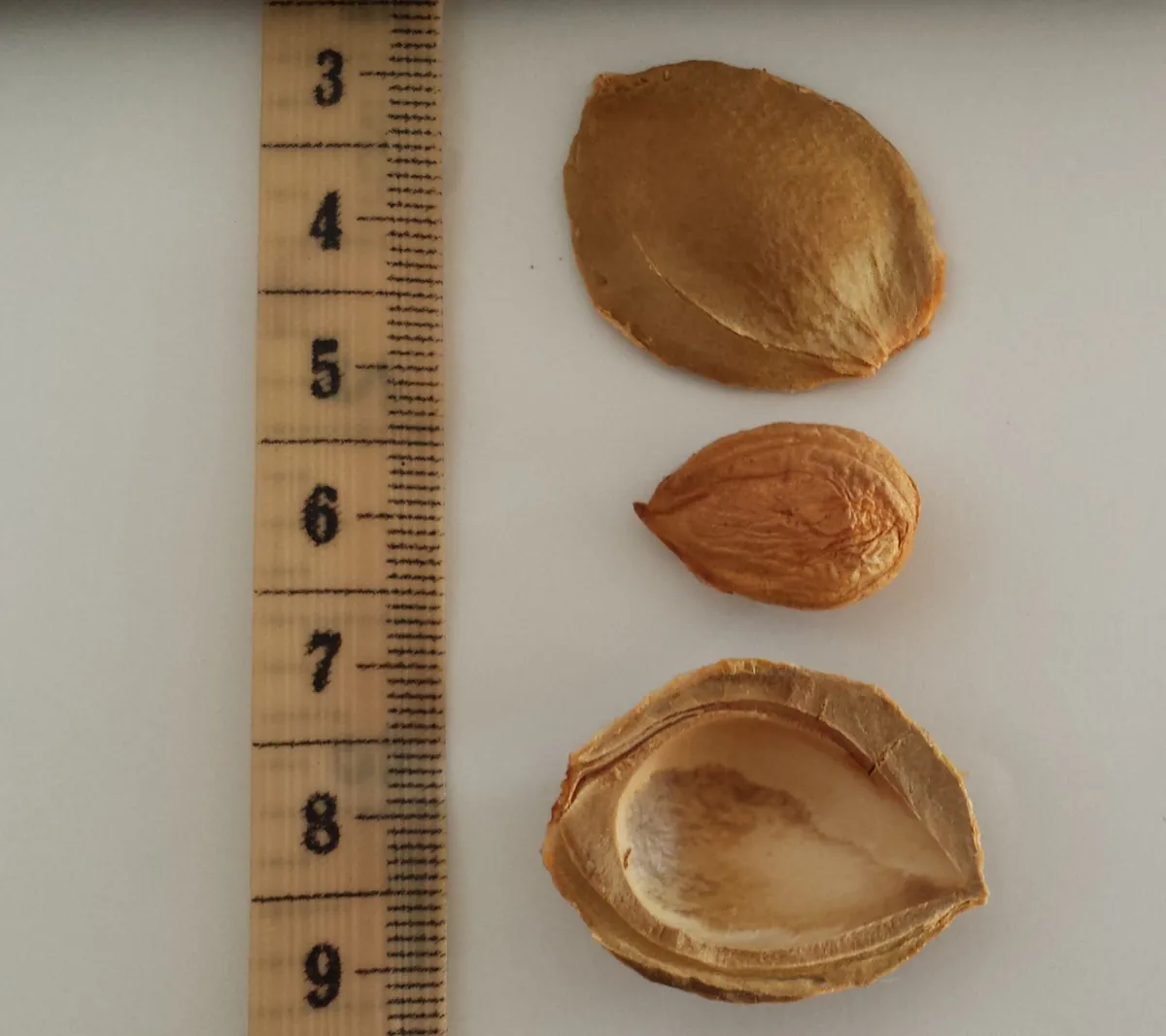
アンズ仁(苦仁)。ルーマニア・ブラショフの市場で購入したアンズの種子を、薄皮付きの仁(上)、殻ごとの種子(中央)、殻を二つに割った状態(下)で示す。センチメートル目盛り付きで大きさが分かる。写真からは苦味種か甘味種かは判別できない。
写っているもの: Prunus armeniaca(種子の仁。苦味種か甘味種かは原典に記載なし)部位・状態: アンズの種子(仁)を、薄皮をつけたままの状態(上)、殻に包まれたまま(中央)、殻を二つに割った状態(下)の三形態で並べ、センチメートル目盛りと比較した写真
写真: Iulian.serbanoiu/ CC BY-SA 3.0/ 原画像/ 台帳の原画像
写真の範囲と来歴
被写体の確認: 原典の記載による同定。原典キャプションは「ルーマニアのアンズ仁と、二つに割った種子の殻(センチメートル尺)。ブラショフの地元市場で購入」とのみ記載し、品種・苦味/甘味の別は記されていない。『苦仁』としての苦味種であることは写真からは確認できず、専門家による再同定も行っていない。
掲載画像: Wikimedia Commons の1920px版。苦味研究所では切り抜き・色調変更なし。 表示用には幅1200px上限のWebPを配信し、台帳の原画像は上のリンクから確認できます。
On this page (9 sections)
Reading the bitterness
Bitter apricot kernels contain the naturally occurring cyanogenic glycoside amygdalin, which is converted to cyanide in the body after consumption, according to an official announcement by EFSA (European Food Safety Authority). This property underlies its assessment of how much raw apricot kernel can lead to an acute risk.
EFSA’s expert panel set an acute reference dose (ARfD)—an intake level described as not producing health effects from a single exposure—of 20 µg/kg body weight for cyanide. According to its official announcement, up to 3 small raw apricot kernels (370 mg) would not exceed this level for an adult, but more than 3 small kernels or less than half a large kernel could exceed it. A single small kernel could exceed it for a young child. In a correction after publication, the wording for a large kernel was revised from 「1個超」 (in translation: "more than 1 kernel") to 「半分未満」 (in translation: "less than half a kernel"). These figures come from EFSA’s official press announcement; the underlying primary document has not been checked here, and they are not a recommendation for routine intake.
Amygdalin is a characteristic constituent of apricot kernels, but not their most abundant constituent. A range of 2–5% is cited from earlier work in the introduction to a debittering study. This was not a measurement made by that study itself.
Another experiment on bitter apricot kernels found that ultrasonically accelerated debittering shortened processing time compared with conventional methods and substantially improved β-glucosidase activity, color, and texture, while affecting oil and protein contents only slightly. Its evaluation used physical and chemical methods including UV-Vis spectroscopy, fluorescence spectroscopy, circular dichroism, electrophoresis, electron microscopy, and thermal analysis; no human sensory assessment of bitterness intensity was performed.
Sources for this overview
Apricot kernels pose risk of cyanide poisoning
Checked for this overview: Checked the announcement’s statement that amygdalin is converted to cyanide after ingestion. / Checked the ARfD value, the adult and child quantities, and the correction note.
Checked for this overview: The 2–5% amygdalin content of kernels is a value cited from earlier research. / Checked the improved physical properties and shortened processing time with ultrasonic debittering.
Follow the connections
bitter apricot kernel →contains→ amygdalin →— sensory attribute→ bitterness
Measured values (3)
| Kind | Compound | Target | Value | Conditions | Source |
|---|---|---|---|---|---|
| DoT | cyanide | bitter apricot kernel | 20 µg/kg body weight | EFSA single-exposure assessment. (Value from an official press announcement. This is not a threshold for the quantity of amygdalin itself.) | European Food Safety Authority, 2016 |
| DoT | cyanide | bitter apricot kernel | >3 pieces per intake | Raw apricot kernels (small). (Read together with the same official announcement’s statement that up to 3 small kernels (370 mg) do not exceed the level.) | European Food Safety Authority, 2016 |
| DoT | cyanide | bitter apricot kernel | <0.5 pieces per intake | Raw apricot kernels (large). (Wording after correction of the official announcement. Individual variation in cultivar and content is not captured by this figure.) | European Food Safety Authority, 2016 |
Values are the reported values of each source (with units and conditions). Thresholds and EC50 depend on the panel and method; they are not single true values.
Structured claims — open a section to read each claim's confidence, evidence and limits
Composition and content (2)
Scope: Raw apricot kernels.
Show data
ingredient-bitter-apricot-kernel —contains→ compound-amygdalinScope: Layer: Food. Concentration description in the background explanation of research on ultrasound-assisted debittering of bitter-variety apricot kernels (prior research citation).
Show data
ingredient-bitter-apricot-kernel —contains→ compound-amygdalinHow processing and cooking change it (1)
Scope: Layer: Food. An experimental study on bitter apricot kernels comparing physical properties before and after debittering with UV-Vis spectroscopy, fluorescence spectroscopy, circular dichroism, electrophoresis, environmental scanning electron microscopy, thermal analysis, and other methods.
Note: These are main experimental findings of the study itself, checked in its full text. They add an account of debittering as a processing technology, separate from EFSA’s ARfD assessment.
Show data
ingredient-bitter-apricot-kernel —can_be_debittered_by→ "Ultrasonically accelerated debitterizing. It shortens processing time compared with conventional methods and substantially improves β-glucosidase activity, color, and texture, while having little effect on oil and protein contents."Safety and regulation (1)
Scope: Consumption of raw apricot kernels.
Note: This is from an official press announcement. The underlying scientific opinion (EFSA Journal 2016;14(4):4424) has not been read, and this is not an intake recommendation. A correction changed the wording for large kernels from 「1個超」 (in translation: "more than 1 kernel") to 「半分未満」 (in translation: "less than half a kernel").
Show data
ingredient-bitter-apricot-kernel —can_exceed_acute_reference_dose_at→ "The acute reference dose (ARfD) for cyanide is 20 µg/kg body weight. EFSA states that up to 3 small raw apricot kernels (370 mg) do not exceed the adult ARfD, but more than 3 small kernels or less than half a large kernel may exceed it. 1 small kernel may exceed it for a young child."