dandelion leaf
ingredient / ingredient-dandelion-leaf
タンポポの葉 / Taraxacum officinale
Edible dandelion leaves. They contain sesquiterpene lactone glycosides.
Photographs (captions in Japanese)
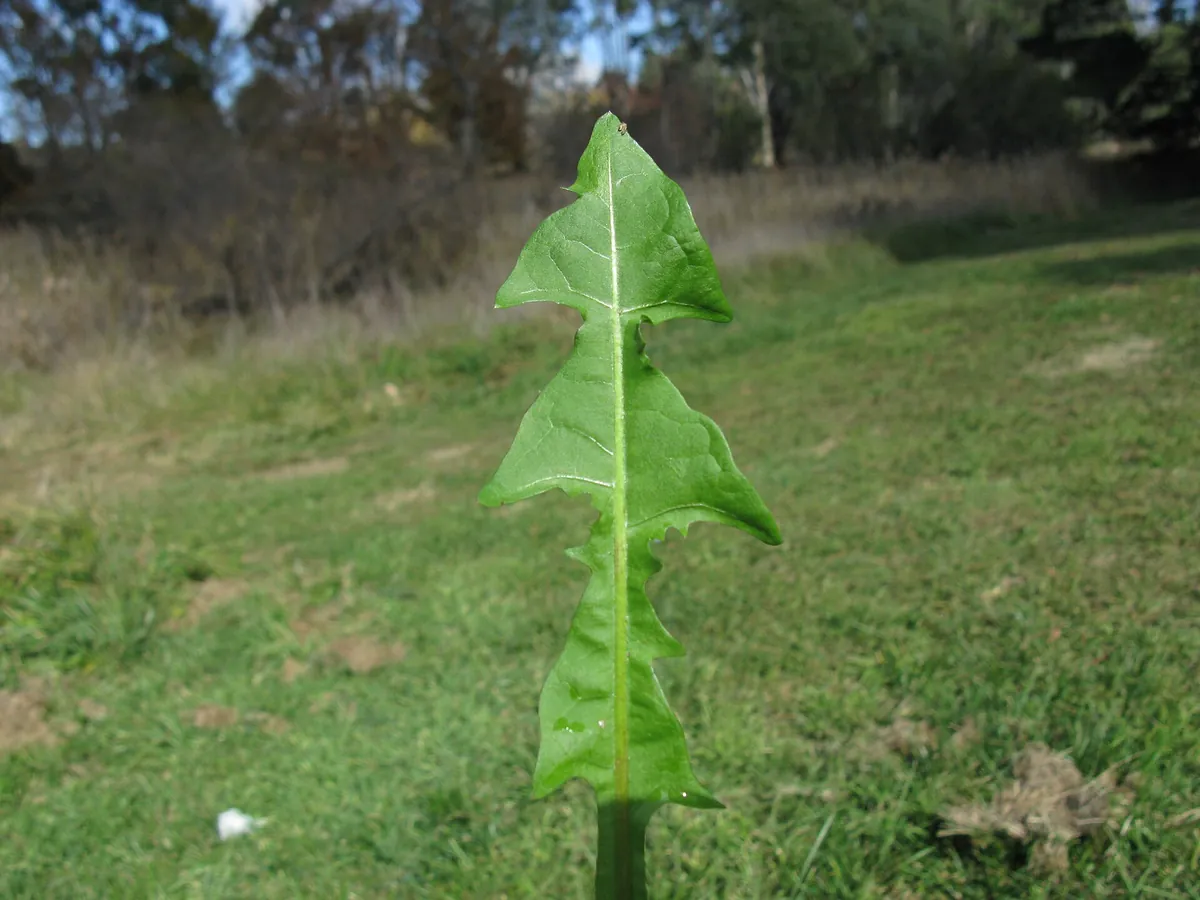
セイヨウタンポポ(Taraxacum officinale)の葉。草地に直立した1枚の葉で、縁が深く不規則に切れ込む特徴的な形がわかる。花や根は写っていない。
写っているもの: Taraxacum officinale部位・状態: 地面から直立した、深く切れ込んだセイヨウタンポポの単葉1枚(葉柄を含む)
写真: Harry Rose (South West Rocks, Australia)/ CC BY 2.0/ 原画像/ 台帳の原画像
写真の範囲と来歴
被写体の確認: 原典の記載による同定。原典キャプションはオーストラリアの牧草地における帰化植物としての解説であり、食用としての収穫状態や産地情報は含まない。
掲載画像: Wikimedia Commons の1920px版。苦味研究所では切り抜き・色調変更なし。 表示用には幅1200px上限のWebPを配信し、台帳の原画像は上のリンクから確認できます。
On this page (8 sections)
Reading the bitterness
Dandelion leaves are one of the edible parts of Taraxacum officinale (common dandelion). The review treats the leaves as an independent plant part, organizing their chemical constituents and including their food use. The leaves appear in the encyclopedia also because they are known as a vegetable with a distinctive bitterness.
Dandelion bitterness is described as being caused mainly by a group of compounds called sesquiterpenoids. The β-glucopyranosyl ester of taraxinic acid and its hydrogenated derivative have been reported as representative constituents in the leaves. However, the extent to which individual compounds contribute to bitterness, and differences by variety or growing conditions, have not been clarified within the scope of this review.
Sources for this overview
Dandelion (Taraxacum Genus): A Review of Chemical Constituents and Pharmacological Effects
Checked for this overview: Confirmed the description treating the leaves as an independent edible plant part. / Confirmed the description identifying taraxinic acid glycosides as major constituents. / Confirmed the description attributing bitterness to sesquiterpenoids. / Confirmed its positioning as a major sesquiterpene lactone in the leaves.
Follow the connections
common dandelion →The edible part of is→ dandelion leaf
dandelion leaf →contains→ taraxinic acid beta-D-glucopyranosyl ester
dandelion leaf salad →includes→ dandelion leaf
Structured claims — open a section to read each claim's confidence, evidence and limits
Composition and content (2)
Scope: Leaves of Taraxacum officinale
Note: Reported as a major sesquiterpene lactone in the leaves.
Show data
ingredient-dandelion-leaf —contains→ compound-taraxinic-acid-glucosideScope: The leaves of Taraxacum officinale
Note: A summary of HPLC/MS and isolation studies cited by the review.
Show data
compound-taraxinic-acid-glucoside —is_major_sesquiterpene_lactone_in→ ingredient-dandelion-leafSensory (1)
Scope: A review of bitterness in the dandelion genus
Note: Does not assert the contribution rate of any individual compound.
Show data
ingredient-dandelion-leaf —has_bitterness_attributed_to→ "Sesquiterpenoids"How processing and cooking change it (2)
Scope: The leaf part addressed by the review
Note: Regional differences in food culture and harvesting safety are outside the scope of this claim.
Show data
organism-taraxacum-officinale —has_food_part→ ingredient-dandelion-leafScope: A candidate structural component of a dish. Regional variation in ingredients is unconfirmed
Note: Source not connected. Does not indicate quantities or cooking conditions.
No source connected — this claim has not been verified yet. It is a general-knowledge placeholder, not a confirmed statement.
Show data
dish-dandelion-salad —includes→ ingredient-dandelion-leaf