Xanthoxylum piperitum D.C.
ingredient / ingredient-sansho-fruit
山椒
Xanthoxylum piperitum D.C. is the fruit of sansho, used as the source material for sanshool in an original 1931 paper. The scientific name is preserved in the form used by that paper.
Photographs (captions in Japanese)
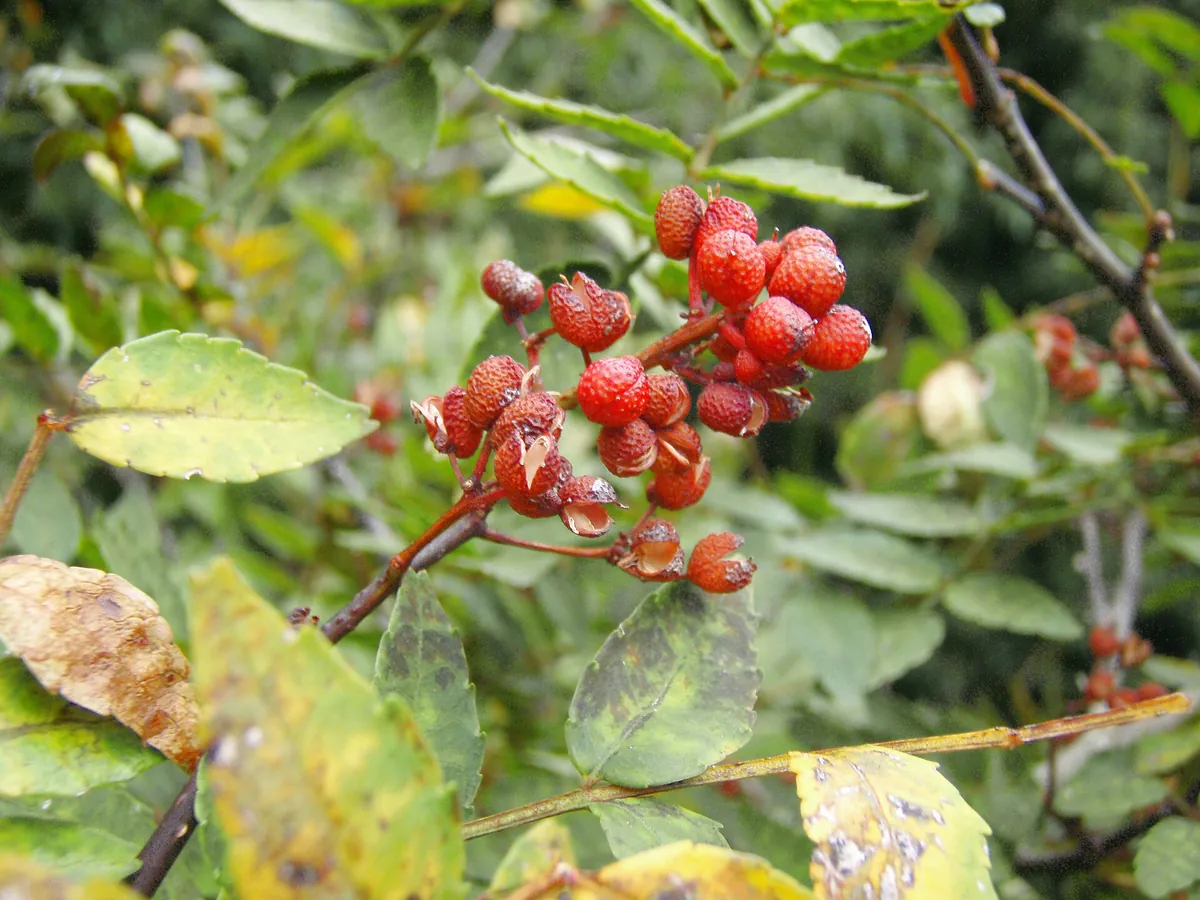
サンショウ(Zanthoxylum piperitum)の果実。枝に房状についた赤褐色の果実が成熟し、一部は裂開して種子が抜けた殻になっている。周囲には羽状複葉の葉が写っている。原典ページは被写体を『山椒の成熟し割れた果実』と記載している。
写っているもの: Zanthoxylum piperitum部位・状態: 枝についたまま成熟し、一部が裂開した果実の房。赤褐色の果皮が割れて内部が覗いている粒がある
写真: Togabi/ CC BY-SA 4.0/ 原画像/ 台帳の原画像
写真の範囲と来歴
被写体の確認: 原典の記載による同定。原典ページは学術種名 Zanthoxylum piperitum のみを記載し、部位・生育段階として『成熟し割れた果実』と説明している。専門家による再同定は行っていない。
掲載画像: Wikimedia Commons の1920px版。苦味研究所では切り抜き・色調変更なし。 表示用には幅1200px上限のWebPを配信し、台帳の原画像は上のリンクから確認できます。
On this page (7 sections)
Reading the bitterness
Sansho fruit was used as material for isolating sanshool, a pungent and tingling compound, in an original Japanese paper published in 1931. The paper says the fruit was extracted with ether, and the resulting crude sanshool was catalytically reduced, fractionated under reduced pressure, and decomposed to investigate its components. It names the material in period spelling as 「サンセウ Xanthoxylum piperitum D.C. の果實 山椒」 (in translation: "Sansho, fruit of Xanthoxylum piperitum D.C."). This scientific name retains the old spelling in the original and does not directly establish current taxonomic treatment.
In modern regional-food records, sansho berries are used whole. 「小あゆの山椒煮」 (in translation: "small ayu simmered with sansho"), recorded as a Shiga Prefecture regional dish, lists whole sansho berries and gives an example for 20 people using 20 g of berries with 1 kg of small ayu. These amounts are one recorded recipe example; they may differ by household or locality.
Sources for this overview
Checked for this overview: The portion checked describing ether extraction, catalytic reduction, fractionation, and decomposition of crude sanshool. / The portion checked containing the original material designation 「サンセウ Xanthoxylum piperitum D.C. の果實 山椒」 (in translation: "Sansho, fruit of Xanthoxylum piperitum D.C.").
Checked for this overview: The portion checked listing ingredients and quantities for 20 people for small ayu simmered with sansho.
Follow the connections
Xanthoxylum piperitum D.C. →contains→ hydroxy-alpha-sanshool (sanshool alkylamides) →can elicit→ tingling
Xanthoxylum piperitum D.C. →The fruit of is used as→ Xanthoxylum piperitum D.C.
small ayu simmered with sansho (koayu no sansho-ni) →uses→ Xanthoxylum piperitum D.C.
Structured claims — open a section to read each claim's confidence, evidence and limits
Composition and content (2)
Scope: Isolation study from 1931 original paper using the fruit of Japanese sansho Xanthoxylum piperitum D.C. as material.
Note: The original paper addresses crude sanshool and is positioned as a historical first step, not as modern chemical identification and quantification.
Show data
ingredient-sansho-fruit —contains→ compound-hydroxy-alpha-sanshoolScope: The description of sansho fruit in the original 1931 paper.
Note: The scientific name is kept in its old spelling from the original. Current taxonomic acceptance is not claimed from this source alone.
Show data
organism-xanthoxylum-piperitum —has_fruit_used_as→ ingredient-sansho-fruitCulture (1)
Scope: A record of regional cuisine within Shiga Prefecture.
Note: The ingredients for 20 people include 20 g of whole sansho berries with 1 kg of small ayu, but the quantities are only one example from this recipe.
Show data
dish-koayu-sansho-ni —uses→ ingredient-sansho-fruit