日本語版

yerba mate tree

organism / organism-ilex-paraguariensis

マテチャノキ / Ilex paraguariensis

Yerba mate tree is a holly-family tree native to South America. Its leaves and twigs are roasted, dried, and aged to make yerba mate.

Photographs (captions in Japanese)
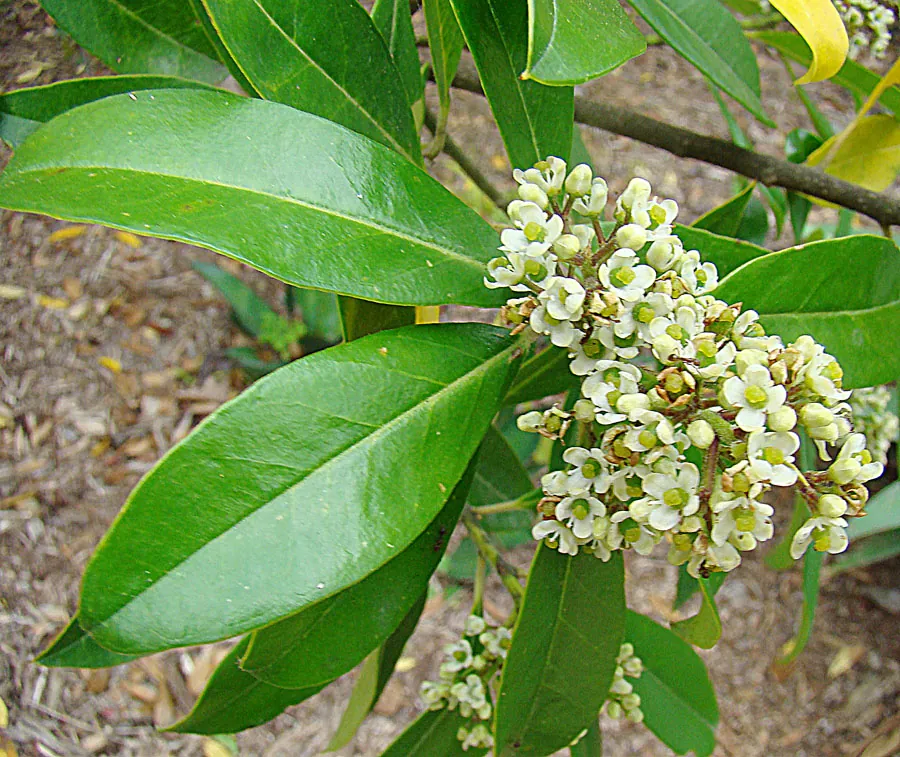
光沢のある緑の葉と白い小さな花房をつけた枝

マテチャノキ(Ilex paraguariensis)の枝葉と花。ファイルページのキャプション「the source of Yerba Mate」に基づく。

写っているもの: Ilex paraguariensis部位・状態: 枝葉と花

写真: Dick Culbert (Gibsons, B.C., Canada)/ CC BY 2.0/ 原画像/ 台帳の原画像

写真の範囲と来歴

被写体の確認: 原典の記載による同定。

掲載画像: リサイズ・トリミング・色調変更なし。Wikimedia Commons のオリジナル画像をそのまま使用。 表示用には幅1200px上限のWebPを配信し、台帳の原画像は上のリンクから確認できます。

On this page (8 sections)
  1. Overview
  2. Sources for this overview (3)
  3. Topic hubs
  4. Follow the connections
  5. Related entries (10)
  6. Composition and content (1)
  7. Sensory (1)
  8. How processing and cooking change it (2)
↑

Reading the bitterness

The yerba mate tree (Ilex paraguariensis) is a holly-family tree native to South America. Its roasted, dried, and aged leaves and twigs become yerba mate. A 2007 review defines mate as 『an infusion made from the leaves of the tree Ilex paraguariensis』. A 2024 study describes preparation in greater detail and says that the most common way to serve the finished leaf material is to pour hot water over it (usually 65–95℃) and drink through a straw.

However, cases have been reported in which species cannot be determined from the ingredient label alone on commercial mate products. Among the products compared in a 2024 study, 1 was labeled as derived from Ilex paraguariensis but proved to be the related species Ilex guayusa. The paper limits this finding to the single product verified and says it does not show the rate of mixing or mislabeling across the market as a whole, while pointing out that names or product labels sometimes cannot establish the source plant's species.

A 2025 review cites earlier research to introduce the mate lineage 'Cambona-4' as having high yield and stress resistance as well as reduced bitterness and a 'mellow flavor'. The same review, again citing earlier research, describes regional differences in preferences for aged leaves: younger mate is preferred in Brazil, whereas in Argentina and Uruguay aged mate is preferred for its enhanced flavor and reduced bitterness. It also says that aging does not substantially change the amounts of bioactive compounds themselves but promotes chemical changes that improve aroma and reduce undesirable volatile compounds.

The same review summarizes the caffeine content of a 500-milliliter mate beverage as about 78–196 milligrams, depending on extraction conditions, and says that caffeine contributes to its characteristic bitterness as well as to the beverage's stimulating and thermogenic effects. This amount is generally less than the about 95–200 milligrams in a standard 240-milliliter cup of filter coffee.

Sources for this overview

  1. Yerba Mate Tea (Ilex paraguariensis): a comprehensive review on chemistry, health implications, and technological considerations

    Heck CI; de Mejia EG / 2007 / review / abstract checked

    Checked for this overview: Checked the review's description of mate as an infusion from Ilex paraguariensis leaves.

  2. Antioxidant Capacity, Phenolic Compounds, and Other Constituents of Cold and Hot Yerba Mate (Ilex paraguariensis) Infusions

    Płatkiewicz J; Okołowicz A; Frankowski R; Grześkowiak T; Jeszka-Skowron M; Zgoła-Grześkowiak A / 2024 / journal article / full text checked

    Checked for this overview: Checked the roasting, drying, and aging steps and the common method of brewing with water at 65–95℃. / Checked how 1 surveyed product was determined to be Ilex guayusa and the limitation that this cannot be extended to the whole market.

  3. Bioactive Compounds of Ilex paraguariensis: A Critical Update on Extraction, Gastrointestinal Stability, and Technological Applications

    Palavicini SMS; Puton BMS; Jacques RA; Valduga E; Backes GT; Paroul N; Steffens C; Cansian RL / 2025 / review / full text checked

    Checked for this overview: The introduction of the reduced-bitterness lineage Cambona-4. / The description of regional differences in bitterness preferences associated with aging. / The mention of caffeine content and bitterness in mate beverages.

Follow the connections

yerba mate infusion →is prepared from→ yerba mate tree

yerba mate tree →— composition→ caffeine →is a poor universal prototy…→ bitterness

Structured claims — open a section to read each claim's confidence, evidence and limits

Composition and content (1)

yerba mate tree — composition: caffeinepreliminary

Scope: Layer: Literature (review summary). Includes variation by extraction conditions, origin, and processing method.

"These compounds are responsible for the beverage's stimulant and thermogenic effects, as well as its characteristic bitterness. For context, yerba mate typically contains about 78-196 mg of caffeine per 500 mL serving, depending on preparation, which is generally lower than a standard 240 mL cup of filtered coffee, which contains about 95-200 mg."
Limitations: Detailed sources for the variation by extraction conditions, origin, and processing method are not specified in that section.
Source: Bioactive Compounds of Ilex paraguariensis: A Critical Update on Extraction, Gastrointestinal Stability, and Technological Applications (Palavicini SMS; Puton BMS; Jacques RA; Valduga E; Backes GT; Paroul N; Steffens C; Cansian RL, 2025) · full text checked
Show dataorganism-ilex-paraguariensis —has_composition→ compound-caffeine
claim: clm-w71e1-mate-caffeine-content-bitterness / type: composition / updated: 2026-09-07

Sensory (1)

yerba mate tree — perceived bitterness is affected by: The mate lineage 'Cambona-4' is recorded in a review as a lineage characterized by high yield and stress resistance as well as 'smooth flavor' (a mellow flavor) with reduced bitterness.preliminary

Scope: Layer: literature (the review cites Correa et al. 2017 when describing the lineage's characteristics).

Note: Secondhand citation (the original Correa et al. 2017 was not read).

"Cambona-4, in particular, is a biclonal progeny known for its high yield, stress resistance, and smooth flavor, making it well-suited for agroforestry systems and formulations requiring reduced bitterness (Correa et al. 2017)."
Limitations: The primary source (Correa et al. 2017) was not read; this is a secondhand citation.
Source: Bioactive Compounds of Ilex paraguariensis: A Critical Update on Extraction, Gastrointestinal Stability, and Technological Applications (Palavicini SMS; Puton BMS; Jacques RA; Valduga E; Backes GT; Paroul N; Steffens C; Cansian RL, 2025) · full text checked
Show dataorganism-ilex-paraguariensis —has_perceived_bitterness_affected_by→ "The mate lineage 'Cambona-4' is recorded in a review as a lineage characterized by high yield and stress resistance as well as 'smooth flavor' (a mellow flavor) with reduced bitterness."
claim: clm-w71e1-mate-cultivar-cambona4-reduced-bitterness / type: sensory / updated: 2026-09-07

How processing and cooking change it (2)

yerba mate infusion is prepared from yerba mate treesupported

Scope: Traditional South American preparation method

"an infusion made from the leaves of the tree Ilex paraguariensis."
States that the leaves and twigs go through roasting, drying, and aging, and that most commonly hot water at 65-95°C is poured over them and it is drunk through a straw.
Source: Antioxidant Capacity, Phenolic Compounds, and Other Constituents of Cold and Hot Yerba Mate (Ilex paraguariensis) Infusions (Płatkiewicz J; Okołowicz A; Frankowski R; Grześkowiak T; Jeszka-Skowron M; Zgoła-Grześkowiak A, 2024) · full text checked
Limits: Survey product No. 8 was not Ilex paraguariensis but the closely related Ilex guayusa, and the same paper states that a comparison based on this single product needs confirmation in a separate study. This shows the limitation of settling the raw-material species from name and product labeling alone.
Limitations: I. guayusa is only 1 product; the rate of admixture or mislabeling across the wider market is not shown.
Source: Antioxidant Capacity, Phenolic Compounds, and Other Constituents of Cold and Hot Yerba Mate (Ilex paraguariensis) Infusions (Płatkiewicz J; Okołowicz A; Frankowski R; Grześkowiak T; Jeszka-Skowron M; Zgoła-Grześkowiak A, 2024) · full text checked
Show dataingredient-yerba-mate-infusion —is_prepared_from→ organism-ilex-paraguariensis
claim: clm-mate-from-ilex / type: processing / updated: 2026-08-31
yerba mate tree — perceived bitterness is affected by: The review states that preferences for aged mate leaves differ by region: in Brazil younger mate is preferred, whereas in Argentina and Uruguay aged mate is preferred for its enhanced flavor and reduced bitterness. The review also says that aging does not substantially alter the amounts of bioactive compounds themselves but promotes chemical changes that improve aroma and reduce undesirable volatile compounds.preliminary

Scope: Layer: literature (the review cites Isolabella et al. 2010; Montiel 2012 for this general tendency).

Note: Secondhand citations (original sources not read). The different directions of regional preference (Brazil versus Argentina and Uruguay) are retained.

"In Brazil, consumers tend to prefer younger mate, whereas in Argentina and Uruguay, aged mate is favored for its enhanced flavor and reduced bitterness. Maturation does not significantly alter the levels of bioactive compounds but promotes chemical transformations that improve aroma and reduce undesirable volatile compounds (Isolabella et al. 2010; Montiel 2012)."
Limitations: Primary sources were not read; these are secondhand citations.
Source: Bioactive Compounds of Ilex paraguariensis: A Critical Update on Extraction, Gastrointestinal Stability, and Technological Applications (Palavicini SMS; Puton BMS; Jacques RA; Valduga E; Backes GT; Paroul N; Steffens C; Cansian RL, 2025) · full text checked
Show dataorganism-ilex-paraguariensis —has_perceived_bitterness_affected_by→ "The review states that preferences for aged mate leaves differ by region: in Brazil younger mate is preferred, whereas in Argentina and Uruguay aged mate is preferred for its enhanced flavor and reduced bitterness. The review also says that aging does not substantially alter the amounts of bioactive compounds themselves but promotes chemical changes that improve aroma and reduce undesirable volatile compounds."
claim: clm-w71e1-mate-aging-reduces-bitterness / type: processing / updated: 2026-09-07

↑ Top of page · ← Encyclopedia (English entries)