bitter orange marmalade
seasoning / seasoning-bitter-orange-marmalade
ビターオレンジ・マーマレード
Bitter orange marmalade is a jam or marmalade made from bitter orange (Citrus aurantium) peel. Water, salt, and heat processes have been compared experimentally for bitterness, preference, and losses of constituents.
Photographs (captions in Japanese)
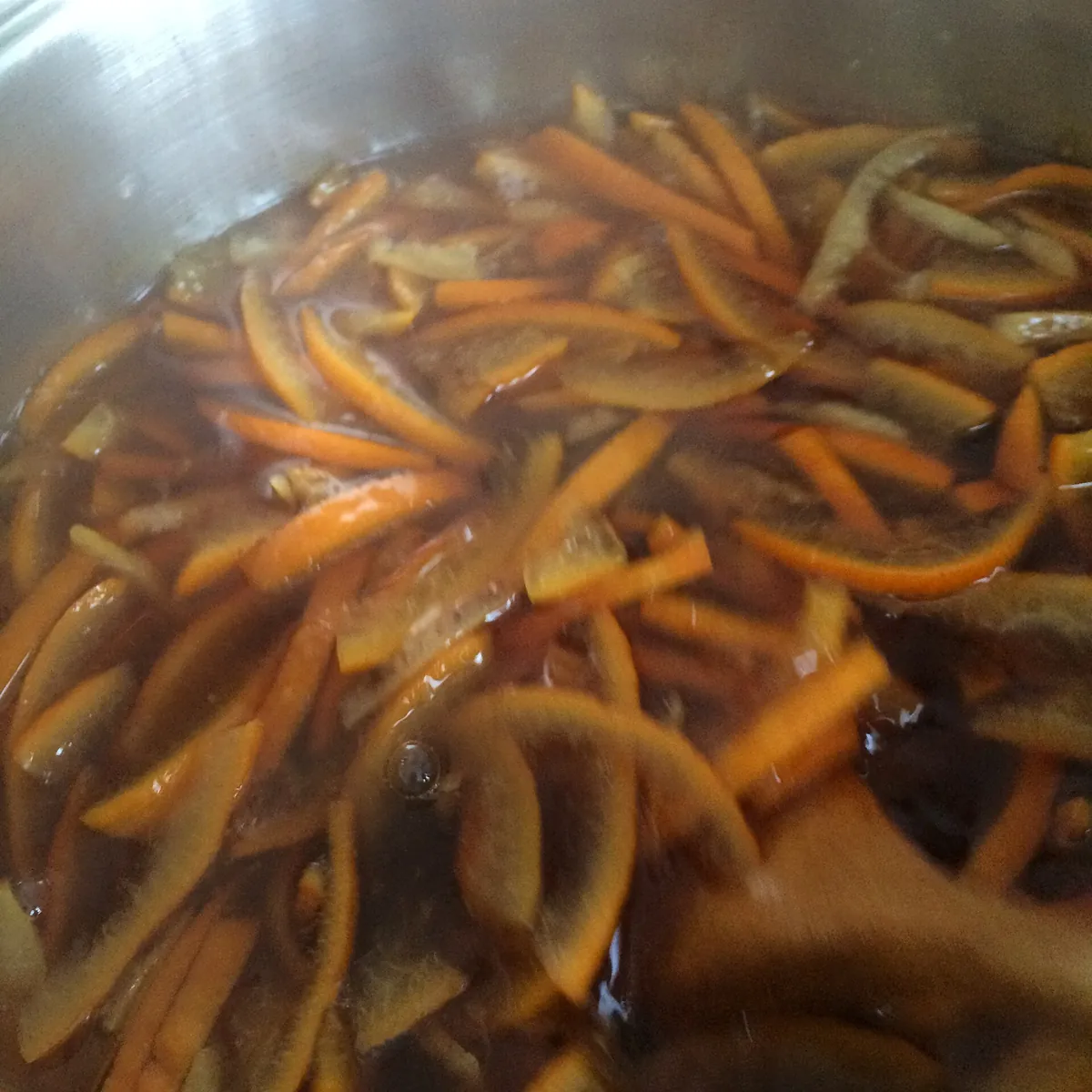
ビターオレンジ・マーマレードの製造過程。鍋の中でセビルオレンジ(苦味だいだい)の果皮の千切りが煮られている、瓶詰め前の一場面。
加工後写っているもの: Citrus aurantium(セビルオレンジ果皮の製造途中)部位・状態: 鍋の中で煮られているセビルオレンジ(苦味だいだい)の果皮の千切り(マーマレード製造途中の状態、瓶詰め前)
写真: Tehmina Goskar/ CC BY-SA 4.0/ 原画像/ 台帳の原画像
写真の範囲と来歴
被写体の確認: 原典の記載による同定。原典キャプションは「セビルオレンジの果皮がマーマレード作りの過程で煮られている様子」と記載。完成品の色・とろみ・瓶詰め状態を示すものではなく、製造工程の一場面である。専門家による再同定は行っていない。
掲載画像: Wikimedia Commons の1920px版。苦味研究所では切り抜き・色調変更なし。 表示用には幅1200px上限のWebPを配信し、台帳の原画像は上のリンクから確認できます。
On this page (8 sections)
Reading the bitterness
Jam made from bitter orange (Citrus aurantium) peel has been studied in an experimental comparison of how far strongly bitter peel can be made more palatable. The study made jam from peel treated with water alone and from peel treated with salt solutions of varying concentrations, then compared bitterness through rankings by a trained panel of 30. Jam treated with water alone remained at nearly the same rank as the bitter control, whereas bitterness ranked lower under the salt-solution treatments. However, these differences do not reflect salt concentration alone: the comparison was of entire processes, including repeated soaking and heating, not an isolated effect of salt.
In a separate preference test with 30 people, jam treated with a 0.625% salt solution was the most preferred among the conditions tested. Salt-solution treatment also accompanied declines in constituents such as phenolics and vitamin C, however, so the lower bitterness cannot be identified as the sole reason for preference. The lower-bitterness and more-preferred conditions overlapped, but the experiment did not isolate and test the relationship between the two.
Sources for this overview
Desamerization of Bitter Jam: Biochemical and Sensory Quality
Checked for this overview: Checked the comparison in which bitterness ranked lower in salt-solution treatment groups. / Checked the preference test in which the 0.625% salt-solution condition was most preferred.
Follow the connections
bitter orange marmalade →— perceived bitterness is s…→ salt citrus-peel debittering
Hypotheses and recipe candidates for this entry are on the Japanese page.
Structured claims — open a section to read each claim's confidence, evidence and limits
Sensory (1)
Scope: A bitterness ranking by a trained panel of 30, and a separate liking evaluation by another 30
Note: The most preferred condition, but the drop in bitterness cannot be fully separated from compound loss, saltiness, and process differences.
Show data
seasoning-bitter-orange-marmalade —has_sensory_acceptability_increased_by→ "The 0.625% NaCl peel treatment among the tested conditions"How processing and cooking change it (1)
Scope: A jam comparison of a water-only condition against several NaCl conditions, using bitter-orange peel
Note: Water alone matched the bitter control; the NaCl conditions lowered it. The result of a whole process including repeated soaking and heating.
Show data
seasoning-bitter-orange-marmalade —has_perceived_bitterness_suppressed_by→ process-citrus-salt-debitteringCulture (1)
Scope: A candidate at the level of general knowledge. Regional and naming differences have not been confirmed.
No source connected — this claim has not been verified yet. It is a general-knowledge placeholder, not a confirmed statement.
Show data
seasoning-bitter-orange-marmalade —is_used_as→ "Seasonings that add a bitter dimension to dishes"