日本語版

frisée

ingredient / ingredient-frisee

フリゼ / Cichorium endivia L. var. crispum (Frisée Group)

Frisée is a curly-leaved cultivar group of Cichorium endivia; the French name means "curled". It has narrow, deeply divided curly leaves. The dark outer leaves are described as more bitter, while the pale center, blanched by excluding light during growth, is less bitter. It denotes the same cultivar group as English curly endive and Italian indivia riccia.

Photographs (captions in Japanese)
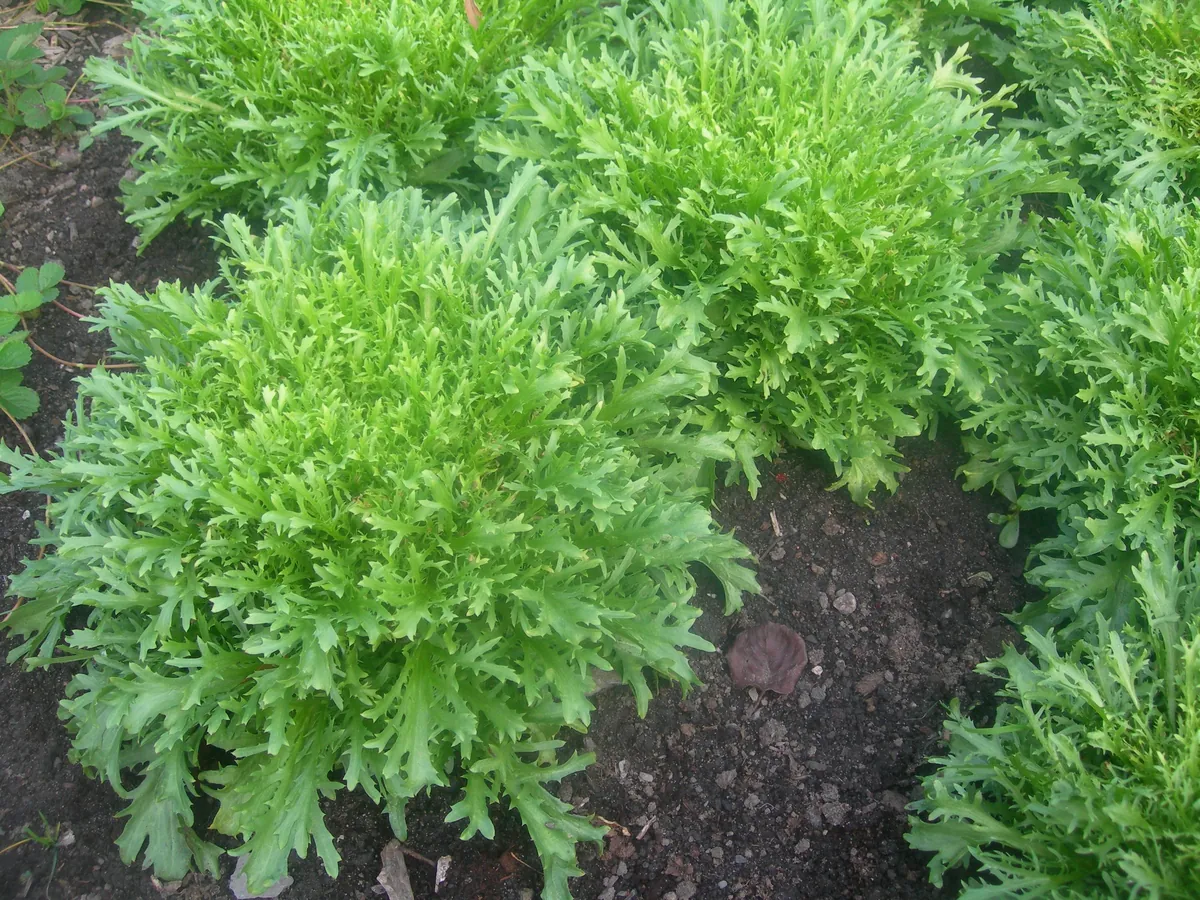
黒い土の畝に、細かく糸状に裂けた明るい緑色の縮れ葉をこんもりと茂らせた株が複数並んでいる。

畑の畝に並んで生育する、細く深く裂けた縮れ葉を持つフリゼ(縮葉エンダイブ)の株。

写っているもの: Cichorium endivia var. crispum部位・状態: 畑で生育中の株(葉全体)

写真: Atilin/ CC BY 3.0/ 原画像/ 台帳の原画像

写真の範囲と来歴

被写体の確認: 原典の記載による同定。説明文「Curly endive」。中心部を軟白化させる前の、外側の緑葉が主体の生育段階と見られる。 画像を開き、細く裂けた縮れ葉が密集した複数の株が畑に並んでいるのを確認した。中心部の淡色化は見られない外側の緑葉の状態。

掲載画像: Wikimedia Commons の原本を長辺2400pxへ縮小。切り抜き・色調変更なし。 表示用には幅1200px上限のWebPを配信し、台帳の原画像は上のリンクから確認できます。

On this page (9 sections)
  1. Overview
  2. Sources for this overview (5)
  3. Topic hubs
  4. Other names
  5. Related entries (10)
  6. Composition and content (1)
  7. Mechanism and receptors (1)
  8. How processing and cooking change it (1)
  9. Culture (1)
↑

Reading the bitterness

Frisée names the curly-leaved Cichorium endivia group in the aster family and genus Cichorium; in French it means 「縮れた」 (in translation: "curled"). Taxonomically it corresponds to Cichorium endivia L. var. crispum, also called Curled Endive Group. The University of Melbourne multilingual plant-name database and North Carolina State University extension common-name list support its identification with the same cultivar group as English curly endive. In Italian it is called indivia ricciuta, meaning curly endive. The extent of overlap with the existing general endive entry remains to be resolved.

Frisée’s dark outer leaves are described as more bitter, while its pale inner leaves grown without light are less bitter. According to a U.S. extension explanation, tying the outer leaves or removing them after harvest to exclude light from the center (blanching) slows chlorophyll production, thereby reducing bitterness. This mechanism is a simplified extension explanation, however, without direct chemical-analytical verification. It is at a different level of explanation from findings that light exposure raises sesquiterpene-lactone concentrations in witloof chicory, another member of Cichorium.

An RNA-seq comparison of frisée, described as a more bitter cultivar, and scarole, described as a less bitter var. latifolium, reports differences in expression of several GAS-like, GAO-like, and COS-like paralog genes involved in sesquiterpene-lactone biosynthesis. This account is limited to the discussion of an earlier study (Zhang et al. 2022) in a French doctoral thesis (Domont, 2023); the original paper’s abstract says only 「より苦い品種」 (in translation: "more bitter varieties") without naming the varieties. The evidence concerns gene expression alone, without direct measurement of bitter constituents or sensory testing. The thesis author also cautions against generalizing to C. intybus (industrial chicory), a different species.

Sources for this overview

  1. Sorting Cichorium names

    Porcher, Michel H. (compiler); authorised by Prof. Snow Barlow / 2003 / academic database / full text checked

    Checked for this overview: Used the Melbourne University database’s identification with var. crispum.

  2. Cichorium endivia (Batavia, Endive, Escarole, Frisée)

    NC State Extension Gardener Plant Toolbox / / government document / full text checked

    Checked for this overview: Used the extension common-name list’s parallel listing. / Used the extension explanation of blanching as evidence for this paragraph.

  3. Indivia — Cichorium endivia L.

    agraria.org / / other / full text checked

    Checked for this overview: Used confirmation of the Italian spelling indivia ricciuta.

  4. Édition par CRISPR/Cas9 de la voie de biosynthèse des lactones sesquiterpéniques en vue de modifier l'amertume de la chicorée industrielle (Cichorium intybus L.)

    Domont, Justine / 2023 / thesis / full text checked

    Checked for this overview: Used the gene-expression differences presented in the doctoral thesis as evidence for this paragraph.

  5. The chromosome-scale assembly of endive (Cichorium endivia) genome provides insights into the sesquiterpenoid biosynthesis

    Zhang, B.; Wang, Z.; Han, X.; Liu, X.; Wang, Q.; Zhang, J.; et al. / 2022 / journal article / abstract checked

    Checked for this overview: Used the scope of the original paper’s abstract as evidence for this paragraph.

Other names: chicorée frisée (fr), indivia riccia (it)

Structured claims — open a section to read each claim's confidence, evidence and limits

Composition and content (1)

friséeCichorium endivia L. var. crispum Lam.(Curled-leaved Group / Curled Endive Group / Frisée Group) is classified as: established

Scope: Taxonomy in the University of Melbourne Multilingual Multiscript Plant Name Database and the common-name list in NC State University extension information.

Note: The plant-name dictionary lists 『Frisée Group』 as an alternative name for 『Crispum Group』. Several independent primary sources agree on the correspondence between frisée and curly endive.

Confirmed that the entry "Cichorium endivia L. (Crispum Group)" lists "Curled Endive Group" as an alternative and gives "Chicorée frisée" as a French name.
Limitations: This database entry does not use the names "Frisée Group" or "Curled-leaved Group". Other horticultural, doctoral-thesis, and Italian sources support identifying frisée with var. crispum.
Source: Sorting Cichorium names (Porcher, Michel H. (compiler); authorised by Prof. Snow Barlow, 2003) · full text checked
Confirmed that the common-name list includes Endive, Escarole, Batavia, and Frisée, and places Frisée in the description of Curly Endive (var. crispum).
Source: Cichorium endivia (Batavia, Endive, Escarole, Frisée) (NC State Extension Gardener Plant Toolbox) · full text checked
Show dataingredient-frisee —is_a→ "Cichorium endivia L. var. crispum Lam.(Curled-leaved Group / Curled Endive Group / Frisée Group)"
claim: clm-w40-frisee-is-cichorium-endivia-crispum / type: taxonomy / updated: 2026-09-02

Mechanism and receptors (1)

frisée has its biosynthesis controlled by Differences in expression of GAS-like, GAO-like, and COS-like paralog genes involved in sesquiterpene-lactone biosynthesis, based on an RNA-seq comparison between the more bitter described C. endivia var. crispum "frisée" (in translation: "frisée") and the less bitter described var. latifolium "scarole" (in translation: "scarole").preliminary

Scope: An RNA-seq comparison of 2 Cichorium endivia varieties, var. crispum and var. latifolium, as summarized in the French doctoral thesis by Domont (2023) from Zhang et al. (2022).

Confirmed verbatim "une étude de Zhang et al. [2022] a complété ces informations par l'analyse de données RNA-seq de 2 variétés de chicorée: C. endivia var. crispum (frisée), reconnue comme amère et C. endivia var. latifolium (scarole), considérée comme moins amère... 5 gènes paralogues de GAS, 5 gènes paralogues de GAO et les 11 gènes paralogues de COS étaient impliqués dans la modulation de l'amertume entre les deux variétés de C. endivia étudiées". The author adds the caution "ces données restent à considérer avec précaution puisqu'elles ont été générées à partir du génome de C. endivia, qui reste une espèce différente de C. intybus" (in translation: "these data should be treated with caution because they were generated from the genome of C. endivia, which remains a different species from C. intybus").
Limitations: The thesis chiefly concerns C. intybus (industrial chicory root); this passage only introduces and summarizes an earlier study. It concerns gene-expression data alone, without measured compounds or sensory assessment.
Confirmed verbatim "STLs biosynthesis-related genes and TPS genes in more bitter varieties have shown a higher level of expression, which could be attributed to genomic variations.".
Limitations: Only the abstract was checked, not the full text. It does not explicitly name cultivars such as frisée or scarole; it says only 『more bitter varieties』 (in translation: "more bitter varieties").
Source: The chromosome-scale assembly of endive (Cichorium endivia) genome provides insights into the sesquiterpenoid biosynthesis (Zhang, B.; Wang, Z.; Han, X.; Liu, X.; Wang, Q.; Zhang, J.; et al., 2022) · abstract checked
Show dataingredient-frisee —has_biosynthesis_controlled_by→ "Differences in expression of GAS-like, GAO-like, and COS-like paralog genes involved in sesquiterpene-lactone biosynthesis, based on an RNA-seq comparison between the more bitter described C. endivia var. crispum "frisée" (in translation: "frisée") and the less bitter described var. latifolium "scarole" (in translation: "scarole")."
claim: clm-w40-frisee-scarole-gene-expression / type: mechanism / updated: 2026-09-02

How processing and cooking change it (1)

frisée — perceived bitterness is suppressed by: The process of excluding light from the heart, either by tying outer leaves during growth for field blanching or by removing outer leaves after harvest and cutting to use only the center. The dark outer leaves are described as more bitter and the light-excluded pale inner leaves as less bitter.contextual

Scope: A description by a North American horticultural extension service (NC State University).

Confirmed "an important bitter-tasting salad green in Europe", "less bitter than endive" for escarole, and "slow[s] the production of chlorophyll which causes the bitter flavor" for blanching. The source also mentions tying outer leaves or using light-blocking covers, as well as self-blanching cultivars.
Limitations: The extension service’s simple explanation attributing bitterness reduction to slower chlorophyll production is not directly verified by chemical analysis.
Source: Cichorium endivia (Batavia, Endive, Escarole, Frisée) (NC State Extension Gardener Plant Toolbox) · full text checked
Show dataingredient-frisee —has_perceived_bitterness_suppressed_by→ "The process of excluding light from the heart, either by tying outer leaves during growth for field blanching or by removing outer leaves after harvest and cutting to use only the center. The dark outer leaves are described as more bitter and the light-excluded pale inner leaves as less bitter."
claim: clm-w40-frisee-bitterness-blanching / type: processing / updated: 2026-09-02

Culture (1)

frisée has the local name Called indivia riccia, or indivia ricciuta, in Italian.contextual

Scope: A description on an Italian agricultural website.

Note: The regional name "scarola riccia" (in translation: "curly scarole") from Campania appeared in search results, but because it is not in the sources compiled for this entry, it has not been recorded here.

Confirmed the spelling "indivia ricciuta" (in translation: "curly endive").
Limitations: This page gives only the spelling "indivia ricciuta" (in translation: "curly endive"); it does not record regional names.
Source: Indivia — Cichorium endivia L. (agraria.org) · full text checked
Show dataingredient-frisee —has_local_name→ "Called indivia riccia, or indivia ricciuta, in Italian."
claim: clm-w40-frisee-italian-local-name / type: cultural / updated: 2026-09-02

↑ Top of page · ← Encyclopedia (English entries)