tencha
ingredient / ingredient-tencha
碾茶
Tea leaves produced by steaming shade-grown new shoots, drying them without rolling, then removing stems and veins. Tencha is the raw material for matcha.
Photographs (captions in Japanese)
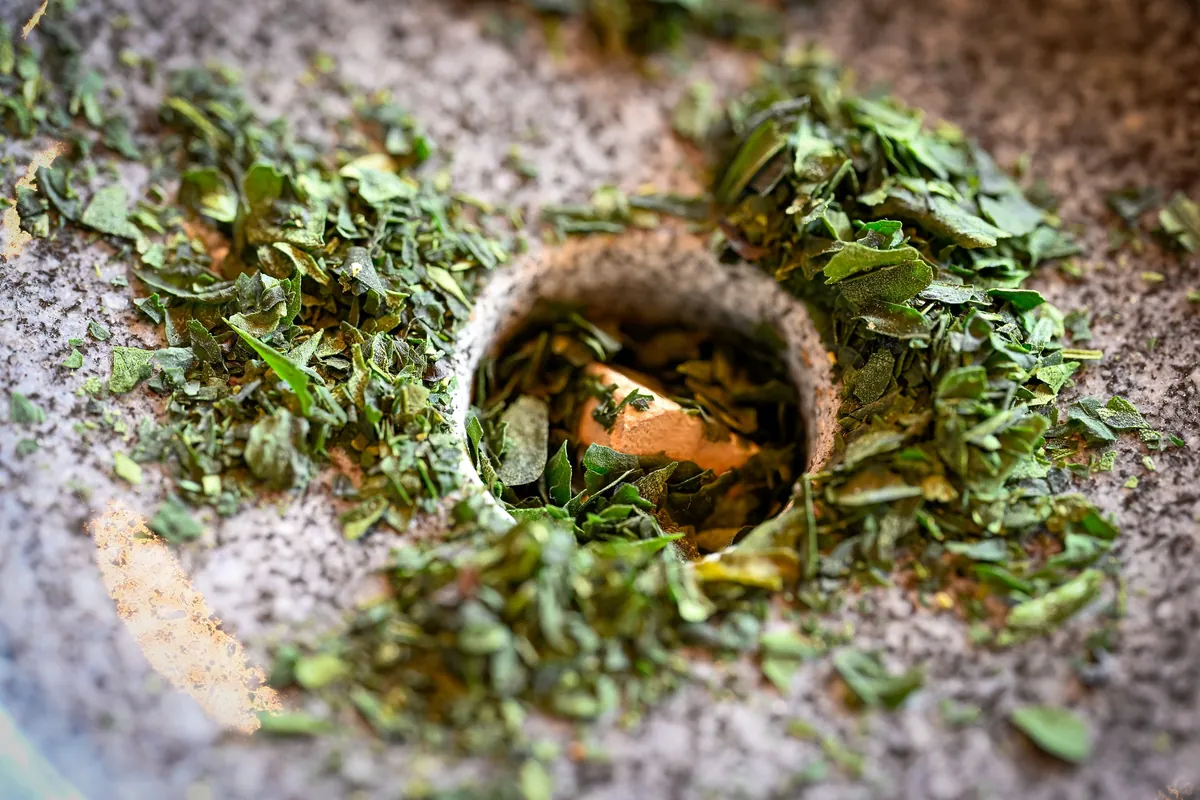
京都府宇治市の石臼の挽き穴周りに広がる、乾燥した碾茶の葉片。
現地観測写っているもの: Camellia sinensis(碾茶)部位・状態: 乾燥・裁断された葉片(石臼の挽き穴周辺)
写真: Derjochenmeyer/ CC BY-SA 4.0/ 原画像/ 台帳の原画像
写真の範囲と来歴
被写体の確認: 原典の記載による同定。説明文に「宇治での抹茶製造用の伝統的な花崗岩の石臼上で挽かれている碾茶葉」と明記。 画像を開き、石臼の穴の周囲に散らばる緑色の乾燥茶葉片のマクロ写真であることを確認した。
掲載画像: Wikimedia Commons の原本を長辺2400pxへ縮小。切り抜き・色調変更なし。 表示用には幅1200px上限のWebPを配信し、台帳の原画像は上のリンクから確認できます。
On this page (7 sections)
Reading the bitterness
Tencha consists of new shoots grown under cover, steamed, dried without rolling, and finished by removing stems and veins; it is the raw material for matcha. According to the official Urasenke website, plucked shoots are evenly steamed and dried without rolling to make rough tea, then stems and veins are removed to leave only tender leaves, called 「仕上碾茶」 (in translation: "finished tencha"). The Japan Tea Central Association defines matcha as 「碾茶を茶臼等で微粉末状に製造したもの」 (in translation: "tencha ground into a fine powder with a tea mill or similar device"). Thus the connection between ground tencha and matcha is supported both by the industry association's definition and Urasenke's process description.
Tencha leaves are produced by shade cultivation that blocks direct sunlight. The absence of direct sunlight is described by Urasenke as reducing astringent constituents and that only the new shoots are picked in the shaded garden. A Shizuoka Prefecture field trial (2016) compared first-flush 'Yabukita' under several shading conditions, from no cover to 85–98% cover for 5–20 days, supporting that tencha and matcha production is planned around shade treatment.
Sources for this overview
Checked for this overview: Used the Urasenke site's explanation of tencha production to support this paragraph. / Used the Urasenke site's explanation of shade cultivation to support this paragraph.
粒度と食感からみた抹茶のおいしさ (The Mouthfeel of Matcha from the Viewpoint of Particle Size and a Texture)
Checked for this overview: Used the quoted Japan Tea Central Association definition of matcha to support this paragraph.
Checked for this overview: Used the Shizuoka field trial's shade-condition design to support this paragraph.
Other names: てん茶 (ja)
Follow the connections
matcha →is prepared from→ tencha
tencha →requires→ tea shading cultivation
tencha →is processed by→ tencha processing
Structured claims — open a section to read each claim's confidence, evidence and limits
How processing and cooking change it (3)
Note: Confirmed from both the Japan Tea Central Association's definition (tencha ground finely with a tea mill or similar device) and the Urasenke site's explanation of the process.
Show data
ingredient-matcha —is_prepared_from→ ingredient-tenchaNote: Tencha's raw tea leaves are new shoots grown under shading cultivation (covered cultivation).
Show data
ingredient-tencha —requires→ process-tea-shading-cultivationNote: The sequence for making tencha is: steam shade-grown new shoots, dry them without rolling (rough tea), then remove stems and veins (finished tencha).
Show data
ingredient-tencha —is_processed_by→ process-tencha-processing