日本語版

Vermouth di Torino

ingredient / ingredient-vermouth-di-torino

ヴェルモット・ディ・トリノ

Vermouth di Torino, an EU-protected geographical indication (IGP): an aromatised wine made throughout Piedmont by adding alcohol to Italian wine products and flavoring them primarily with Artemisia plants (A. absinthium and/or A. pontica are required) and other permitted herbs and spices. Actual alcohol content is 16–22% vol. A geographical-indication subtype of vermouth in general.

Photographs (captions in Japanese)
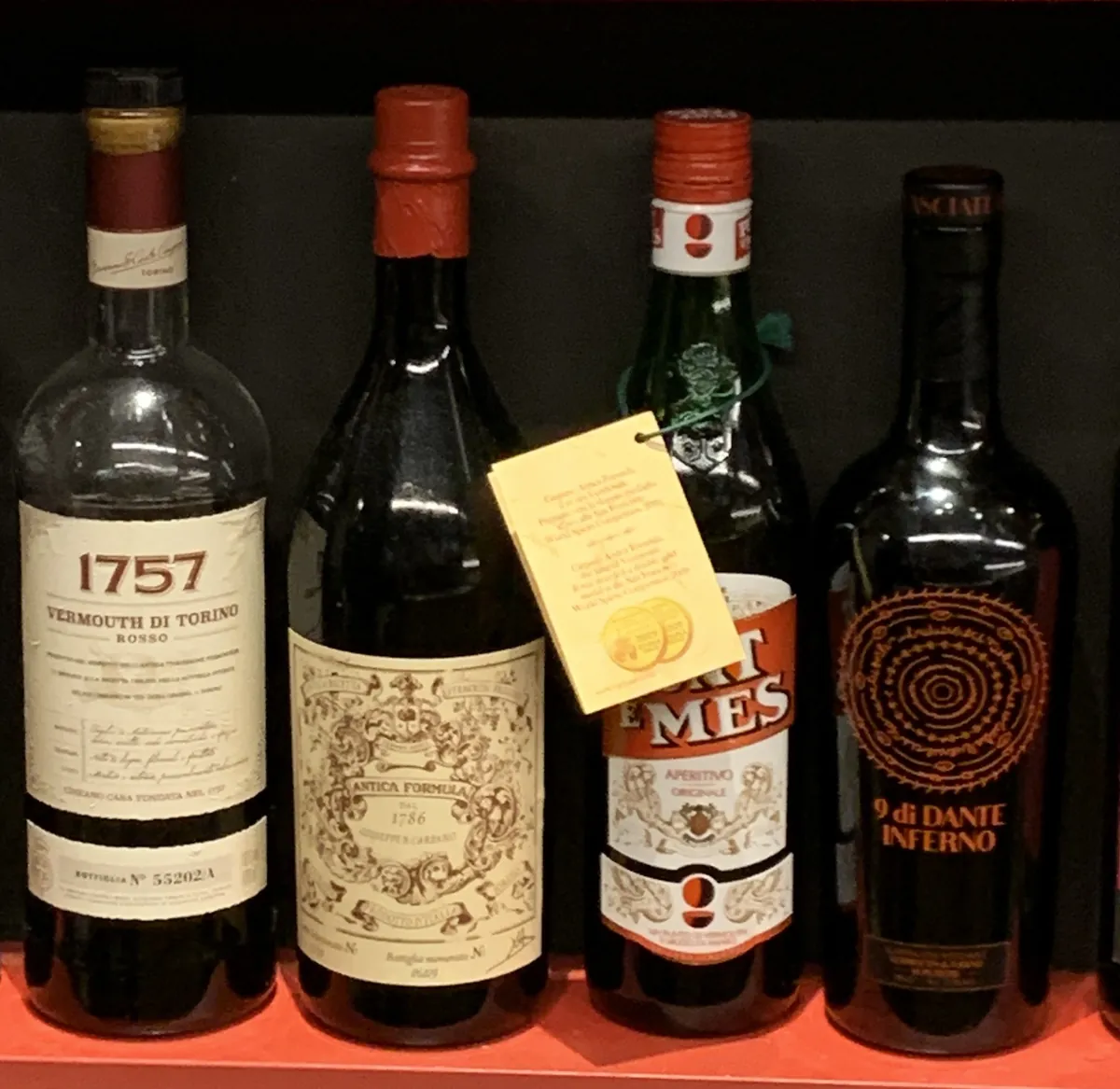
棚に並んだヴェルモット・ディ・トリノの瓶4本

ヴェルモット・ディ・トリノを名乗る複数銘柄(1757、Antica Formula、9 di DANTEほか)の瓶を並べた写真。

写っているもの: 該当なし(加工食品)部位・状態: 瓶入り製品(複数銘柄)

写真: Cavalcante9/ CC BY-SA 4.0/ 原画像/ 台帳の原画像

写真の範囲と来歴

被写体の確認: 原典の記載による同定。

掲載画像: リサイズ・トリミング・色調変更なし。Wikimedia Commons のオリジナル画像をそのまま使用。 表示用には幅1200px上限のWebPを配信し、台帳の原画像は上のリンクから確認できます。

On this page (8 sections)
  1. Overview
  2. Sources for this overview (5)
  3. Topic hubs
  4. Other names
  5. Follow the connections
  6. Related entries (10)
  7. Safety and regulation (5)
  8. Culture (1)
↑

Reading the bitterness

Vermouth di Torino is an aromatised wine registered as an EU protected geographical indication (IGP). Under the disciplinare (production specification) promulgated in Italy's official gazette (Decreto 22 marzo 2017, n. 1826), it is defined as an aromatised wine made from one or more Italian wine products obtained in Piedmont, with added alcohol, flavored mainly with plants of the genus Artemisia alongside other permitted herbs and spices. The production and bottling zone is described as the entire Piedmont region.

The same disciplinare requires the presence of Artemisia absinthium (wormwood) and/or A. pontica among the plants used for flavoring, at no less than 0.5 grams of dried plant equivalent per 1 liter of finished product. This is a minimum-use rule in the specification, not an analytical measurement of the plant's contribution to sensory bitterness. Actual alcohol content must be at least 16% vol and less than 22% vol.

On the legal basis of Articles 21 and 26(1)(3) of Regulation (EU) No 251/2014, this geographical indication was entered in the register of protected geographical indications for aromatised wine products by Commission Implementing Regulation (EU) 2020/198. Under that regulation's record, the Italian technical file and national approval are reported as received on March 24, 2017. This is a different date from promulgation of the disciplinare on March 22, 2017.

Turin herb-shop owner Antonio Benedetto Carpano (「アントニオ・ベネデット・カルパーノ」) is described as beginning industrial production of vermouth in 1786 at his Piazza Castello shop in Turin, initially using Piedmont Moscato white wine as its base. Several sources state that, notwithstanding earlier mentions in Tuscany, production and renown became associated primarily with Piedmont through Carpano. It should be noted that this is an origin narrative conveyed by an encyclopedia and a museum database, and is an account at the level of industrial history rather than the history of an individual brand.

Sources for this overview

  1. Decreto 22 marzo 2017, n. 1826 - Disciplinare di produzione della denominazione "Vermut di Torino"/"Vermouth di Torino"

    Ministero delle Politiche Agricole Alimentari e Forestali / 2017 / government document / full text checked

    Checked for this overview: Checked the definition in the IGP production specification. / Checked the rule governing the production and bottling zone. / Checked the required Artemisia species and minimum use quantity. / Checked the rule specifying actual alcohol content of 16–22% vol.

  2. Commission Implementing Regulation (EU) 2020/198 of 13 February 2020 laying down rules for the application of Regulation (EU) No 251/2014 ... and the listing of the existing geographical designations in that register

    European Commission / 2020 / government document / full text checked

    Checked for this overview: Checked the EU register entry and date of receipt.

  3. Regulation (EU) No 251/2014 of the European Parliament and of the Council of 26 February 2014 on the definition, description, presentation, labelling and the protection of geographical indications of aromatised wine products

    European Parliament and Council of the European Union / 2014 / government document / full text checked

    Checked for this overview: Checked the regulations establishing the legal basis for registration.

  4. vermut - Enciclopedia

    Istituto della Enciclopedia Italiana / / academic database / full text checked

    Checked for this overview: Checked the account that Carpano founded the enterprise in 1786.

  5. Antonio Benedetto Carpano (Bioglio 24 novembre 1751 - Torino 1815)

    MuseoTorino (Comune di Torino, Biblioteche Civiche Torinesi) / / government document / full text checked

    Checked for this overview: Checked the comparison with earlier mentions in Tuscany.

Other names: Vermut di Torino (it)

Follow the connections

Vermouth di Torino →requires minimum content of→ wormwood

Vermouth di Torino →— designated production zone→ Piedmont

Structured claims — open a section to read each claim's confidence, evidence and limits

Safety and regulation (5)

Vermouth di Torino is defined in a standard as An aromatised wine obtained in the Piedmont region by adding alcohol to one or more Italian wine products and flavouring it primarily with Artemisia species (other permitted herbs and spices may also be used) — the disciplinare's definition.contextual

Scope: Italy. Decreto 22 marzo 2017, n. 1826 (the disciplinare text)

Note: A legal definition under a geographical indication; it does not guarantee the production method of any individual brand.

Confirmed that the disciplinare text, published in the official gazette, defines the product as an aromatised wine based on Piedmont-produced wine products with alcohol added and flavoured primarily with Artemisia species.
Limitations: A definition from the domestic disciplinare; the wording may differ in detail from the EU registry's text.
Source: Decreto 22 marzo 2017, n. 1826 - Disciplinare di produzione della denominazione "Vermut di Torino"/"Vermouth di Torino" (Ministero delle Politiche Agricole Alimentari e Forestali, 2017) · full text checked
Show dataingredient-vermouth-di-torino —is_defined_in_regulation_as→ "An aromatised wine obtained in the Piedmont region by adding alcohol to one or more Italian wine products and flavouring it primarily with Artemisia species (other permitted herbs and spices may also be used) — the disciplinare's definition."
claim: clm-vermouth-di-torino-igp-definition / type: regulatory / updated: 2026-09-01
Vermouth di Torino requires_minimum_content_of wormwoodcontextual

Scope: Italy. Decreto 22 marzo 2017, n. 1826 (the disciplinare text)

Confirmed the text "tra i diversi generi di Artemisia utilizzabili è obbligatoria la presenza delle specie absinthium e/o pontica" (in translation: among the various usable Artemisia species, the presence of absinthium and/or pontica is mandatory), together with the requirement of at least 0.5 g/L of dried plant material.
Limitations: A minimum-use rule under the standard, not an analytical value that measured the actual sensory contribution to bitterness.
Source: Decreto 22 marzo 2017, n. 1826 - Disciplinare di produzione della denominazione "Vermut di Torino"/"Vermouth di Torino" (Ministero delle Politiche Agricole Alimentari e Forestali, 2017) · full text checked
Show dataingredient-vermouth-di-torino —requires_minimum_content_of→ ingredient-wormwood
claim: clm-vermouth-di-torino-artemisia-requirement / type: regulatory / updated: 2026-09-01
Vermouth di Torino — permitted alcohol range: Actual alcohol content is specified as at least 16% vol and less than 22% vol.contextual

Scope: Italy; text of the disciplinare in Decreto 22 marzo 2017, n. 1826.

Checked the actual alcohol-content requirement 『non inferiore a 16% vol. e inferiore a 22% vol.』 (in translation: "not less than 16% vol. and less than 22% vol.").
Source: Decreto 22 marzo 2017, n. 1826 - Disciplinare di produzione della denominazione "Vermut di Torino"/"Vermouth di Torino" (Ministero delle Politiche Agricole Alimentari e Forestali, 2017) · full text checked
Show dataingredient-vermouth-di-torino —has_permitted_alcohol_range→ "Actual alcohol content is specified as at least 16% vol and less than 22% vol."
claim: clm-vermouth-di-torino-alcohol-range / type: regulatory / updated: 2026-09-01
Vermouth di Torino — designated production zone: Piedmontcontextual

Scope: Italy; text of the disciplinare in Decreto 22 marzo 2017, n. 1826.

Checked that 『l'intero territorio della Regione Piemonte』 (in translation: "the entire territory of the Piedmont region") is designated as the production and packaging zone.
Source: Decreto 22 marzo 2017, n. 1826 - Disciplinare di produzione della denominazione "Vermut di Torino"/"Vermouth di Torino" (Ministero delle Politiche Agricole Alimentari e Forestali, 2017) · full text checked
Show dataingredient-vermouth-di-torino —has_designated_production_zone→ region-piemonte
claim: clm-vermouth-di-torino-production-zone / type: regulatory / updated: 2026-09-01
Vermouth di Torino is registered as an EU geographical indication: On the legal basis of Regulation (EU) No 251/2014, Article 21 and Article 26(1)(3), Commission Implementing Regulation (EU) 2020/198 entered "Vermut di Torino"/"Vermouth di Torino" in the register as a protected geographical indication for aromatised wine products. Italy's technical file and national approval are recorded, per Regulation 2020/198, as having been received on March 24, 2017.contextual

Scope: EU. Regulation (EU) 2020/198, Article 2, Recitals 5 and 8

Note: A factual record of the registration procedure; it is not a claim guaranteeing the commercial standing of any individual brand.

Confirmed that "Vermut di Torino"/"Vermouth di Torino" is listed in the Article 2 register as a geographical indication; that Recital 8 lists the two Italian domestic spelling variants (Vermouth di Torino / Vermut di Torino) side by side as registered names; and that Recital 5 confirms the conformity assessment.
Limitations: The technical file's receipt date is a record of the EU-side registration procedure, and is a different date from the disciplinare's promulgation date (2017).
Context: Provides context via Regulation (EU) No 251/2014, the legal basis for the geographical indication registration, which sets out definitions for aromatised wine generally and for vermouth (an aromatised wine using Artemisia species, among other requirements).
Limitations: This provision was not re-retrieved this time; it follows the content retrieved on 2026-08-31 and kept in the source record.
Show dataingredient-vermouth-di-torino —is_registered_as_eu_geographical_indication→ "On the legal basis of Regulation (EU) No 251/2014, Article 21 and Article 26(1)(3), Commission Implementing Regulation (EU) 2020/198 entered "Vermut di Torino"/"Vermouth di Torino" in the register as a protected geographical indication for aromatised wine products. Italy's technical file and national approval are recorded, per Regulation 2020/198, as having been received on March 24, 2017."
claim: clm-vermouth-di-torino-eu-gi-registration / type: regulatory / updated: 2026-09-01

Culture (1)

Vermouth di Torino — origin narrative as told: Turin herb-shop owner Antonio Benedetto Carpano (G.A.B. Carpano) is described as beginning industrial vermouth production in 1786 at his Piazza Castello shop in Turin. He initially used Piedmont Moscato white wine as the base. The sources describe production and renown as becoming associated particularly with Piedmont through Carpano despite earlier references in Tuscany.contextual

Scope: The vermut entry in the Treccani encyclopedia and the Carpano entry in MuseoTorino.

Note: Included as an origin narrative conveyed consistently by several public and encyclopedic sources. Their assessments of historical certainty are not wholly identical (the account of earlier references in Tuscany comes from MuseoTorino).

States that G.A.B. Carpano began industrial vermouth production in Turin in 1786 and initially used Piedmont Moscato white wine.
Limitations: An account of industrial history rather than of an individual brand.
Source: vermut - Enciclopedia (Istituto della Enciclopedia Italiana) · full text checked
States that Carpano began vermouth production in 1786 at his Piazza Castello shop and that, despite earlier references in Tuscany, production and renown came to be associated with Piedmont through him.
Limitations: This is a municipal museum's biographical account, not the primary historical records (such as contemporary business records).
Source: Antonio Benedetto Carpano (Bioglio 24 novembre 1751 - Torino 1815) (MuseoTorino (Comune di Torino, Biblioteche Civiche Torinesi)) · full text checked
Show dataingredient-vermouth-di-torino —has_historical_origin_narrative→ "Turin herb-shop owner Antonio Benedetto Carpano (G.A.B. Carpano) is described as beginning industrial vermouth production in 1786 at his Piazza Castello shop in Turin. He initially used Piedmont Moscato white wine as the base. The sources describe production and renown as becoming associated particularly with Piedmont through Carpano despite earlier references in Tuscany."
claim: clm-vermouth-di-torino-carpano-origin / type: cultural / updated: 2026-09-01

↑ Top of page · ← Encyclopedia (English entries)