Aperol
ingredient / ingredient-aperol
アペロール
Aperol is an orange Italian bitter aperitif brand described as having been introduced in Padua in 1919 by the Barbieri brothers, Luigi and Silvio. Campari Group acquired it in 2003. It is one brand within amaro, the general bitter/liqueur category under EU law.
Photographs (captions in Japanese)
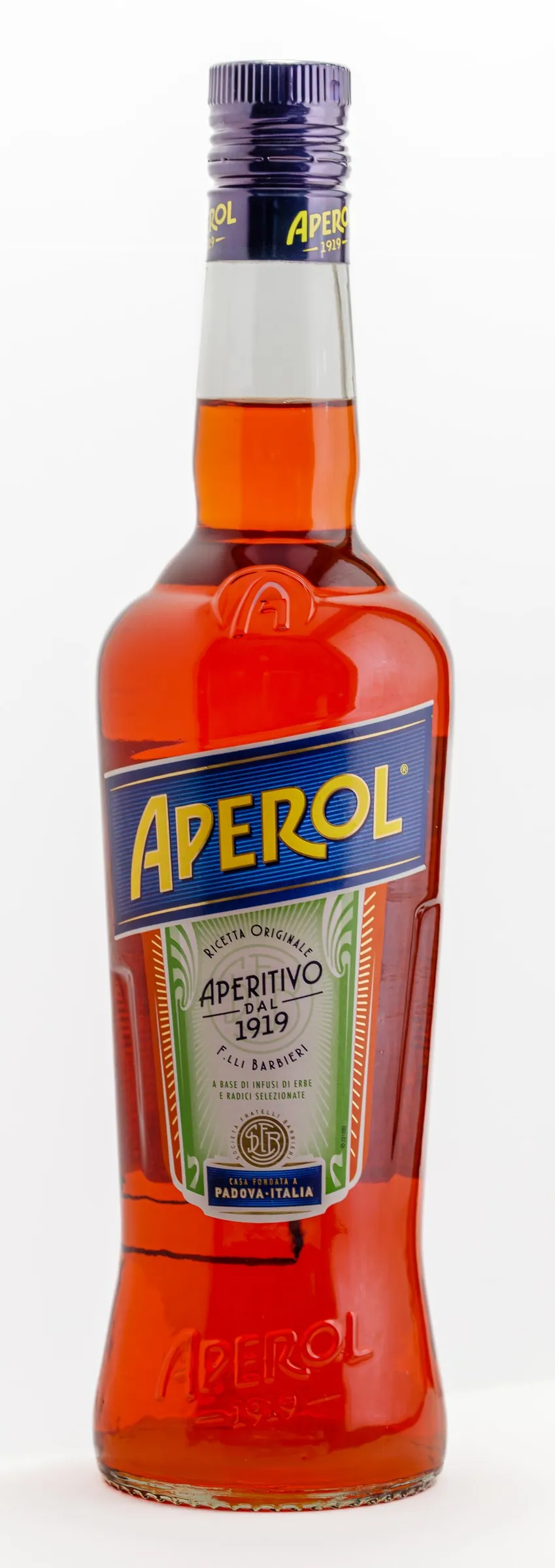
満たされたAperolのボトル正面。ラベルに「Aperitivo dal 1919」「F.lli Barbieri」「Padova・Italia」の文字
写っているもの: N/A(銘柄ボトル)部位・状態: 未開封のボトル全体、正面。液体が満ち、ラベル全面が読める
写真: Friedrich Haag/ CC BY-SA 4.0/ 原画像/ 台帳の原画像
写真の範囲と来歴
被写体の確認: 原典の記載による同定。説明文に「Aperol bottle, 70 cl - 11 vol.%, front」と明記、self-photographed。entities.csvのBarbieri兄弟・パドヴァの記述と一致 画像を開いて確認。ラベルに「APEROL」「Ricetta Originale Aperitivo dal 1919」「F.lli Barbieri」「Casa fondata a Padova・Italia」の文字が明瞭に読める
掲載画像: Wikimedia Commons の原本を長辺2400pxへ縮小。切り抜き・色調変更なし。 表示用には幅1200px上限のWebPを配信し、台帳の原画像は上のリンクから確認できます。
On this page (9 sections)
Reading the bitterness
Aperol is an orange Italian bitter aperitif described as having been introduced in Padua in 1919 by the Barbieri brothers, Luigi and Silvio. The official site says the brothers took over a liqueur company founded by their father in 1880 and completed the drink after 7 years of experimentation. It describes Bruno Malavasi, its present dedicated herbalist and master blender, as custodian of the recipe’s secret.
According to the official FAQ, Aperol is an Italian bitter aperitif made with ingredients including gentian and cinchona; the other ingredients are not disclosed. The company calls it 「イタリアのアマロ」 (in translation: "an Italian amaro"), translates amaro as 「ちょっと苦い」 (in translation: "a little bitter"), and describes itself as the sweetest of the amaros. The official page provides no basis on which to verify that translation or ranking.
The official FAQ’s tasting notes begin with a lively citrus-peel aroma on the nose, then describe a bittersweet taste with a hint of vanilla and bitterness, followed by a lingering herbal, bitter finish. These are statements by the company itself, not measurements from a standardized sensory panel.
A representative Aperol cocktail is the Spritz. The official IBA recipe calls for 90 ml Prosecco and 60 ml Aperol plus a splash of soda water in a wine glass filled with ice, lightly stirred and garnished with an orange slice. The company’s own FAQ recipe, the 「3-2-1法」 (in translation: "3-2-1 method"), specifies 3 parts Prosecco, 2 parts Aperol, and 1 part soda, giving the same Prosecco-to-Aperol ratio. The official IBA page also notes versions using Campari, Cynar, or Select instead of Aperol, placing several bitter brands in parallel within the same cocktail format.
Sources for this overview
Checked for this overview: Used the founding year and brothers’ names from the history page.
Checked for this overview: Used the opening year of their father’s company and the name of the current blender. / Used the official statement that it contains gentian. / Used the official FAQ statement that it contains cinchona. / Used the company’s characterization as amaro and its quoted translation. / Used a summary of the official tasting notes. / Used the company’s own 3-2-1 recipe.
Spritz – IBA Official Cocktail
Checked for this overview: Used the proportions and method in the official IBA recipe. / Used the official IBA note naming Campari as an alternative. / Used the official IBA note naming Cynar as an alternative.
Follow the connections
Spritz →is prepared through→ Aperol
Campari →is used as an alternative to→ Aperol
Cynar →is used as an alternative to→ Aperol
Aperol →is flavoured with→ gentian root →— sensory attribute→ bitterness
Aperol →is flavoured with→ Cinchona succirubra (bark extract) →— sensory attribute→ bitterness
Structured claims — open a section to read each claim's confidence, evidence and limits
Composition and content (2)
Scope: The Aperol official FAQ (the company's own description).
Note: Connected to the existing ingredient-gentian-root entity. The formulation ratio and the plant part used are not disclosed by Aperol.
Show data
ingredient-aperol —is_flavoured_with→ ingredient-gentian-rootScope: The Aperol official FAQ (the company's own description).
Note: Connected to the existing ingredient-cinchona-extract entry. A direct containment relationship with the existing compound-quinine entry cannot be confirmed from Aperol's official page (we do not make that connection here on the basis of the general-knowledge equation cinchona bark = quinine).
Show data
ingredient-aperol —is_flavoured_with→ ingredient-cinchona-extractSensory (1)
Scope: The Aperol official FAQ (the company's own description).
Show data
ingredient-aperol —has_sensory_attribute→ "The official Aperol FAQ states 『Aperol’s distinctive taste comes from carefully selected fruit, aromatic herbs, roots and woods. Citrus peel leads the charge with a crisp tang on the nose, with a hint of vanilla and bittersweet notes on the palette, with a lasting herbal, bitter finish.』."How processing and cooking change it (4)
Scope: The IBA's official recipe (New Era category)
Note: Prosecco and soda water are not made into entities, as they do not directly relate to the bitterness theme.
Show data
dish-spritz —is_prepared_with→ ingredient-aperolScope: A note on the IBA's official recipe (Spritz page)
Show data
ingredient-campari —is_alternative_to→ ingredient-aperolScope: The note on the official IBA Spritz recipe page.
Note: A connection from the Cynar side based on the same note as the related alternatives record.
Show data
ingredient-cynar —is_alternative_to→ ingredient-aperolScope: The official Aperol FAQ’s own recipe description, the 『3-2-1法』 (in translation: "3-2-1 method").
Note: The ratio of 3 parts Prosecco to 2 parts Aperol to 1 part soda is substantially consistent with the official IBA recipe’s 90 ml to 60 ml Prosecco-to-brand ratio of 3:2, but this FAQ does not give specific ml quantities.
Show data
ingredient-aperol —is_used_in→ dish-spritzCulture (2)
Scope: Padua, Italy. The official Aperol site’s own account.
Show data
ingredient-aperol —has_history→ "The official site reports that the Barbieri brothers, Luigi and Silvio, presented Aperol in Padua in 1919 after taking over their father’s liqueur company, which it describes as having opened in 1880. It says they experimented for 7 years beginning in 1912 before the presentation. The company also states that its current dedicated herbalist and master blender, Bruno Malavasi, guards the secret recipe."Scope: The Aperol official FAQ (the company's own description).
Note: The English rendering "little bitter" is the company's own paraphrase, not a literal translation of amaro (which in Italian simply means "bitter"). We do not judge the accuracy of this paraphrase and record it as-is, as the company's own self-description.
Show data
ingredient-aperol —is_a_type_of→ ingredient-amaro