wormwood
ingredient / ingredient-wormwood
ニガヨモギ / Artemisia absinthium L.
Wormwood is a bitter herb of the genus Artemisia in the aster family, used to flavor absinthe, vermouth, and other products. It contains absinthin, a bitter sesquiterpene-lactone dimer, and is a representative Artemisia plant subject to EU limits on thujone in flavorings.
Photographs (captions in Japanese)
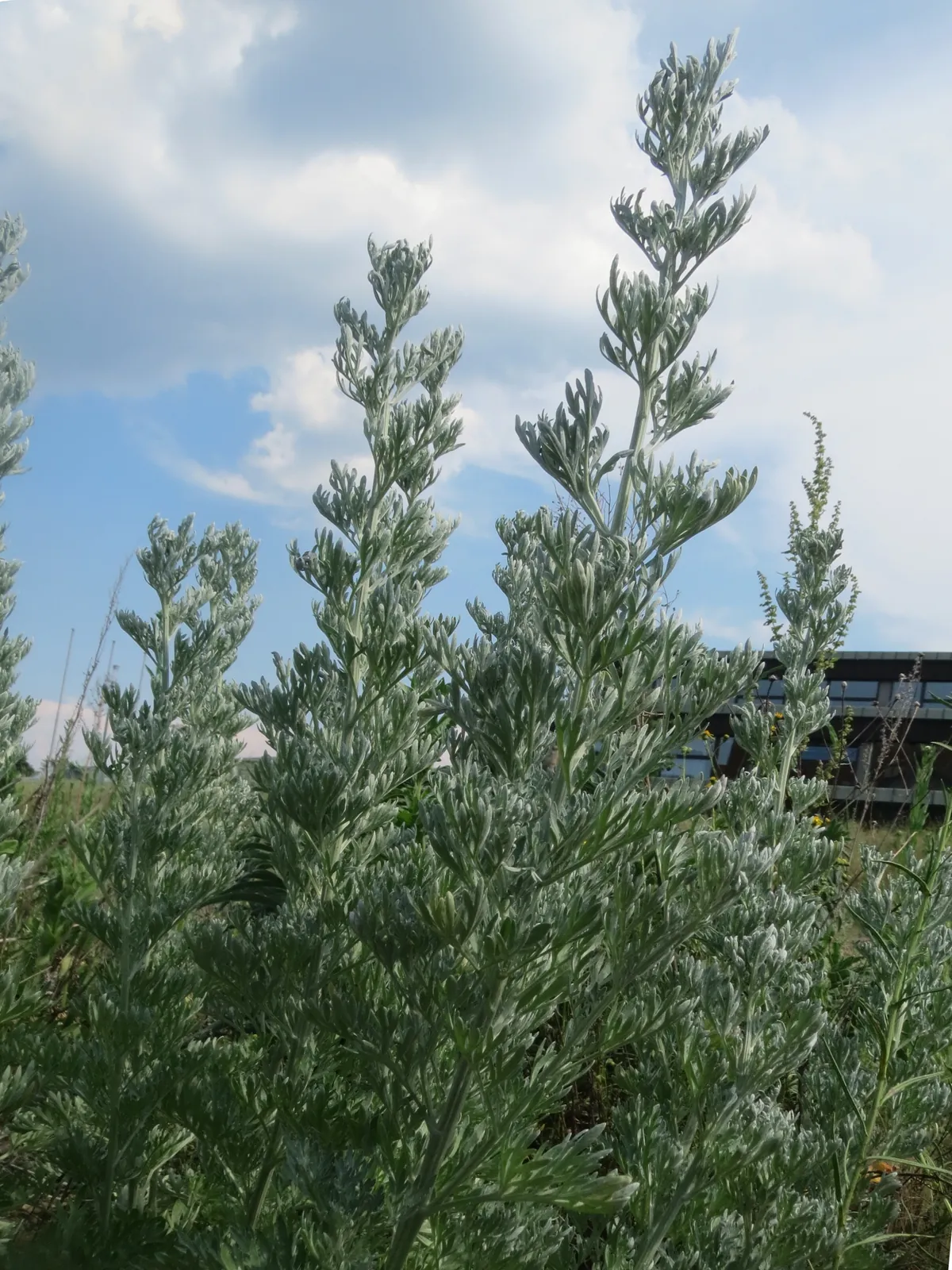
ドイツ・ホッケンハイムの休閑地に自生するニガヨモギ(Artemisia absinthium)。原典によれば、このホッケンハイム内では当該地点のみに自生する個体群とされる。アブサン・ベルモット等の香味原料となる苦味ハーブの地上部。
写っているもの: Artemisia absinthium部位・状態: 野生個体群の地上部(茎葉)、休閑地に自生する状態
写真: AnRo0002/ CC0 1.0/ 原画像/ 台帳の原画像
写真の範囲と来歴
被写体の確認: 原典の記載による同定。原典のドイツ語キャプションは Wermutkraut (Artemisia absinthium) と種を明記。専門家による再同定は行っていない。
掲載画像: Wikimedia Commons の原寸ファイル。苦味研究所では切り抜き・色調変更なし。 表示用には幅1200px上限のWebPを配信し、台帳の原画像は上のリンクから確認できます。
On this page (9 sections)
Reading the bitterness
Wormwood (Artemisia absinthium L.) is a bitter herb in the aster family, genus Artemisia. A 2026 review lists wormwood as a source of absinthin, a bitter sesquiterpene-lactone dimer, in a table of bitter compounds from herbs and spices and their source plants. This is an attribution in a review table, however; no quantitative content value has been confirmed.
Wormwood is widely used to flavor bitter alcoholic drinks such as vermouth and bitters. The vermut entry in the Treccani encyclopedia lists assenzio (wormwood) as a component of a general herb-infused vermouth recipe. The bitters entry in The Oxford Companion to Spirits & Cocktails likewise lists wormwood with gentian and cinchona bark as a core bittering ingredient. The production specification (Italian disciplinare) for the geographical indication Vermouth di Torino goes further: it requires the presence of Artemisia absinthium and/or A. pontica and at least 0.5 grams of dried plant equivalent per 1 liter of finished product.
In Swedish, wormwood is malört. According to Svenska Akademiens ordböcker, the word is described as a compound of Old Swedish mal (moth) and ört (herb), with an original meaning of 『蛾に対する草』 (in translation: "herb against moths"). The dictionary records its earliest occurrence around 1420 in the Old Swedish text Bonaventuras Betraktelser. This is a second-hand account of the dictionary's word history, however; the original text has not been checked.
The malört entry in Svenska Akademiens ordböcker gives the use 『蒸留酒の香り付けに使う』 (in translation: "used to flavor spirits") in its definition, and lists absint (absinthe), besk (a kind of bitter liqueur), and vermouth as comparison references. This is only dictionary-level evidence, but illustrates that wormwood is a common ingredient across several categories of bitter alcoholic drinks: absinthe, vermouth, and besk.
Sources for this overview
Checked for this overview: Checked the statement that wormwood is a source plant of absinthin.
Checked for this overview: Checked the description of its inclusion in vermouth recipes.
The Oxford Companion to Spirits and Cocktails — “bitters” entry
Checked for this overview: Checked its listing among the core ingredients of bitters.
Checked for this overview: Checked the required Artemisia species and minimum quantity under the IGP specification.
malört(見出し語)— Svenska Akademiens ordböcker(SAOL/SO/SAOB)
Checked for this overview: Checked the etymology of malört (herb against moths). / Checked the record of its first occurrence around 1420. / Checked the link through comparison references in the dictionary.
Other names: Artemisia absinthium L. (la), malört (sv), üröm (hu)
Follow the connections
wormwood →contains→ absinthin
vermouth →is flavoured with→ wormwood
Vermouth di Torino →requires minimum content of→ wormwood
Structured claims — open a section to read each claim's confidence, evidence and limits
Composition and content (4)
Scope: A review summary (Table 1 of a 2026 review on the receptor pharmacology of bitter compounds in herbs and spices).
Show data
ingredient-wormwood —contains→ compound-absinthinScope: The general recipe in the vermut entry of the Treccani encyclopedia.
Note: Described as an ingredient consistent with the name's etymology (Wermut).
Show data
ingredient-vermouth —is_flavoured_with→ ingredient-wormwoodScope: A general definition in a Swedish dictionary (SO/SAOL)
Note: The SO dictionary's entry for 『malört』 lists, as comparison references (JFR), absint (absinthe), 2besk (this entity), and vermouth side by side, corroborating at the dictionary level that wormwood is the common ingredient running through the 3 types absinthe, vermouth, and besk (a record linked to H14). Connected to the same ingredient-wormwood as the existing ingredient-vermouth / ingredient-absinthe.
Show data
ingredient-bask —is_flavoured_with→ ingredient-wormwoodScope: Aromatic bitters for cocktails, in general.
Note: This is a general description in a reference entry, not an analytical measurement of the composition of an individual brand.
Show data
ingredient-aromatic-bitters —is_flavoured_with→ ingredient-wormwoodSafety and regulation (1)
Scope: Italy. Decreto 22 marzo 2017, n. 1826 (the disciplinare text)
Show data
ingredient-vermouth-di-torino —requires_minimum_content_of→ ingredient-wormwoodCulture (2)
Scope: Swedish. The HISTORIK section of the entry for 『malört』 in Svenska Akademiens ordböcker (SO)
Show data
ingredient-wormwood —has_name_etymology→ "The source states that the Swedish name malört is a compound of Old Swedish mal (moth) and ört (plant), with the original meaning given as 『蛾に対する草』 (in translation: "a plant against the moth")."Scope: Word history of Swedish malört; the HISTORIK section of the 『malört』 entry in Svenska Akademiens ordböcker (SO).
Show data
ingredient-wormwood —has_term_first_appearing_in→ "The Old Swedish text Bonaventuras Betraktelser. The SO dictionary records a first occurrence around 1420."