gaeng khilek
dish / dish-gaeng-khilek
ゲーン・キーレック
Gaeng khilek is a Thai curry dish in which khilek leaves and flowers are boiled and drained, then simmered with coconut milk and spices. Regional and household variants exist.
Photographs (captions in Japanese)
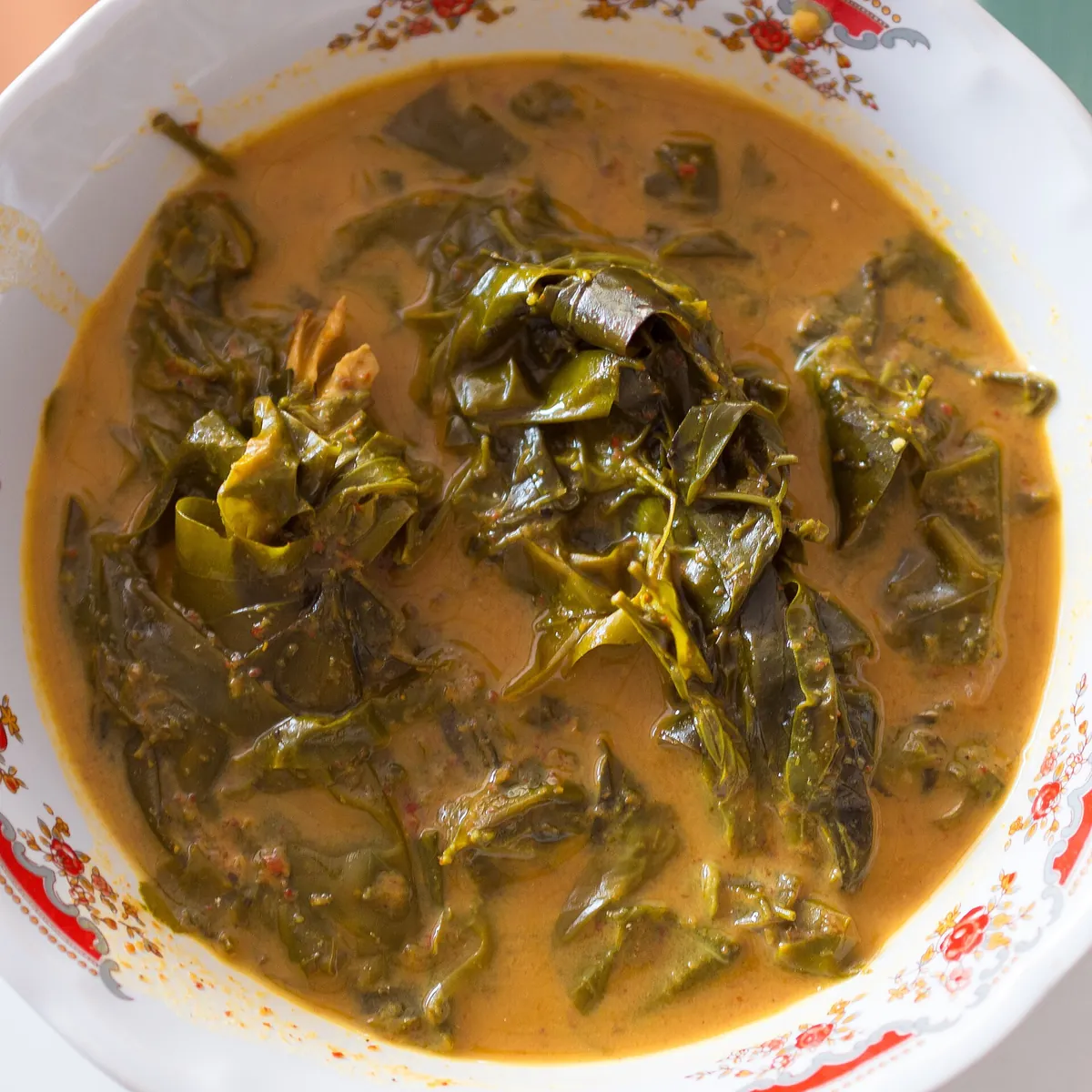
gaeng khilek(แกงขี้เหล็ก)。キーレック(Senna siamea)の葉を茹でてから、ココナッツミルクベースの赤みがかったカレースープで煮込んだタイ南部の一例。盛り付け・辛味付けは店・家庭により異なる。
料理写っているもの: Senna siamea部位・状態: ゆでて刻んだキーレック(Senna siamea)の葉を、ココナッツミルクベースの赤みがかったカレースープで煮込んだ状態。花柄の器に盛られている
写真: Takeaway/ CC BY-SA 3.0/ 原画像/ 台帳の原画像
写真の範囲と来歴
被写体の確認: 原典の記載による同定。原典キャプションが Senna siamea(kassod tree)の葉と明記しており、学名一致は原典記載どおり。専門家による再同定は行っていない。家庭・店舗ごとの調理例であり地域の標準形ではない。
掲載画像: Wikimedia Commons の1920px版。苦味研究所では切り抜き・色調変更なし。 表示用には幅1200px上限のWebPを配信し、台帳の原画像は上のリンクから確認できます。
On this page (7 sections)
Reading the bitterness
Gaeng khilek is a Thai curry dish in which khilek leaves and flowers are boiled and drained, then simmered with coconut milk and spices. The formulation is described as varying by region and household. A recipe for gaeng khilek with roast pork published by Mahidol University's Institute of Nutrition cooking-preservation project lists these leaves and flowers as ingredients. However, this is one example recorded as a dish from central Thailand, and not an ingredient list common to all regional and household variants of gaeng khilek.
The same recipe describes first boiling the leaves and flowers and discarding the water, then boiling them again until soft and squeezing out the moisture. The number of repetitions and the finishing guide are records from this recipe, not a prescribed general debittering method for khilek. The site's culinary explanation says that khilek is bitter and that, after discarding the water several times in this way, coconut milk added at the end cuts the bitterness. However, this is a culinary-cultural explanation and has not been confirmed by controlled comparison with trained evaluators.
Sources for this overview
Checked for this overview: Checked the listing of leaves and flowers in the ingredient list for gaeng khilek with roast pork. / Checked the recorded steps of boiling, discarding the water, boiling again, and squeezing. / Checked the culinary explanation that coconut milk cuts bitterness.
Follow the connections
gaeng khilek →includes→ khilek leaves
gaeng khilek →is prepared through→ boiling and discarding leaf water
Hypotheses and recipe candidates for this entry are on the Japanese page.
Structured claims — open a section to read each claim's confidence, evidence and limits
How processing and cooking change it (3)
Scope: A candidate structural component of a dish. Regional variation in ingredients is unconfirmed
Note: Source not connected. Does not indicate quantities or cooking conditions.
No source connected — this claim has not been verified yet. It is a general-knowledge placeholder, not a confirmed statement.
Show data
dish-gaeng-khilek —includes→ ingredient-khilek-leavesScope: Gaeng khilek with roasted pork published by Mahidol University's Institute of Nutrition
Note: Not a required-ingredients list covering every variant of gaeng khilek.
Show data
dish-gaeng-khilek —includes→ ingredient-khilek-leavesScope: A recipe published by Mahidol University
Note: The number of repetitions and the endpoint are as recorded in this recipe; this is not a general debittering method for plants in general.
Show data
dish-gaeng-khilek —is_prepared_with→ process-leaf-boil-discard-waterCulture (2)
Scope: A candidate at the level of general knowledge. Regional and naming differences have not been confirmed.
No source connected — this claim has not been verified yet. It is a general-knowledge placeholder, not a confirmed statement.
Show data
dish-gaeng-khilek —is_documented_as_part_of→ "Regional bitter-food culture"Scope: A culinary explanation on the same site
Note: A culinary-cultural explanation, not a quantitative sensory comparison.
Show data
dish-gaeng-khilek —has_perceived_bitterness_suppressed_by→ "A university recipe's culinary explanation that coconut milk cuts the bitterness"