khilek leaves
ingredient / ingredient-khilek-leaves
キーレックの葉 / Senna siamea
Cooking parts including leaves, young shoots, and flowers of Khi Lek. A boiling-and-discarding-water step is recorded for gaeng.
Photographs (captions in Japanese)
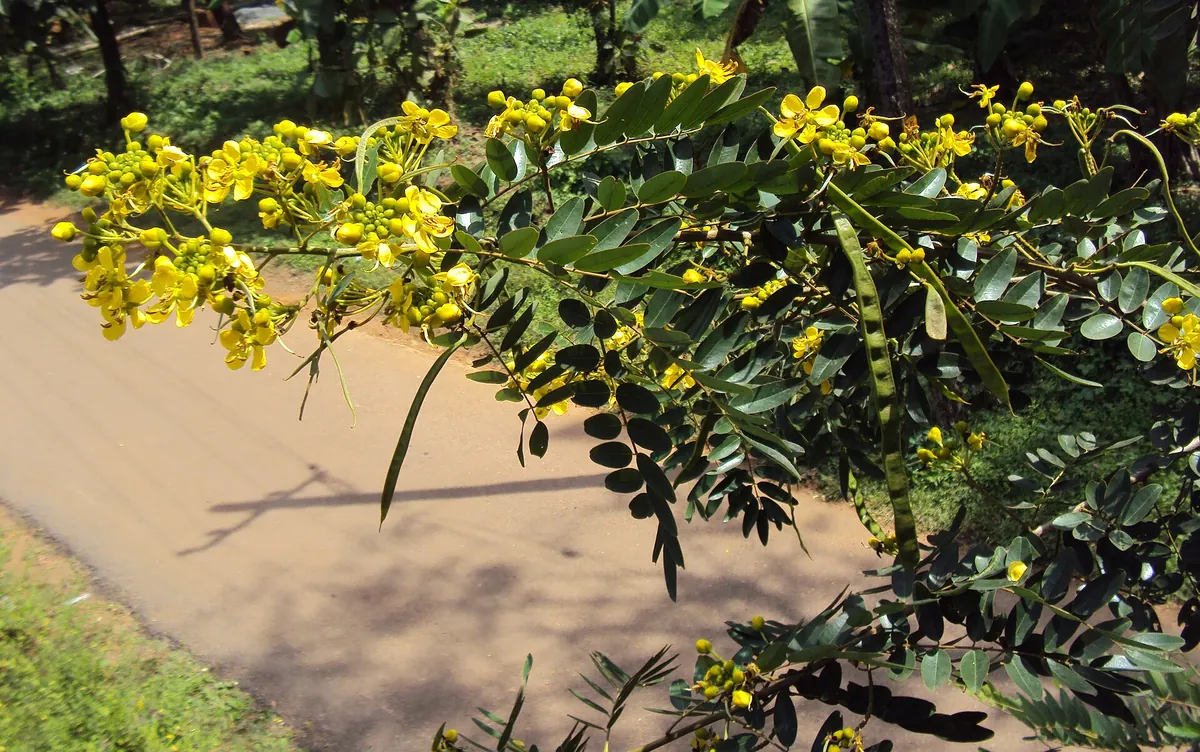
キーレック(Senna siamea)の枝葉。羽状複葉の小葉が対になって並び、黄色い5弁花と細長い莢が同じ枝に混在している。食用に用いるのは若葉・花・莢だが、本写真は木本全体の生育状態を示す。
写っているもの: Senna siamea部位・状態: キーレック(Senna siamea)の枝先。羽状複葉と黄色い花、細長い莢(さや)が同時に見える状態
写真: Vinayaraj/ CC BY-SA 3.0/ 原画像/ 台帳の原画像
写真の範囲と来歴
被写体の確認: 原典の記載による同定。写真は開花・結実期の樹木全体を示すもので、食用として収穫される若葉のみを写した写真ではない。学名は原典キャプションのSenna siameaに基づく。
掲載画像: Wikimedia Commons の1920px版。苦味研究所では切り抜き・色調変更なし。 表示用には幅1200px上限のWebPを配信し、台帳の原画像は上のリンクから確認できます。
On this page (8 sections)
Reading the bitterness
In Thai, the leaves, young shoots, and flowers of Senna siamea, known as Khi Lek, are collectively treated as the parts used in cooking. An ethnobotanical survey of 50 people in Pa Tio district, Yasothon province, northeastern Thailand, records this plant as a wild edible plant under the local name Khi Lek, and states that it is heated before eating to reduce bitterness. Rather than using the bitter leaves as they are, this becomes a food that reaches the table only after the added step of heating.
A university's cooking-preservation project lists leaves and flowers in gaeng Khi Lek with roast pork. It also records boiling and discarding the water. These are one example, and the record cannot show the required ingredients for all variants of gaeng using khilek, or the amount by which the debittering reduces bitterness.
Sources for this overview
Ethnobotanical study of wild edible plants in Pa Tio District, Yasothon Province, Thailand
Checked for this overview: Confirmed the record of Khi Lek as a wild edible plant and bitterness reduction by heating.
Checked for this overview: Confirmed that leaves and flowers appear in the ingredient list for gaeng Khi Lek.
Follow the connections
gaeng khilek →includes→ khilek leaves
khilek leaves →is prepared from→ Senna siamea
Hypotheses and recipe candidates for this entry are on the Japanese page.
Structured claims — open a section to read each claim's confidence, evidence and limits
Composition and content (1)
Scope: The leaves, young shoots, and flowers of Khi Lek used in Thai cuisine
Note: Connected the edible plant parts in the dish with the plant species.
Show data
ingredient-khilek-leaves —is_prepared_from→ organism-senna-siameaHow processing and cooking change it (3)
Scope: A candidate structural component of a dish. Regional variation in ingredients is unconfirmed
Note: Source not connected. Does not indicate quantities or cooking conditions.
No source connected — this claim has not been verified yet. It is a general-knowledge placeholder, not a confirmed statement.
Show data
dish-gaeng-khilek —includes→ ingredient-khilek-leavesScope: Gaeng khilek with roasted pork published by Mahidol University's Institute of Nutrition
Note: Not a required-ingredients list covering every variant of gaeng khilek.
Show data
dish-gaeng-khilek —includes→ ingredient-khilek-leavesScope: Faculty of Home Economics cooking column, Suan Dusit University
Show data
ingredient-khilek-leaves —is_prepared_with→ "Boil in boiling water (sometimes with a little salt) and discard the water at least 2 times, then wash with fresh water."Culture (1)
Scope: A candidate at the level of general knowledge. Regional and naming differences have not been confirmed.
No source connected — this claim has not been verified yet. It is a general-knowledge placeholder, not a confirmed statement.
Show data
ingredient-khilek-leaves —is_used_as→ "A vegetable/ingredient carrying bitterness"