Senna siamea
organism / organism-senna-siamea
タガヤサン
Tagayasan (khi lek), a wild edible plant recorded in Thailand as being heated before eating to reduce its bitterness.
Photographs (captions in Japanese)
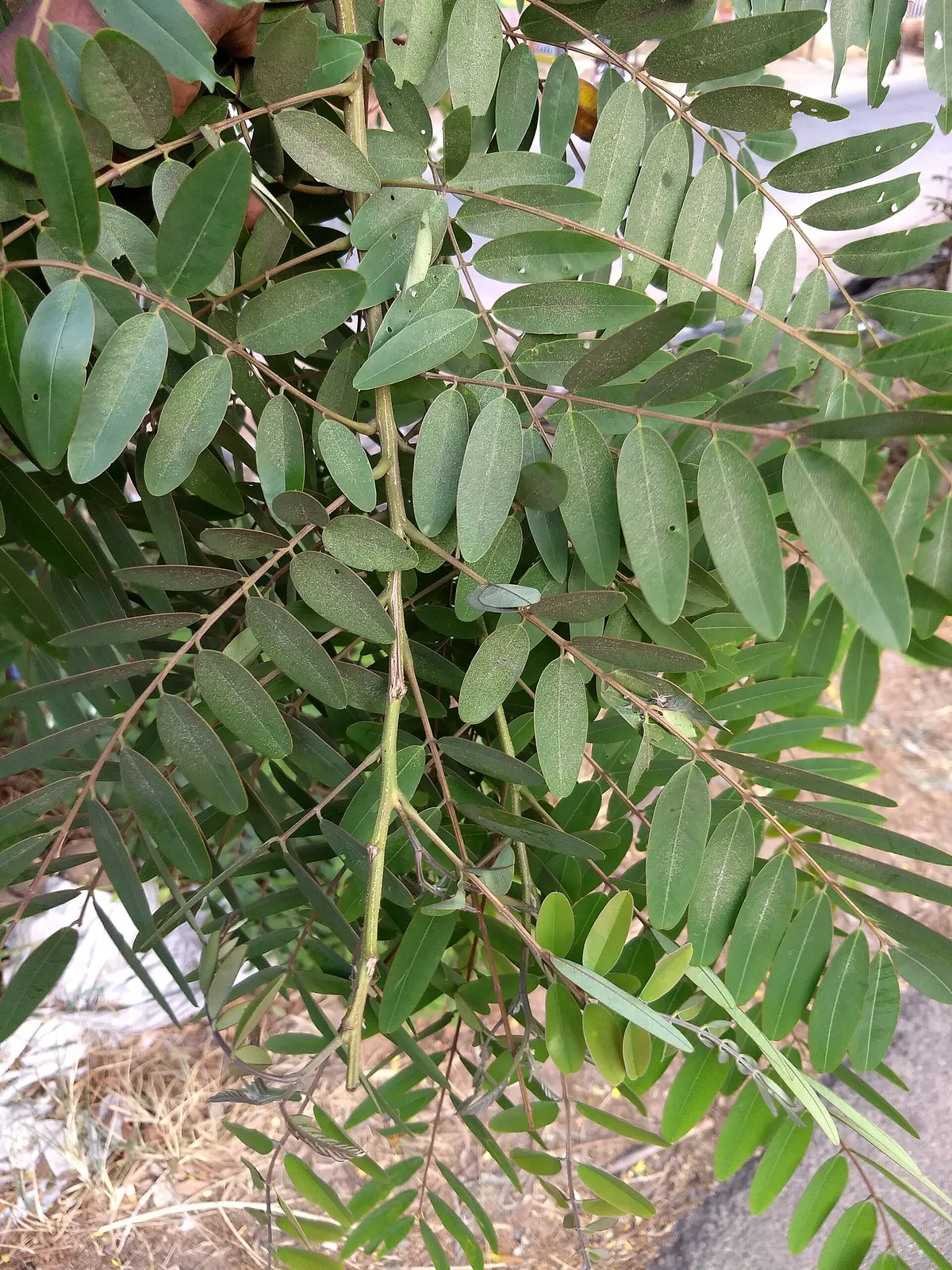
タガヤサン(Senna siamea, ขี้เหล็ก)の葉。楕円形の小葉が並ぶ羽状複葉の枝が写っている。
写っているもの: Senna siamea部位・状態: 羽状複葉の枝(葉のみ、花・莢は写っていない)
写真: Renjusplace/ CC BY-SA 4.0/ 原画像/ 台帳の原画像
写真の範囲と来歴
被写体の確認: 原典の記載による同定。原典はインド・ケーララ州クティヤトードでの撮影個体として記載。写っているのは葉のみで、ゲーン・キーレックで食用にされる若葉・花とは限らない。専門家による再同定は行っていない。
掲載画像: Wikimedia Commons の1920px版。苦味研究所では切り抜き・色調変更なし。 表示用には幅1200px上限のWebPを配信し、台帳の原画像は上のリンクから確認できます。
On this page (9 sections)
Reading the bitterness
Tagayasan (Senna siamea, local name ขี้เหล็ก / Khi Lek) is recorded as a wild edible plant in an ethnobotanical survey in Pa Tio District, Yasothon Province, Thailand. Its leaves, young shoots, and flowers are used in cooking; they are bitter as they are and are described as being heated before use to reduce bitterness.
This record comes from a survey of 50 people in one region. It gives neither a specific heating method or duration nor how much bitterness remains afterward. The same survey links the leaves, young shoots, and flowers used in Thai cooking under the name khi lek to this plant species.
Sources for this overview
Ethnobotanical study of wild edible plants in Pa Tio District, Yasothon Province, Thailand
Checked for this overview: Confirmed the local name and the account of reducing bitterness by heating. / Confirmed the survey limits and the link between the leaves, young shoots, and flowers and their source species.
Other names: ขี้เหล็ก (th)
Follow the connections
khilek leaves →is prepared from→ Senna siamea
Structured claims — open a section to read each claim's confidence, evidence and limits
Composition and content (1)
Scope: The leaves, young shoots, and flowers of Khi Lek used in Thai cuisine
Note: Connected the edible plant parts in the dish with the plant species.
Show data
ingredient-khilek-leaves —is_prepared_from→ organism-senna-siameaHow processing and cooking change it (1)
Scope: Pa Tio District, Yasothon Province, Thailand
Note: An example of a cooking-culture practice of reducing bitterness by parboiling and discarding the water.
Show data
organism-senna-siamea —is_documented_as_having→ "Recorded as a wild edible plant under the local name ขี้เหล็ก (Khi Lek). It is heated before cooking to reduce bitterness."Culture (1)
Scope: A general-audience article from the Highland Research and Development Institute (HRDI).
Show data
organism-senna-siamea —is_documented_as_part_of→ "One of the vegetables on an HRDI article’s 「รสขม(苦味)」 (in translation: "bitter taste (bitterness)") list (ดอกขี้เหล็ก, the flowers)."