Larb (ลาบ)
dish / dish-larb
ラープ
Northern Thai (Lanna) dish/preparation method defined in academic sources as finely mincing meat and seasoning it with a chili paste called พริกลาบ (larb spice mix). Documented in a Northern Thai dialect lexical-semantics study as a distinct cooking-method vocabulary word (alongside ส้า and หลู้), and in a gastronomy-tourism review as one of the classic Lanna meat- and vegetable-based dishes. Distinct from larb khom, its bitter variant.
Photographs (captions in Japanese)
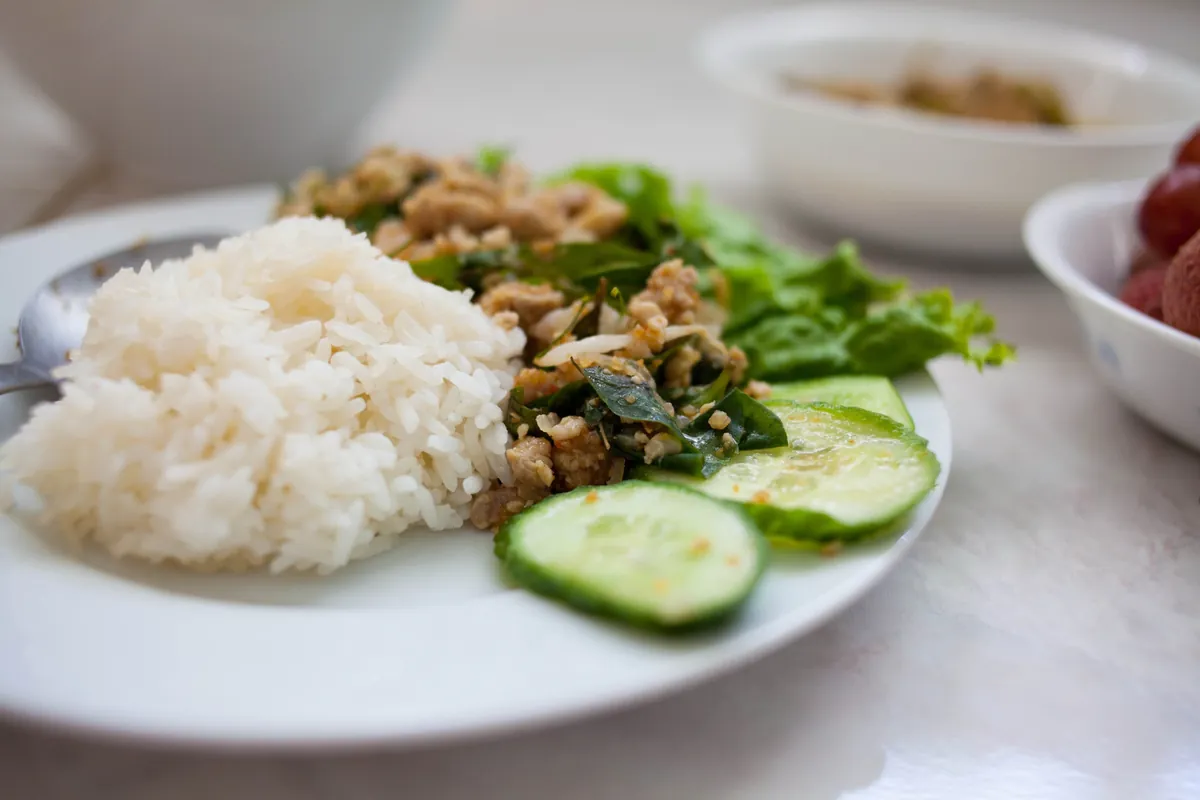
唐辛子ペースト(พริกลาบ)などの香辛料と和えた鶏ひき肉のラープ(ลาบ)。ラープはタイ北部(ランナー)等で、肉を細かく刻んで香辛料と和える調理法・料理を指す。苦味変種として別途登録されている dish-larb-khom とは区別される一般的なラープの例。
料理写っているもの: 該当分類群なし(ラープ、刻んだ鶏肉のサラダ状料理)部位・状態: 香辛料と和えた鶏ひき肉のラープを盛り付けた状態
写真: Sodanie Chea/ CC BY 2.0/ 原画像/ 台帳の原画像
写真の範囲と来歴
被写体の確認: 原典の記載による同定。原典説明は「Larb or 'Laab' is a semi salty and spicy dish. It's minced meat mixed with lots of different spices, and vegetables.」。地域(ラオス/タイ北部いずれの様式か)の明記はない。
掲載画像: Wikimedia Commons の原寸ファイルを取得後、苦味研究所にて sips で長辺2400px程度に縮小。切り抜き・色調変更なし。 表示用には幅1200px上限のWebPを配信し、台帳の原画像は上のリンクから確認できます。
On this page (8 sections)
Reading the bitterness
「ラープ」 (larb; ลาบ), also called 「フルー」 (lu; หลู้) in the dialect, is a term for a traditional northern Thai (Lanna) cooking method. A 2022 gastronomy-tourism review cites earlier work classifying Lanna cooking methods into 10 types and introduces larb/lu as 『肉などを細かく刻み、プリックラープと呼ばれる調味料(唐辛子ペースト)で味付けする調理法』 (in translation: "a cooking method in which meat or other ingredients are chopped finely and seasoned with a condiment called phrik larb [chili paste]"). That 10-part classification is itself described as based on 3 earlier sources; the review did not conduct its own primary verification.
The same review cites earlier research on 5 ethnic groups associated with Lanna food culture (Tai Lue, Tai Khun, Tai Yuan, Tai Lua, and Tai Yong). It presents larb and 「ゲーンホー」 (kaeng ho) as dishes rooted in 『価値観(ค่านิยม)』 (in translation: "cultural values") and often eaten on important occasions. However, this classification comes through a secondary citation, and the cited primary source was not independently checked in this phase.
A 2022 study of northern Thai dialect food names analyzes the gender-contrasting pair 「ラーププー(ลาบปู๊)」 (in translation: "larb puu") and 「ラープメー(ลาบแม่)」 (in translation: "larb mae") as terms for larb. Larb puu, the larb of 『祖父・男性』 (in translation: "grandfather or male"), denotes raw larb. Because finely mincing the meat by hand requires physical strength, it is described as traditionally eaten mainly by men on important occasions such as festivals. Larb mae, the larb of 『母』 (in translation: "mother"), denotes cooked larb and is described as associated with women and children. The study is an analysis of lexical semantics; it did not verify actual patterns of consumption.
Larb is seasoned with a chili paste called phrik larb. A government extension document explains that the distinctive bold flavor and aroma of northern Thai larb come from the spice 「マカーウェン」 (makhwaen; มะแขว่น) serving as the 『主役(ตัวชูโรง)』 (in translation: "star ingredient") in that paste. A source from the northern highland community of Pang Mao also records a practice of grilling or blanching the flowers and young leaves of a plant called 「ディーグーワー」 (di-ngu-wa; ดีงูหล้า) and eating them with nam phrik (chili dip) and larb.
Sources for this overview
การท่องเที่ยวเชิงอาหารพื้นบ้านล้านนา (Lanna Gastronomy Tourism)
Checked for this overview: Checked the definition of the cooking method as chopping meat and seasoning it with phrik larb. / Checked the characterization of the dish as rooted in cultural values among 5 ethnic groups.
Checked for this overview: Checked the lexical-semantic analysis of the gender-contrasting terms larb puu and larb mae.
"มะแขว่น" สุดยอดเครื่องเทศล้านนา อร่อยลิ้นชา นานาประโยชน์
Checked for this overview: Checked the description of makhwaen as the star ingredient of phrik larb.
ดีงูหล้า (องค์ความรู้เพื่อการพัฒนาพื้นที่สูงอย่างยั่งยืน)
Checked for this overview: Checked the description of a practice of eating di-ngu-wa with larb.
Other names: ลาบ (th), larb (th-Latn)
Follow the connections
Makhwaen fruit (ผลมะแขว่น) →is used in→ Larb (ลาบ)
dee ngu wa →is traditionally paired with→ Larb (ลาบ)
Structured claims — open a section to read each claim's confidence, evidence and limits
How processing and cooking change it (3)
Scope: Lanna (Northern Thai) traditional food classification, in a gastronomy-tourism review citing a 10-category classification of Northern Thai cooking methods
Note: Review article synthesis, itself citing รัตนา พรหมพิชัย (2542), สำนักงานพัฒนาเศรษฐกิจจากฐานชีวภาพ (2552), and a Chiang Mai University library resource for the 10-category classification; not independently verified beyond the review's own presentation.
Show data
dish-larb —is_defined_as→ "ลาบ/หลู้ เป็นวิธีการปรุงอาหารโดยการสับให้ละเอียด ได้แก่ เนื้อสัตว์ เพื่อนำไปปรุงกับเครื่องปรุงที่เรียกว่าพริกลาบ (Larb/lu is a cooking method: finely mincing/chopping meat, then seasoning it with a chili-paste mix called phrik larb.)"Scope: Northern Thai (Lanna) larb, general (not larb khom specifically)
Note: Extension/agricultural-outreach page, not a recipe study with measured proportions; general statement about Northern larb, does not specifically name dish-larb-khom.
Show data
ingredient-makhwaen-fruit —is_used_in→ dish-larbScope: Community knowledge page for a highland community (ชุมชนปางมะโอ), Northern Thailand
Show data
organism-dee-ngu-wa —is_traditionally_paired_with→ dish-larbCulture (2)
Scope: Lanna food culture, 8 northern Thai provinces
Note: Secondary citation chain: the review article attributes this classification to ทัศนีย์ อารมณ์เกลี้ยง and สุภาพ ฉัตราภรณ์ (2557); that primary source was not independently retrieved.
Show data
dish-larb —has_cultural_role_of→ "ลาบ and แกงโฮะ are classed among Lanna foods tied to ค่านิยม (cultural values), eaten on important/festive occasions (โอกาสสำคัญ), per a review's citation of a study on 5 ethnic groups connected to Lanna food (ไทลื้อ ไทเขิน ไทยวน ไทลัวะ ไทยอง)."Scope: Northern Thai dialect food-naming semantics
Note: Linguistic/semantic-field analysis, not a culinary or nutritional source; the study cites ธเนศวร์ เจริญเมือง (2562) for the gendered division of raw/cooked larb consumption. PDF text extraction has font-encoding artifacts (custom Thai font); this claim is paraphrased rather than quoted verbatim to avoid propagating encoding errors.
Show data
dish-larb —has_variant→ "A Northern Thai dialect lexical-semantics study analyzes the food names ลาบปู๊ and ลาบแม่ as a gendered antonym pair: ลาบปู๊ ('grandfather's/male larb') denotes raw larb, traditionally eaten by men especially at festive/ceremonial occasions and requiring physical strength to finely mince the meat by hand; ลาบแม่ ('mother's larb') denotes cooked larb, associated with women and children."